The Oilliphéist is a legendary Irish serpent-like dragon linked to lakes and rivers in Irish folklore. You’ll find it described as a massive, sinuous creature with fearsome features, often symbolizing nature’s wild power and mystery. Legends portray it as both a guardian of hidden treasures and a threatening beast. Its stories reflect Ireland’s deep connection to enchanted waters. If you continue exploring, you’ll discover intriguing tales behind this mythic creature and its cultural significance.
Key Takeaways
- The Oilliphéist is a legendary Irish serpent-like dragon linked to lakes and rivers in folklore.
- It is depicted as a massive, sinuous creature with fearsome features, sometimes with multiple heads or fiery eyes.
- The myth symbolizes nature’s wild power and explains mysterious water phenomena in Irish rural communities.
- Modern interpretations see it as a guardian of treasures or a cultural symbol featured in festivals and media.
- The legend of the Oilliphéist endures, shaping Irish cultural identity and inspiring stories about Ireland’s mystical waters.
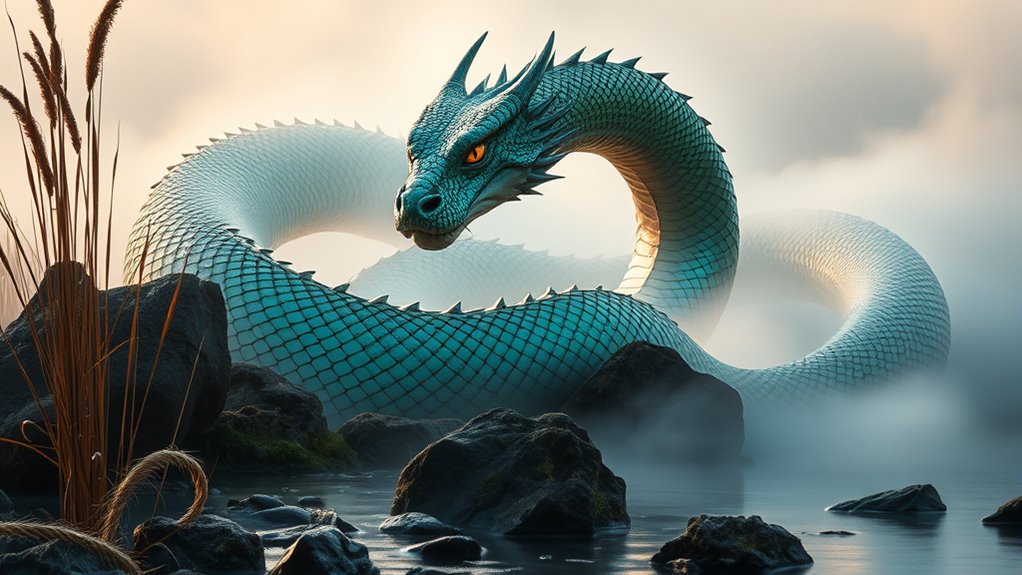
Have you ever heard of the Oilliphéist, the legendary Irish monster said to lurk in the dark waters of lakes and rivers? This creature’s mythical origins trace back centuries, rooted deeply in Irish folklore and oral storytelling traditions. Described as a serpentine dragon with a massive, sinuous body and fearsome features, the Oilliphéist has long captured the imagination of those who live near Ireland’s lakes and streams. Its legend likely served to explain strange sightings or mysterious happenings in rural communities, acting as both a cautionary tale and a symbol of nature’s wild, unpredictable power. Over generations, stories of this water beast spread across Ireland, weaving itself into local legends and cultural identity.
In terms of mythical origins, the Oilliphéist embodies elements of Celtic mythology, blending the characteristics of dragons and water spirits. Some stories depict it as an ancient guardian of hidden treasures beneath the lakes, while others portray it as a destructive creature that threatens livestock and villagers. Its appearance varies from one tale to another, sometimes described with multiple heads or fiery eyes, emphasizing its supernatural nature. Its presence in Irish mythology often reflects mankind’s awe and fear of the vast, mysterious waters, which were seen as portals to the unknown. The creature’s myth served to explain phenomena such as sudden drownings, strange noises, or unexplained disappearances in lakes and rivers, reinforcing the idea that such waters were enchanted or cursed.
Fast forward to modern references, and the Oilliphéist remains a compelling figure in contemporary Irish culture. It appears in local festivals, literature, and even modern media, like films and documentaries that explore Ireland’s mythological heritage. Some storytellers and artists reinterpret the creature as a symbol of Ireland’s rich history and natural beauty, portraying it as a guardian rather than a menace. In recent years, the Oilliphéist has inspired fictional stories and adaptations, blending folklore with modern fantasy. Its image is often used to promote tourism, emphasizing Ireland’s mysterious lakes and rugged landscapes. Despite the passage of time, the legend persists, enthralling new generations and sparking curiosity about the ancient stories that continue to shape Irish identity. Whether as a mythic relic or a modern symbol, the Oilliphéist endures as a fascinating emblem of Ireland’s mystical past and its ongoing cultural storytelling.
Frequently Asked Questions
What Is the Origin of the Oilliphéist Legend?
You might find that the legend of the oilliphéist has mythical origins rooted in Irish culture, symbolizing chaos and the unknown. Its story evolved from ancient folklore, reflecting local fears and respect for nature’s power. This creature holds cultural significance as a guardian of sacred waters and a warning of natural dangers. Over time, the legend has been passed down, blending myth and history to preserve Ireland’s rich storytelling tradition.
Are There Any Modern Sightings of the Oilliphéist?
There haven’t been verified modern sightings of the oilliphéist, but some eyewitness accounts continue to spark interest. People report mysterious serpentine shapes or large, strange creatures in Irish lakes and rivers, fueling speculation about possible sightings. While these stories excite local communities and enthusiasts, no concrete evidence confirms the oilliphéist’s existence today. Still, the legend persists, inspiring curiosity and folklore among those who keep an eye out for the creature.
How Does the Oilliphéist Compare to Other Irish Mythical Creatures?
Like the mighty Jörmungandr from Norse myth, the oilliphéist stands out among comparable mythical serpents, embodying both fear and awe. You’ll find it rooted deeply in regional dragon legends, where it symbolizes chaos and protection. Unlike liminal creatures or fairies, the oilliphéist’s serpentine form and fierce reputation evoke a primal connection to Ireland’s wild, untamed spirit, making it a unique guardian of ancient Gaelic lore.
Are There Specific Locations Associated With the Oilliphéist?
You’ll find the oilliphéist linked to Irish folklore sites, especially lakes and water bodies, much like other lake monsters. These locations, often remote and mysterious, fuel stories about the creature lurking beneath the surface. In folklore, the oilliphéist is said to inhabit certain lakes in Ireland, making these sites iconic for myth enthusiasts. Visiting these areas, you can feel the legacy of Irish legends alive in the landscape.
What Symbolism Is Attached to the Oilliphéist in Irish Culture?
You see that the oilliphéist symbolizes primal forces and chaos in Irish culture, embodying both danger and power. Its mythical symbolism highlights the struggle between chaos and order, reminding you of nature’s unpredictable strength. The creature’s presence in stories underscores its cultural significance, representing the importance of bravery and resilience. Overall, the oilliphéist’s symbolism reminds you of nature’s fierce beauty and the human spirit’s capacity to confront the unknown.
Conclusion
As you imagine the Oilliphéist coiled beneath the Irish waves, it symbolizes the primal fears and mysteries hidden deep within the land and sea. Its serpentine form whispers of ancient chaos and the power of nature’s unknown forces. Remember, like the dragon guarding secrets beneath the surface, some mysteries are meant to remain just out of reach, reminding you of the wild, untamed spirit that runs through Ireland’s legends and your own imagination.