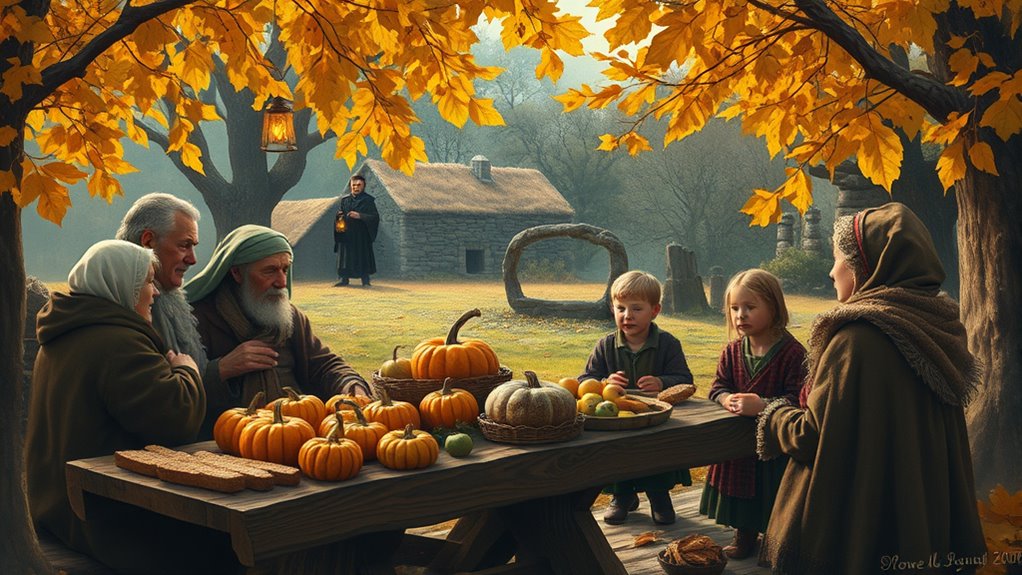

In Irish folk tradition, the púca or puck plays a key role in harvest customs, symbolizing both bounty and unpredictability. People offer food and light fires to honor land spirits, hoping for a plentiful season ahead. Festivals filled with music and dance celebrate these beliefs, reinforcing community bonds and respect for nature’s unseen forces. To understand more about how these customs connect to the puck’s stories and their lasting significance, keep exploring this rich cultural tapestry.
Key Takeaways
- The Púca is a mischievous fairy linked to Irish harvests, representing both bounty and unpredictability.
- Offerings like food and lighting fires are made to appease the Púca and land spirits during festivals.
- Harvest festivals feature music, dance, and communal feasts, honoring spirits and expressing gratitude for crops.
- Customs reinforce community bonds and spiritual respect, emphasizing harmony with land spirits influencing nature.
- These folk beliefs and rituals have persisted, highlighting the land’s sacredness and cultural importance across generations.
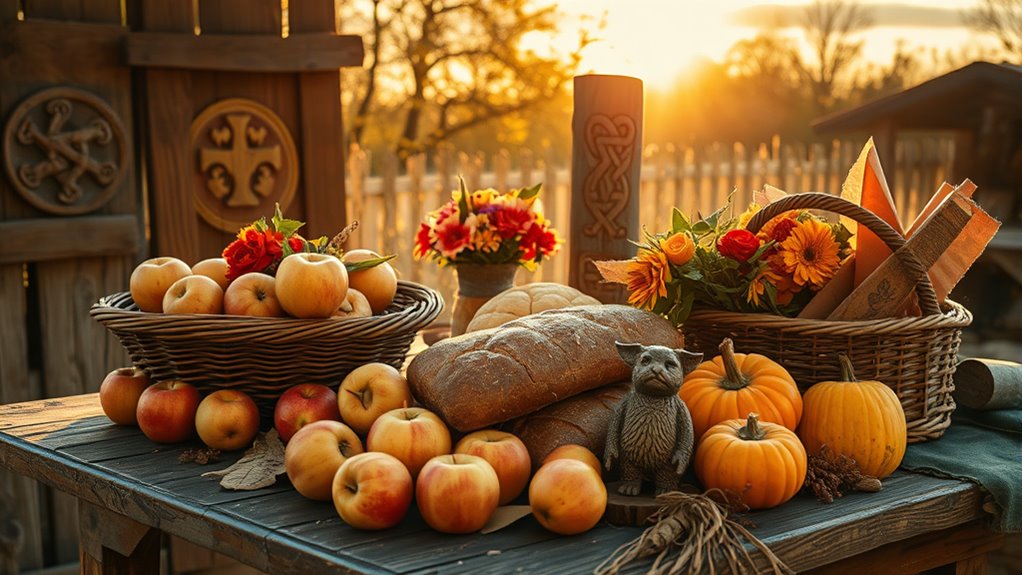
Have you ever wondered how cultures celebrate the bounty of the harvest season? Across the globe, people come together to honor the land’s gifts through various customs and folk beliefs. In Ireland, puck folklore plays a significant role in these celebrations. The puck, a mischievous fairy creature, is often associated with the harvest, embodying both the bounty and the unpredictable nature of nature’s gifts. During harvest festivals, tales of the puck remind communities to respect the land and its spirits, believing that the fairy’s favor could bring a plentiful harvest or a harsh winter if ignored. These stories aren’t just entertainment; they serve as moral lessons to honor nature’s balance. In many Irish harvest festivals, offerings are made to appease the puck and other local spirits, ensuring a good harvest for the next year. This tradition highlights the deep-rooted belief that the land is alive with spirits that influence human fortune.
Harvest festivals themselves are vibrant events, often marked by lively music, dance, and communal feasts. They serve as a way to give thanks for the crops and to celebrate the hard work of farmers and everyone involved in food production. These festivals are more than just parties; they are a reflection of centuries-old folk beliefs that acknowledge the land’s spiritual presence. In some regions, people participate in rituals like offering food or lighting fires to honor the spirits that protect the crops. These customs reinforce the idea that harvest time isn’t just about gathering food but also about maintaining harmony with the unseen forces believed to govern nature’s cycles. Such traditions foster a sense of community and remind everyone of their dependence on the land’s generosity.
Throughout history, these customs have persisted because they connect people to their environment and to each other. Whether it’s through storytelling, symbolic offerings, or communal celebrations, harvest festivals honor the land’s bounty while respecting the mysterious forces believed to influence it. The puck folklore and other folk beliefs serve as cultural touchstones, reminding us that the harvest is as much about spiritual gratitude as it is about physical abundance. By participating in these customs, you’re joining a long-standing tradition that recognizes the land’s sacredness and the importance of living in harmony with nature’s rhythms. So, next time you hear about harvest festivals, remember that beneath the festivities lies a rich tapestry of stories and beliefs that have shaped cultural identities for generations.
Frequently Asked Questions
How Did the Púca Originate in Irish Folklore?
You might find that the púca originates in Irish folklore as a shape-shifting spirit, often linked to the fairy world. Its origins are rooted in ancient Celtic beliefs, where it represented both mischievous and protective forces. The púca’s origins reflect Ireland’s rich tradition of storytelling, blending mythology and nature. This creature’s presence in folklore highlights historical fears, respect for nature, and the importance of honoring customs to keep balance with the supernatural world.
Are There Modern Festivals Celebrating the Púca?
You might stumble upon modern celebrations that honor púca folklore, especially around Halloween or harvest festivals, where costumes and storytelling bring the myth alive. These festivals often blend tradition with contemporary fun, keeping the púca’s mysterious nature alive. Coincidentally, such events remind us how folklore continues to shape community spirit and cultural identity today, connecting past beliefs to present-day celebrations. Embrace these festivities to experience the púca’s enduring legacy firsthand.
You’ll notice púca symbols like twisted branches, masks, and animal motifs in harvest rituals. These symbols often represent the púca’s mysterious nature and connection to the land. During harvest offerings, people leave items like grains, apples, and small figurines inspired by púca imagery to honor the spirit. These symbols and offerings aim to invite good fortune, protect crops, and acknowledge the púca’s role in local folklore.
How Do Different Regions Interpret the Púca’s Role in Harvest?
Like a chameleon blending into its surroundings, regional variations shape how you see the púca’s role in harvest. In some areas, folk influence casts the púca as a mischievous spirit that tests farmers’ luck, while elsewhere, it’s seen as a guardian of the harvest or a bringer of good fortune. These differing interpretations reflect the rich tapestry of folklore that colors each community’s understanding of this mysterious creature.
Are There Specific Foods Traditionally Offered to the Púca?
You might offer foods like bread, milk, or sweet treats to the púca, as part of offerings customs rooted in folk belief. These foods hold food symbolism, representing respect and gratitude for the púca’s role in the harvest. When you make these offerings, it’s believed to guarantee good fortune and harmony, strengthening your connection with local traditions and honoring the mystical creature during harvest celebrations.
Conclusion
As you walk through these ancient harvest traditions, you’re stepping into a tapestry woven with whispers of the púca and the spirits that dance in the shadows. These customs aren’t just rituals; they’re the heartbeat of a land alive with stories and secrets. Embrace the magic lingering in the air, for in every gesture and belief, the echoes of forgotten worlds call out, inviting you to keep the legend alive long after harvest’s end.