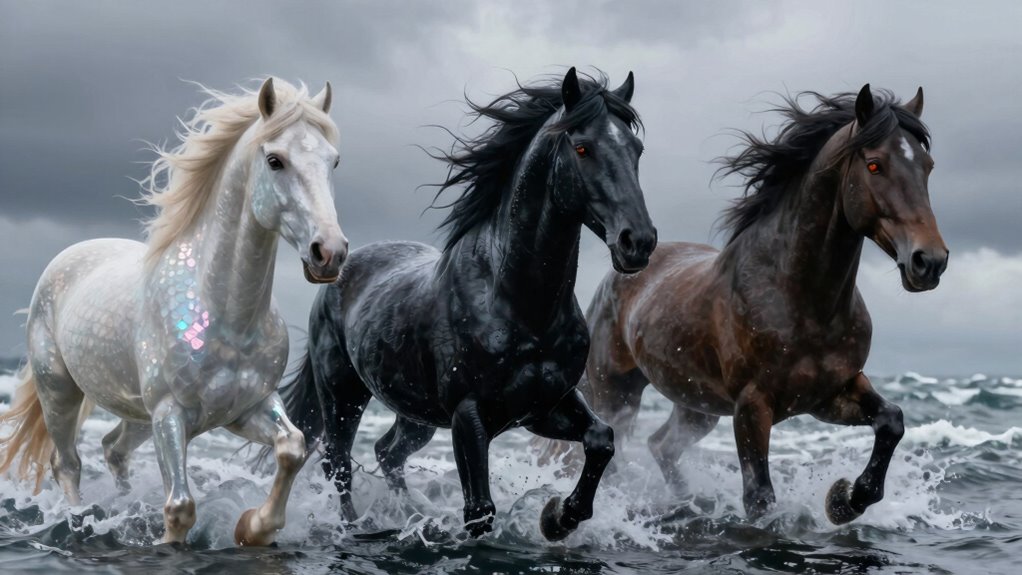
Comparing Each-Uisge, Kelpie, and other dangerous water horses, you’ll see they all embody fears and respect for water’s power. The Kelpie, from Scottish tales, is a shape-shifting horse that can be deadly, warning travelers of water dangers. The Each-Uisge from Scottish folklore is a shape-shifter too, often appearing as a beautiful horse or a human, and represents water’s unpredictable and dangerous aspects. If you explore further, you’ll uncover how these creatures reflect different cultures’ views on water’s mystery and menace.

Get school and study supplies delivered free — and shop member deals
- Fast, free delivery on millions of items
- Access to Prime Big Deal Days deals on October 6–7
- Prime Video, Amazon Music and more included
Key Takeaways
- Each-Uisge, Kelpie, and similar water horses are mythological creatures symbolizing water’s allure and danger across different cultures.
- Kelpie originates from Scottish folklore, often depicted as a shape-shifting, perilous horse near lakes and rivers.
- Each-Uisge, from Scottish legend, is a deadly water spirit that lures victims to drown, emphasizing water hazards.
- Hippocampus, from Greek mythology, is a divine, majestic sea creature symbolizing strength, grace, and the mystical ocean.
- These creatures reflect cultural fears, reverence, and admiration for water’s power, with Kelpie and Each-Uisge emphasizing danger, and Hippocampus representing divine beauty.
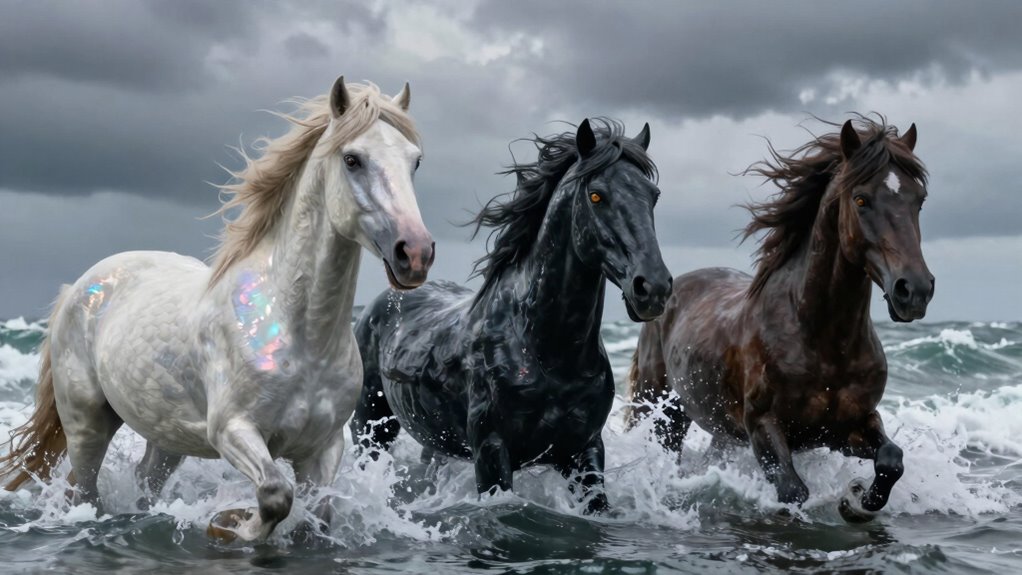
Have you ever wondered how different water horses, like the legendary kelpie and the mythic hippocampus, compare? These creatures come from rich mythological traditions and serve powerful symbolic roles in their respective cultures. The Kelpie, originating from Scottish folklore, is often depicted as a shape-shifting horse that appears near lakes and rivers. Its mythical origins are rooted in stories meant to warn people about the dangers of water, especially for children and travelers. Culturally, the kelpie embodies both allure and menace—beautiful yet deadly—symbolizing the unpredictable nature of water itself. Its myth serves as a cautionary tale, reminding people to respect the power of the natural world. The kelpie’s dark, mysterious presence in Scottish stories also reflects local fears and reverence for water spirits, blending folklore with social values. Interestingly, these stories often emphasize the symbolic significance of water, highlighting its dual nature as both life-giving and threatening. This duality underscores how societies have historically viewed water as a force requiring respect and caution.
In contrast, the hippocampus, from Greek mythology, holds a different symbolic significance. It’s often depicted as a majestic, winged horse with the upper body of a horse and the tail of a fish. Its mythical origins trace back to ancient Greece, where it was associated with gods like Poseidon and linked to the sea’s divine domain. Unlike the kelpie, which is primarily a cautionary figure, the hippocampus symbolizes grace, strength, and the mystical connection between land and sea. Its cultural symbolism emphasizes navigation, power, and the divine aspect of water creatures. The hippocampus appears in Greek art and literature as an emblem of the sea’s beauty and mystery, a creature that embodies the harmony between the terrestrial and aquatic worlds. The mythological symbolism of water reflects broader themes of divine intervention and the awe-inspiring power of nature.
While the kelpie’s folklore often evokes fear and respect, the hippocampus inspires awe and admiration. The kelpie’s shape-shifting abilities and dangerous reputation highlight the unpredictable, sometimes treacherous nature of water, warning humans to stay cautious. The hippocampus, on the other hand, signifies a majestic, almost divine presence, representing the sea’s mystique and the human desire to understand and honor its depths. Both creatures exemplify how water horses serve as cultural symbols, reflecting the values, fears, and reverence societies hold for water. Their mythical origins give them a timeless appeal, shaping stories that continue to resonate today, whether as warnings or symbols of divine beauty and power.
mythological water horse figurine
As an affiliate, we earn on qualifying purchases.
As an affiliate, we earn on qualifying purchases.
Frequently Asked Questions
Are Water Horses Based on Real Animals or Myths?
Water horses are based on myths, not real animals. Their mythical origins come from legends that depict them as dangerous, shape-shifting creatures. You’ll find these stories often reflect cultural symbolism, representing fears or nature’s power. While they may seem real in stories, there’s no evidence they exist outside of myth. These legends serve to teach lessons or symbolize natural forces, making them fascinating parts of cultural folklore.
How Are Water Horses Featured in Different Cultures?
Water horses feature prominently in different cultures as mythical creature origins that symbolize various fears and beliefs. In Scottish folklore, the Kelpie embodies danger and seduction, while in Welsh tales, similar water spirits represent mystery and transformation. These creatures serve as cultural symbolism for nature’s unpredictability and the importance of respecting water. You see how these stories reflect community values, fears, and respect for the natural world.
What Are Common Legends Associated With Each Creature?
You hear tales of water horses with mythical origins and deep cultural symbolism, where legends warn of their danger. Each features stories of luring travelers, dragging them into watery graves, or testing bravery. These myths evoke fear and fascination, highlighting their role as guardians or punishers. Whether as cursed spirits or wise creatures, their legends serve as warnings, reflecting cultural values and fears about the mysterious depths of water.
Can Water Horses Be Kept as Pets or Are They Purely Mythical?
Water horses are purely mythical creatures and can’t be kept as pets. Their symbolism often represents danger, mystery, and the wild, untamed aspects of water in various mythic stories. As mythical creature representations, they embody the fears and fascination humans have with water’s unknown depths. While enchanting in stories and legends, they exist only in folklore, so you can’t truly keep a water horse as a pet.
How Do Stories of Water Horses Influence Local Folklore?
Stories of water horses dramatically shape local folklore, turning peaceful lakes into domains of mystery and danger. You might believe they symbolize nature’s wildness or serve as cautionary tales. These tales evolve over centuries, amplifying their mythic status and embedding water horse symbolism deep into cultural identity. As a result, folklore evolves, blending fear, fascination, and respect, making water horses legendary guardians or fearsome monsters that forever haunt local memories.
As an affiliate, we earn on qualifying purchases.
Conclusion
So, whether you’re captivated by the eerie allure of each-uisge, the cunning kelpie, or the dangerous water horses, remember they each carry their own dark charm. These mythical creatures remind us to respect nature’s mysteries—and maybe keep your phone handy, just in case you need to call a modern-day hero. After all, even in a world with Wi-Fi, some legends still lurk beneath the water’s surface, waiting to surprise you. Stay curious, and stay safe!
As an affiliate, we earn on qualifying purchases.
As an affiliate, we earn on qualifying purchases.
Halloween Picks
halloween
As an affiliate, we earn on qualifying purchases.