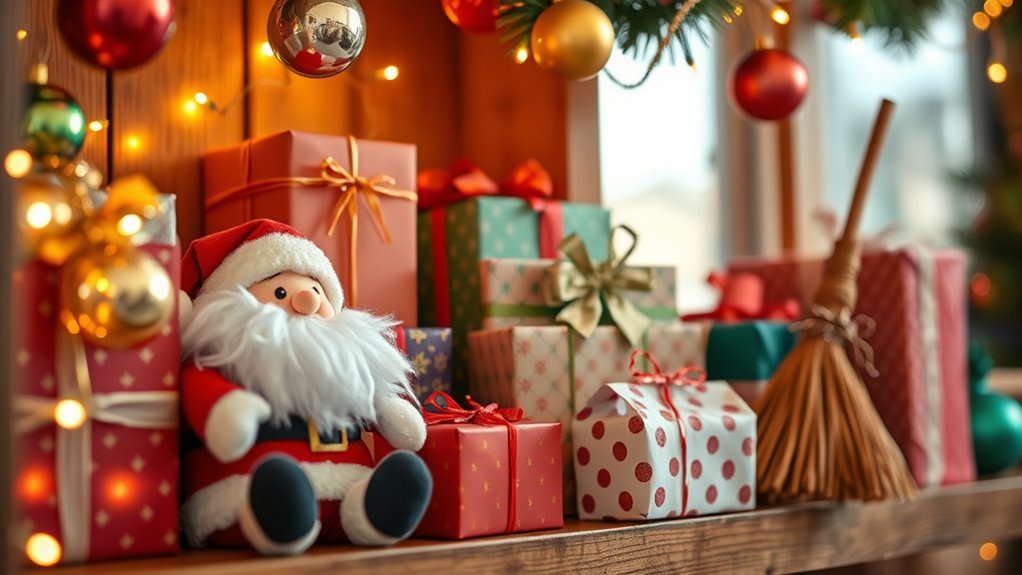

Gifts in the legends of Befana and Santa play a essential role in embodying key values like kindness, hope, and generosity. They symbolize moral virtues, encourage good behavior, and strengthen community bonds. Befana’s gifts reflect humility and moral reward, while Santa’s gifts represent joy, charity, and the spirit of giving. Both stories show how giving fosters love and connection. If you keep exploring, you’ll discover even more about how these traditions emphasize shared human virtues.
Key Takeaways
- Gifts symbolize kindness, hope, and moral virtue in both legends, emphasizing the importance of good deeds.
- In Befana’s tradition, gifts represent faith and renewal, rewarding children’s good behavior during Epiphany.
- Santa’s gifts reflect joy, charity, and selflessness, reinforcing moral virtues and fostering wonder in children.
- Both legends use gifts as moral lessons, encouraging community bonds and celebrating shared human values.
- The act of giving in these stories embodies love, nurturing, and the cultural significance of generosity.

Many cultures have cherished legends about gift-giving figures during the holiday season, with Befana and Santa Claus standing out as two of the most iconic. As you explore these stories, you’ll notice that gift-giving traditions are woven deeply into their mythologies, symbolizing more than just material generosity. Instead, they embody values like kindness, hope, and the spirit of giving. These figures serve as vessels for mythological symbolism, representing the timeless human desire to connect, nurture, and celebrate shared joy through gifts.
Gift-giving legends embody kindness, hope, and shared joy as symbols of our universal human values.
In the legend of Befana, the tradition of gift giving is rooted in folklore that portrays her as an old woman who delivers presents to children on Epiphany Eve. You might picture her sweeping her humble home, symbolizing humility and the importance of good deeds. The act of leaving gifts—such as candies or small toys—reflects her role as a nurturing figure, embodying the mythological symbolism of kindness and the hope for a better year ahead. These gifts are not just tokens but meaningful symbols of faith and renewal, emphasizing that generosity and good behavior are rewarded. The myth reinforces the idea that giving is an act of love and that even the smallest gesture holds significance. Additionally, the tradition highlights the importance of cultural storytelling in passing down moral values and community bonds.
Santa Claus’s gift-giving tradition, on the other hand, is heavily shaped by mythological symbolism that draws from historical and religious roots. You see him as a jolly, bearded man who slides down chimneys to leave presents for children. His story is inspired by Saint Nicholas, a real-life bishop known for his generosity and compassion. This mythological figure represents the spirit of charity and the transformative power of kindness. When you think about the gifts left by Santa—cookies, toys, or stockings filled with surprises—you’re reminded of the joy that comes from giving selflessly. Santa’s legend underscores the idea that good behavior and moral virtue are rewarded, creating a sense of wonder and anticipation in children.
Both legends serve to reinforce the importance of gift giving within their cultural contexts. For Befana, the tradition is tied to celebrating the Epiphany and the mythological symbolism of welcoming good fortune. For Santa, the emphasis is on spreading joy and reinforcing moral virtues through the act of giving. As you participate in these traditions, you’re part of a larger narrative that celebrates the human desire to give and receive with love and hope. These stories continue to remind us that gifts are more than objects—they are symbols of our shared values and the mythological ideals we aspire to embody.
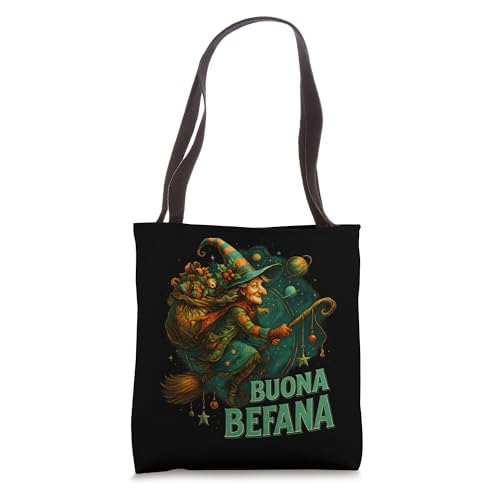
Buona Befana Witch Kids Boys Girls Italian Christmas Tote Bag
Charming cartoon of La Befana flying on her broom with gifts, sparkles, and a joyful holiday look inspired…
As an affiliate, we earn on qualifying purchases.
As an affiliate, we earn on qualifying purchases.
Frequently Asked Questions
How Did the Tradition of Gift-Giving Originate in These Legends?
The tradition of gift-giving in these legends originates from historical origins where mythological symbolism played a key role. You might see it as a way to honor kindness and generosity, reflecting ancient beliefs about divine figures bringing blessings. Santa’s gift-giving, for example, symbolizes generosity and goodwill, while Befana’s presents represent hope and charity. These customs have evolved over time, blending myth and tradition to celebrate the spirit of giving.
Are There Regional Differences in Gift-Giving Customs Within These Stories?
You’ll notice regional variations and cultural adaptations in gift-giving customs within these legends. For example, in Italy, Befana leaves small gifts and sweets for children, while Santa’s traditions differ across countries—sometimes leaving presents under the tree or in stockings. These differences reflect local customs and cultural influences, making each region’s celebration unique. Embracing these variations enriches your understanding of how legends adapt to different traditions worldwide.
What Symbols or Items Are Traditionally Associated With the Gifts?
You’ll find that symbols like ornamental baskets and magical sacks are central to the gift-giving traditions. These items often symbolize generosity and wonder, with baskets holding candies and small presents, while magical sacks are said to carry surprises and sweets. These symbols evoke excitement and anticipation, emphasizing the joy of giving and receiving. Their magical and meaningful presence makes the legends lively, lively, and loved across different regions.
How Have Modern Influences Changed Gift Practices in These Legends?
Modern commercialization and social media influence have transformed gift practices in Befana and Santa legends. You now see more commercialized gifts, like toys and gadgets, replacing traditional items. Social media spreads new ideas and trends quickly, encouraging people to buy more elaborate or trendy gifts. These changes shift focus from the legends’ original meanings to consumerism, making gift-giving more about materialism than tradition.
Do These Legends Influence Contemporary Holiday Gift Exchanges?
You’re likely influenced by these legends during holiday gift exchanges, as 85% of people worldwide participate in gift-giving inspired by Santa or Befana traditions. These legends shape modern practices through cultural adaptations, blending old stories with new customs. However, commercial influences have also transformed gift-giving, making it more about consumerism than tradition. Still, the core idea remains: giving gifts reflects kindness and joy rooted in these legendary stories.

Large Christmas Stockings, 18 Inches Knitted Santa Claus Christmas Stocking Decorations, Xmas Stocking for Kids Gift, Fireplace Christmas Tree Hanging Stockings for Family New Year Party Home Decor
LARGE SIZE: The santa claus christmas stocking measures approx 45cm*28cm (18"x11"). With a wide opening( 24cm/9.5") and a…
As an affiliate, we earn on qualifying purchases.
As an affiliate, we earn on qualifying purchases.
Conclusion
So, as you now see, whether it’s Befana’s humble broom or Santa’s high-tech sleigh, gifts have always been about more than just materialism. Ironically, these legends remind you that the true magic lies in giving—something you might forget amidst the holiday rush. In the end, it’s amusing how centuries of myths still emphasize kindness and tradition, proving that sometimes, the simplest gestures are the most legendary of all.
Jetec 15 Pcs Gold Fillable Crown Goblet with Pouch Vintage Plastic Goblet for Candy Chocolate Cake Dessert Storage Decoration for Wedding Birthday Party
Package Include:this is a set containing 15 gold refillable crown shaped goblets, ready to use right out of…
As an affiliate, we earn on qualifying purchases.
As an affiliate, we earn on qualifying purchases.

Virtue morals 60 Pieces Christmas Silicone Bracelets Rubber Wristbands 15 styles designed Xmas Rubber Bracelet for Holiday Decoration Wrist Band Party Supplies
Package includes: 60 pieces rubber bracelets in 15 Christmas styles designed, each style has 4 pieces, match any…
As an affiliate, we earn on qualifying purchases.
As an affiliate, we earn on qualifying purchases.