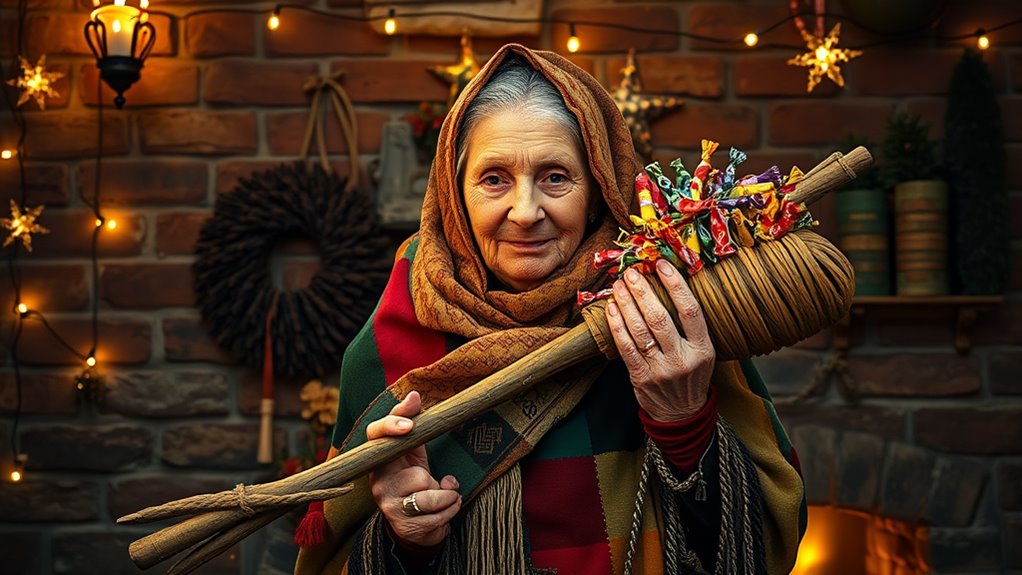

The Italian Befana is a legendary witch who brings gifts to children on Epiphany, blending ancient pagan rituals with regional celebrations. She’s often depicted as an old woman with a crooked nose, pointed hat, and broomstick, symbolizing kindness and magic. Traditionally, children leave out stockings with treats for her donkey, hoping for candies or small presents in return. To discover more about her fascinating history and regional customs, keep exploring her enchanting story.
Key Takeaways
- The Befana is a folkloric witch who delivers gifts to children on Epiphany Eve in Italy.
- She is depicted as an old woman with a crooked nose, pointed hat, and broomstick.
- Her legend dates back to pre-Christian times and has evolved into a symbol of generosity and childhood magic.
- Italian regions celebrate her with processions, markets, and children leave treats like carrots for her donkey.
- The Befana embodies warmth, kindness, and festive spirit, integral to Italy’s Epiphany traditions.
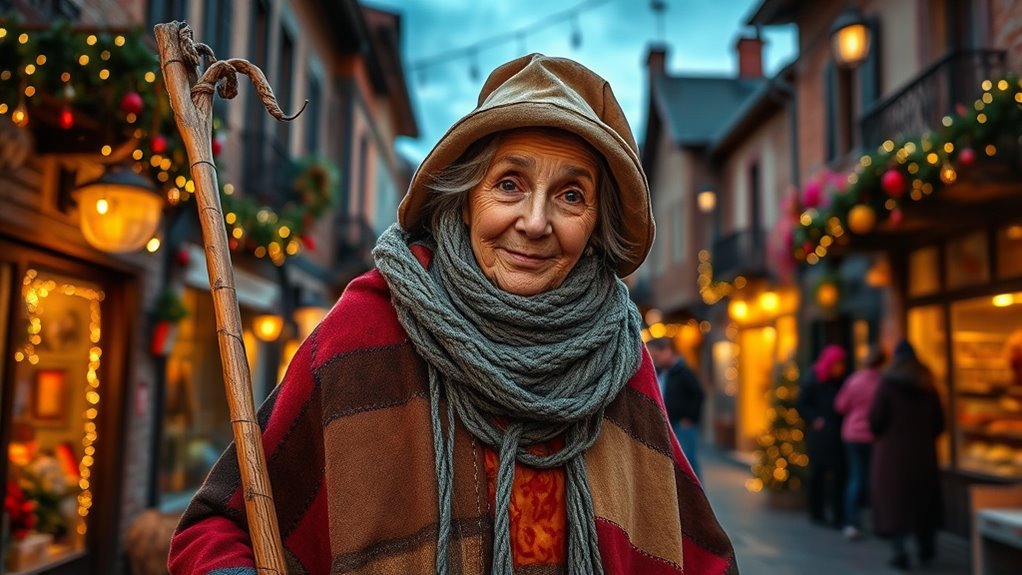
Have you ever wondered who the Italian Befana is and why she’s such a beloved figure during the Epiphany celebrations? The story of the Befana has deep roots that stretch back centuries, with historic origins blending folklore, legend, and cultural traditions. It’s believed that her story dates back to pre-Christian times, evolving over the centuries into the special figure children and families celebrate today. The legend speaks of a kindly witch who rides a broomstick, bringing gifts and sweets to children who have been good, and coal or onions to those who haven’t. This tradition is uniquely Italian, and regional customs have shaped how people honor her across Italy.
In many regions, the story of the Befana is intertwined with local legends and customs. In northern Italy, for example, towns often have lively processions and markets on the night of January 5th, where children ardently await her visit. They leave out stockings filled with carrots and water for her donkey, hoping she’ll fill them with candies or small presents. Down south, especially in Sicily and Naples, the festivities are even more vibrant, with parades, fireworks, and street performances. These regional traditions give each community its own flavor, but the core story remains consistent: the Befana is a symbol of kindness, generosity, and the magic of childhood.
The historic origins of the Befana are somewhat debated, but many believe her figure is connected to ancient pagan rituals celebrating the winter solstice, repurposed over time into a Christian legend. Some think she’s linked to the Roman goddess Strenia, associated with New Year’s gifts, while others see her as a representation of the good witch archetype. Over the centuries, the church integrated her story into Epiphany celebrations, turning her into a symbol of the holiday that marks the visit of the Three Wise Men to the baby Jesus.
Today, the tradition persists, especially in small towns and villages, where children passionately await her arrival. The image of the Befana — a kind, old woman with a crooked nose, a pointed hat, and a broom — is a cherished part of Italian cultural identity. Whether through story, parades, or gift-giving, she continues to embody the warmth and magic of the Epiphany, connecting generations through a shared sense of wonder rooted in history and regional customs.
Frequently Asked Questions
What Is the Origin of the Befana Legend?
The legend of Befana has deep folkloric origins rooted in Italian tradition, dating back to ancient times. You’ll find her story intertwined with the historical roots of Epiphany celebrations, where she’s believed to bring gifts to children. According to folklore, she’s a kind witch who searches for the Christ child, offering gifts in hopes of forgiveness. Her story blends myth, religious symbolism, and cultural history, creating a beloved Italian tradition.
How Has the Befana Tradition Evolved Over Centuries?
You’ve watched this festive folklore evolve from a humble, broom-riding witch to a symbol of generosity and mystery. Over centuries, the Befana’s story has absorbed cultural symbolism, blending pagan traditions with Christian beliefs. She now embodies holiday cheer, with children enthusiastically awaiting her gifts. Her role has shifted from a fearsome figure to a beloved part of Italy’s cultural tapestry, making her a whimsical reminder of history’s playful transformation.
Are There Regional Differences in Celebrating the Befana?
Yes, you’ll notice regional variations in celebrating the Befana across Italy. In some areas, you’ll find lively parades and street festivals, while others focus on quiet family traditions. Local customs influence how you might see Befana’s portrayal, from different costumes to unique sweets and gifts. These regional differences add charm and diversity to the celebration, making each community’s way of honoring the Befana uniquely special.
What Symbols Are Associated With the Befana?
You’ll notice that symbols like broomsticks and soot are associated with the Befana, highlighting her witch-like qualities. Festive decorations such as stars and stockings are also common, creating a joyful atmosphere. Symbolic gifts, like candies and small toys, are left in children’s stockings or shoes, emphasizing the tradition’s playful and generous spirit. These symbols help bring the story of Befana to life during Epiphany celebrations.
How Is the Befana Celebrated in Modern Italy?
In modern Italy, you celebrate Befana by baking traditional treats like sweet bread and cookies, often shaped into stars or broomsticks. Kids hang stockings for her to fill with candies and small gifts. You’ll see towns decorated with festive motifs, such as stars and broomsticks, and participate in parades and markets. It’s a joyful time that blends tradition with community spirit, making the holiday lively and memorable.
Conclusion
So, next time you curse that strange old woman dropping candies from the sky, remember, she’s just Italy’s version of Santa’s grumpy aunt. The Befana may be a witch, but at least she’s got style—flying around on her broom and handing out goodies. Who needs Santa’s sleigh when you’ve got a flying, candy-giving, slightly creepy old lady? Embrace the chaos—after all, it’s all part of Italy’s charmingly bizarre holiday charm.