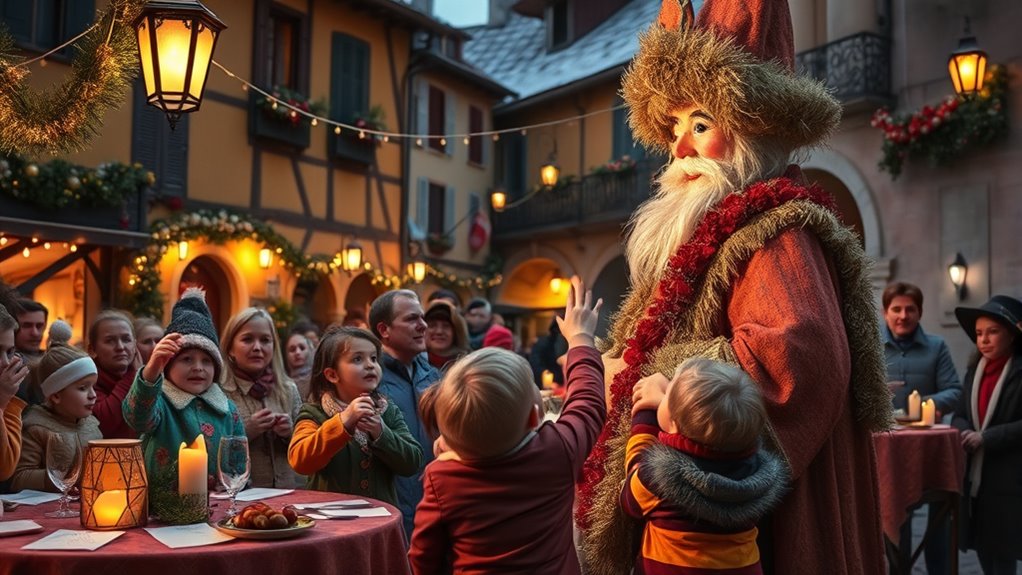
Celebrating Befana involves enjoying Italy’s lively Epiphany traditions, where children wake up on January 6th to find shoes filled with sweets, chocolates, and small gifts left by the kind witch. Towns host colorful parades, street performances, and craft markets, creating a joyful festive atmosphere. Many communities organize special events like runs, workshops, and nighttime processions, with people dressing as Befana. To discover more about these charming customs and their rich cultural roots, keep exploring the traditions behind Italy’s beloved holiday.
Key Takeaways
- Children leave shoes filled with treats on January 5th for Befana to fill overnight.
- Festivities include colorful parades, street performances, and markets celebrating the witch’s legend.
- Communities organize Befana-themed events like runs, craft workshops, and nighttime processions.
- The tradition symbolizes kindness, generosity, and the magic of childhood rooted in Italy’s folklore.
- Educational activities and cultural events help preserve and share the legend’s historical and cultural significance.
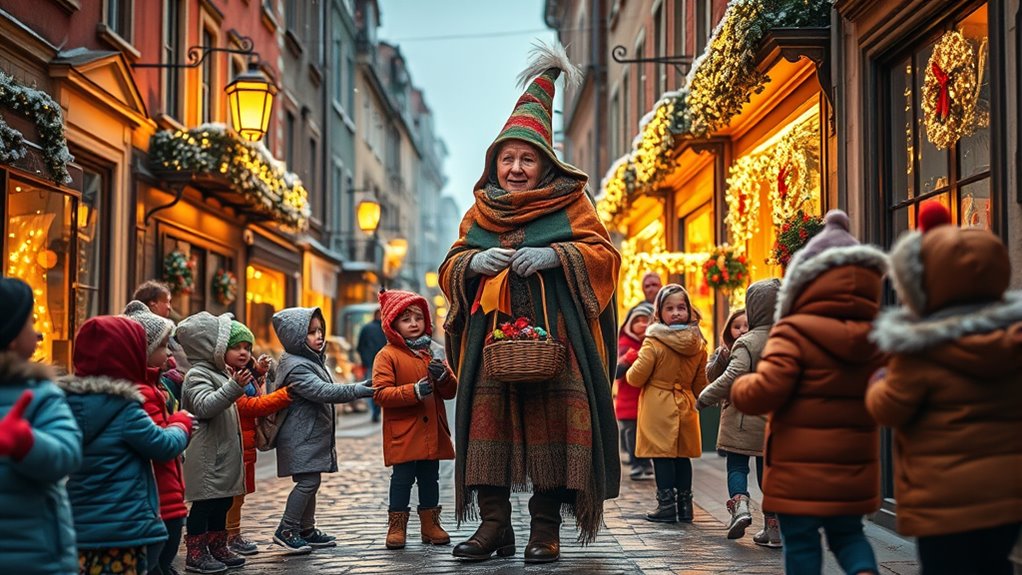
Befana is a beloved Italian tradition that celebrates the arrival of a kind witch bringing gifts and sweets to children on the night of January 5th. This charming custom has deep roots in Italy’s history and folklore, blending ancient beliefs with contemporary festivities. The historical origins of Befana trace back centuries, with stories that intertwine with the Christian holiday of Epiphany, which marks the visit of the Magi to the Baby Jesus. Over time, local legends evolved, and Befana became a symbol of goodwill and generosity. According to popular tales, she was a kindly old woman who, upon seeing the Wise Men follow the star, decided to join their journey, only to be lost and wandering ever since, bringing gifts to good children in hopes of finding her way to the Christ child.
Befana, the kind witch of Italy, brings gifts on Epiphany, symbolizing goodwill and holiday cheer.
Today, these historical origins are celebrated through a variety of modern customs across Italy. In many towns and cities, children wake up on January 6th to find their shoes filled with sweets, chocolates, and small presents, left overnight by Befana herself. The tradition encourages children to be well-behaved in hopes of receiving a reward, much like Santa Claus in other cultures. Markets and festivals dedicated to Befana take place in numerous regions, where you’ll see colorful parades, street performers, and artisans selling traditional treats and crafts. In these gatherings, towns often recreate the festive atmosphere that has persisted for generations, blending historical storytelling with lively celebrations. Additionally, somatic therapy techniques are sometimes used to help individuals process the emotional significance of holiday traditions and memories.
In recent years, modern celebrations of Befana have expanded beyond traditional customs. Local communities organize events like Befana-themed runs, craft workshops, and nighttime processions, where participants dress up as the witch or other characters. Schools and cultural centers often host educational activities, teaching children about the legend’s origins and significance. The modern festivities also emphasize community spirit, bringing families and neighbors together to enjoy shared meals, music, and dance. Despite the evolution of these celebrations, the core idea remains the same: honoring a figure who embodies kindness, generosity, and the magic of childhood.
Whether through traditional gift-giving, lively festivals, or community events, you’ll find that celebrating Befana connects you with Italy’s rich history and vibrant culture. It’s a delightful way to mark the end of the holiday season, embracing both ancient legend and contemporary joy. As you participate in these festivities, you’ll experience firsthand how Italy keeps its folklore alive, transforming centuries-old stories into lively, modern traditions that continue to enchant generations.

California Costumes Adult Mona List Kit Costume
Inflatable Picture Frame, Printed Picture
As an affiliate, we earn on qualifying purchases.
As an affiliate, we earn on qualifying purchases.
Frequently Asked Questions
How Did the Befana Tradition Originate Historically?
You might find that the Befana tradition originates from ancient Italian folklore, blending pagan and Christian beliefs. Historically, it’s linked to the Epiphany, symbolizing the Wise Men’s journey to visit baby Jesus. The cultural significance lies in celebrating the end of Christmas, where Befana, a kind witch, delivers gifts and sweets to children. This tradition reflects Italy’s rich history, emphasizing kindness, generosity, and the blending of spiritual and folk customs.
Are There Regional Differences in Celebrating Befana Across Italy?
Imagine the Befana as a colorful mosaic—each region adds its unique tile. You’ll find regional customs and costumes that vary across Italy, from the lively celebrations in Rome to the rustic traditions in Sicily. In some areas, children wait for the Befana with sweet treats, while others emphasize folkloric dances. These regional differences enrich the holiday, making each celebration a vibrant reflection of local history and culture.
What Are Typical Foods Eaten During Epiphany in Italy?
During Epiphany in Italy, you’ll enjoy sweet pastries like galette or ciambelle and indulge in festive candies such as marzipan and chocolate figurines. These treats symbolize joy and abundance, making the celebration even more special. You might find regional variations, but sharing these delicious foods with friends and family is a cherished tradition. So, savor the sweet pastries and festive candies, and embrace the warmth of Italian Epiphany celebrations.
How Do Children Prepare for the Befana Visit?
You prepare for the Befana visit by leaving out your children’s gifts, like small toys or sweets, to welcome her. Kids often wear colorful Befana costumes, complete with pointy hats and broomsticks, to celebrate her arrival. They also leave out stockings or shoes, hoping she fills them with treats. To get ready, children tidy up their homes and maybe even leave a glass of wine or traditional treats for her.
Are There Modern Adaptations to Traditional Befana Celebrations?
Yes, modern adaptations of Befana celebrations include digital festivities and social media sharing. You might watch live-streamed parades, participate in online gift exchanges, or share photos and videos of your decorations and traditions. These updates help you stay connected with family and friends, especially if you’re apart. Embracing technology makes the holiday more interactive and accessible, blending centuries-old customs with contemporary ways to celebrate the beloved Italian tradition.

Tuscanini Italian Gianduiotti Chocolate, 4.2 | Imported from Italy | Vegan, Gluten Free, Dairy Free | Hazelnut Chocolate | Individually Wrapped Italian Chocolates
Authentic Italian Indulgence – Traditional Gianduiotti chocolates crafted in Italy, blending smooth chocolate with finely ground hazelnuts for…
As an affiliate, we earn on qualifying purchases.
As an affiliate, we earn on qualifying purchases.
Conclusion
As you embrace the enchanting tradition of Befana, you’ll find yourself swept away in a whirlwind of magic and history that’s truly unparalleled. This beloved Italian custom isn’t just a celebration; it’s a gateway to a world where folklore dances with reality, and every gift and sweet is a token of timeless wonder. By participating, you open a secret portal to Italy’s most mesmerizing Epiphany festivity—an experience so extraordinary, it’ll linger in your heart forever.
Befana shoe filled with treats
As an affiliate, we earn on qualifying purchases.
As an affiliate, we earn on qualifying purchases.

LAONIU Christmas Befana Merry Gift Snowflake Welcome Flag Outdoor Outside Holiday Party Decorations Ornament Home House Garden Yard Decor Double Sided 12.5 X 18 Small
As an affiliate, we earn on qualifying purchases.
As an affiliate, we earn on qualifying purchases.