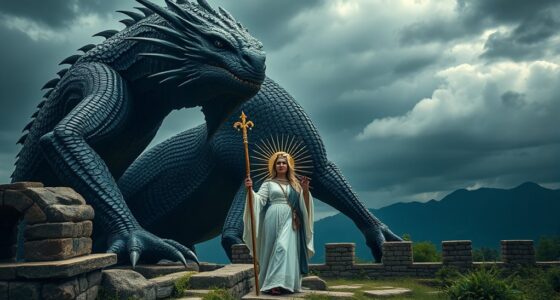
In Breton folklore, the Ankou is infamous for its chilling role in stories of body-snatching, often seen as a skeletal figure pulling a cart to collect souls. It symbolizes death’s grip and societal fears of desecration, embodying both fear and acceptance. Legends warn of its appearance at life’s end, highlighting the importance of respectful burial rites. To uncover more about this haunting figure and its cultural significance, keep exploring these eerie stories.
Key Takeaways
- The Ankou is linked to stories of body-snatching and fears of desecration in Breton folklore.
- Legends depict the Ankou sometimes collecting unburied or stolen bodies, emphasizing societal anxieties.
- Body-snatching stories reflect fears of disrupting the natural order and disrespecting the dead.
- Tales serve as warnings to respect proper burial rites to avoid the Ankou’s wrath.
- The myth highlights the community’s struggle to understand death and protect sacred remains.

In Breton folklore, the Ankou is known as the Grim Reaper, a spectral figure that signals death and guides souls to the afterlife. This haunting figure embodies more than just the end of life; it carries deep cultural symbolism rooted in the region’s history and beliefs. You might imagine the Ankou as a tall, cloaked skeleton with a scythe, but its presence is far more than visual—it’s a powerful symbol that reflects the community’s understanding of mortality. The Ankou’s origins trace back centuries, with folklore suggesting it emerged from the collective consciousness of Breton villagers who sought to make sense of death’s mystery. Its folklore origins are intertwined with local stories that warn of its appearance, often at the end of the year or during times of crisis, emphasizing the cycle of life and death that shapes Breton cultural identity. Additionally, its cultural symbolism reveals how communities process mortality and the importance of respecting the dead. As you explore its cultural symbolism, you realize that the Ankou is more than just a harbinger of death; it serves as a reminder of life’s transient nature. In Breton tradition, the Ankou’s role extends to collecting the souls of the deceased, often depicted as a skeletal figure riding a cart or pulling a hearse. This image is a stark reminder of mortality, woven into the fabric of local customs and beliefs. The figure’s presence in folklore origins is also linked to stories of body-snatching, where the Ankou is sometimes said to collect bodies not yet buried, fueling fears and superstitions. These stories symbolize societal anxieties about death and the importance of respecting the dead, reinforcing the idea that the Ankou is both a protector and a grim collector in the natural order. Understanding the Ankou’s cultural symbolism helps you grasp its significance in Breton culture—it’s a reminder that death is an inevitable part of life, woven into the community’s spiritual fabric. Its folklore origins reveal a community trying to comprehend the unknown and impose order on the chaos of death through stories and traditions. The concept of body-snatching, tied to fears of desecration and the importance of proper burial rites, adds a layer of complexity to its symbolism. The Ankou’s presence in legends reflects a collective effort to acknowledge mortality, encourage proper funeral practices, and foster respect for those who have passed. So, when you consider the Ankou, you’re looking at a figure that embodies both the fears and acceptance of death, deeply rooted in Breton cultural symbolism and folklore origins.
Frequently Asked Questions
What Is the Origin of the Ankou Legend?
You learn that the Ankou legend originates from Breton folklore, where it’s seen as a death omen and a ghostly encounter. It’s believed to be a spectral figure that signals impending death, often appearing before tragic events. The legend likely stems from ancient Celtic beliefs about spirits guiding souls or marking death’s arrival, creating a haunting presence that’s both feared and revered in local stories and ghostly encounters.
How Does the Ankou Choose Its Victims?
Imagine death’s shadow stretching over you like a silent, waiting specter. The Ankou chooses its victims through folklore symbolism, sensing the inevitable presence of death in a person’s life. It’s drawn to those nearing their end, guided by unseen forces that mirror ancient death symbolism. You don’t choose the Ankou; it chooses you, embodying the quiet, relentless march of mortality in Breton legend.
Are There Any Modern Sightings of the Ankou?
You won’t find concrete evidence of recent supernatural encounters with the ankou, as sightings remain rooted in folklore symbolism rather than verified events. Many believe it appears in local legends to remind us of mortality, but modern reports are scarce and often dismissed as myths. If you encounter stories of the ankou today, they typically serve as cultural reminders of death’s inevitability, not as literal sightings.
How Is the Ankou Depicted in Breton Folklore?
In Breton folklore, you see the Ankou depicted as a death symbol wielding a scythe, embodying the Grim Reaper’s role. This figure often appears as a tall, skeletal figure draped in dark robes, sometimes with a hollowed face or glowing eyes. Folklore imagery paints him as a harbinger of death, lurking at crossroads or on stormy nights, symbolizing the inevitable end and the cycle of life and death.
What Rituals Are Associated With the Ankou?
You participate in funeral traditions that honor the Ankou, often seeing it as a death omen. Rituals may include offerings or prayers to ward off its presence, especially during graveside rites. People believe the Ankou signals impending death, so they observe specific customs like lighting candles or reciting prayers to protect themselves. These rituals serve both as respect for the dead and as a way to interpret the Ankou’s ominous role in Breton folklore.
Conclusion
So, next time you see the Ankou lurking in the shadows, remember—you’re just part of his never-ending game of hide and seek. With a scythe in hand and a grin that could scare crows away, he’s got your number. Who needs Hollywood villains when Breton folklore delivers a grim reaper so charmingly eerie? Embrace it, or at least get comfortable knowing that, in Brittany, death’s got a very stylish, very sneaky mascot.