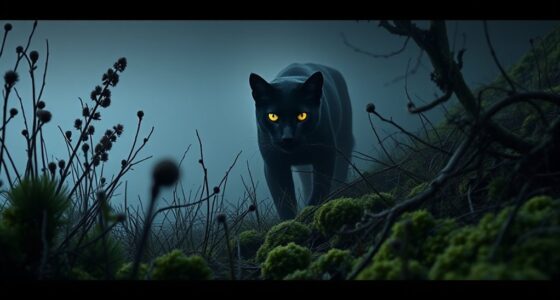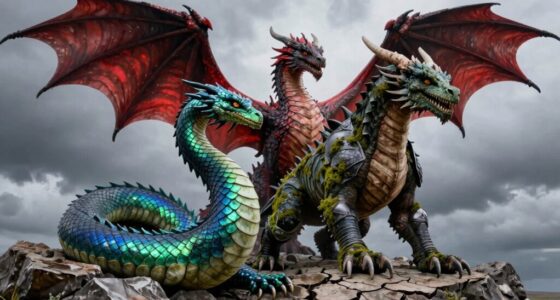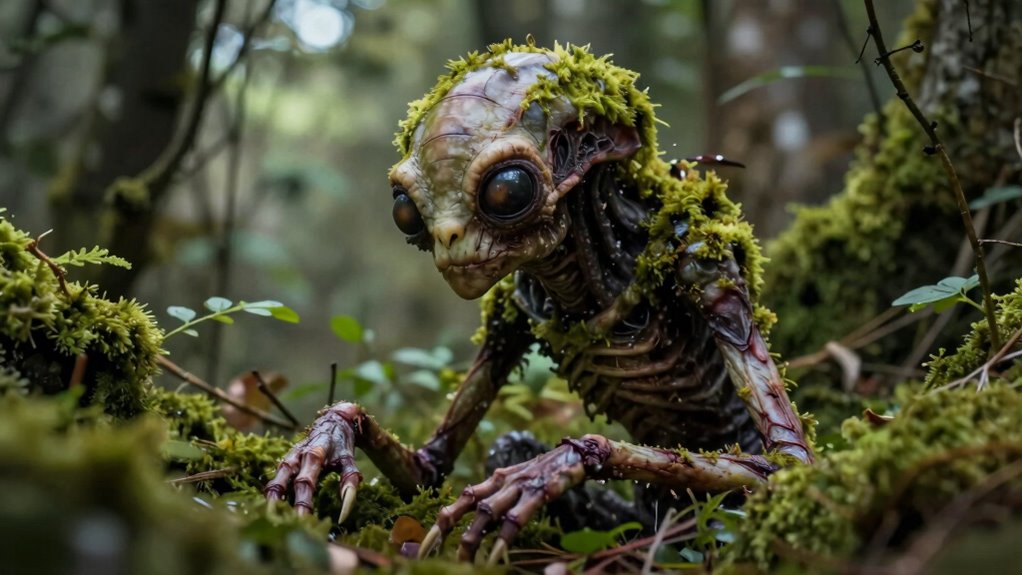

Unfamous monsters draw you in because they embody hidden fears, moral lessons, and cultural values often overlooked by mainstream tales. They tap into your curiosity about the unknown and remind you that stories can be more complex than simple evil or good. These creatures often symbolize societal anxieties and personal fears, making them deeply relatable. As you explore their origins and symbols, you’ll discover how these monsters reflect our collective psyche and evolve with time.

Prime made for students and young adults
- Fast, free delivery for dorm and study essentials
- Prime Video and Amazon Music included
- Member-only deals
Key Takeaways
- Unfamous monsters evoke curiosity by blending myth, folklore, and modern reinterpretation, creating a sense of mystery and intrigue.
- Their layered backstories reflect societal fears, making them relatable and symbolically meaningful.
- Their evolving portrayals mirror cultural values, fears, and hopes across different eras.
- They act as mirrors of societal anxieties, offering insights into collective subconscious and cultural evolution.
- Their ambiguous nature invites personal and societal reflection, making them compelling beyond traditional hero-villain roles.

Have you ever wondered about the creatures lurking in the shadows that rarely make the headlines? These unfamous monsters often fly under the radar, overshadowed by legendary beasts like dragons or vampires. Yet, they possess a strange allure that draws you in, inviting curiosity and imagination. Their origins are often rooted in myth, folklore, and ancient stories—what we call their mythical origins. These creatures are the product of cultures trying to explain the unknown or instill moral lessons. For instance, some monsters emerge from local legends that warn against certain behaviors, while others serve as symbols of nature’s unpredictability. Over time, these mythic origins transform, blending into modern interpretations that keep them relevant today. Contemporary storytellers, filmmakers, and artists reinterpret these creatures, giving them new life and relevance. They may be depicted as misunderstood beings or modern-day threats, but what remains constant is their power to evoke mystery and fascination.
You might find yourself captivated by their stories because these monsters challenge the typical hero-victim narrative. Unlike their famous counterparts, unfamous monsters often have complex backstories, making them feel more human and relatable. They aren’t simply evil or monstrous for the sake of it; instead, they embody fears, societal issues, or unanswered questions. This layered storytelling makes them more intriguing and allows you to see the monsters not as mere threats but as symbols of deeper themes. Modern interpretations often add a twist—these creatures may be misunderstood victims, environmental allegories, or even protectors. This reinterpretation breathes new life into ancient myths, making them resonate with contemporary audiences. Additionally, understanding their mythical origins can deepen our appreciation for how storytelling reflects cultural values and fears across different eras. Recognizing how these stories evolve highlights the importance of cultural symbolism in shaping collective perceptions of monsters and the unknown. Exploring the symbolic nature of these creatures reveals how stories serve as mirrors of societal anxieties and hopes. Furthermore, these stories often reveal underlying societal fears, which helps us understand the context in which these monsters emerged.
What’s compelling about these unfamous monsters is how they reflect your own fears and curiosities. They embody the unknown, the hidden, and the mysterious aspects of life that often go unnoticed or unrecognized. Their stories aren’t always neatly packaged; instead, they invite you to look beyond the surface, to question what’s real and what’s myth. By exploring their origins and modern reinterpretations, you gain insight into how cultures evolve and how storytelling adapts to changing times. These monsters, though unfamous, hold a mirror to your own fears and fascinations, reminding you that sometimes, the most intriguing stories are the ones hiding in the shadows, waiting to be uncovered.
mythology folklore monster figurines
As an affiliate, we earn on qualifying purchases.
As an affiliate, we earn on qualifying purchases.
Frequently Asked Questions
How Do Unfamous Monsters Influence Popular Culture?
Unfamous monsters influence popular culture by inspiring creative storytelling that resonates with audiences on a deeper level. You’re drawn to their uniqueness, which sparks curiosity and engages your imagination beyond mainstream narratives. These monsters challenge conventional icons, making stories more diverse and intriguing. As a result, they foster a richer, more varied cultural landscape, encouraging creators and audiences alike to explore new worlds and ideas through fresh, mesmerizing characters.
Are Unfamous Monsters Based on Real Creatures or Myths?
Unfamous monsters are often based on cryptid origins or mythological parallels, blending real creature stories with cultural legends. You’ll find that many of these monsters draw inspiration from ancient myths or mysterious sightings, giving them a sense of authenticity and intrigue. By connecting to mythological parallels, these creatures gain a layered history, making them fascinating to explore and contributing to their eerie, mesmerizing appeal in popular culture.
What Makes a Monster Become “Unfamous” Instead of Famous?
A monster becomes “unfamous” when it lacks widespread recognition, often due to its cultural obscurity or limited storytelling. You might picture it as lurking in shadows, forgotten by mainstream media or folklore, overshadowed by iconic creatures. Its anonymity keeps it from gaining fame, making it a hidden gem for those seeking rare, mysterious beings. The less exposure, the more likely it remains an obscure, unfamous monster.
Do Unfamous Monsters Have Symbolic Meanings in Stories?
Unfamous monsters often carry rich symbolic meanings in stories, embodying moral symbolism or societal fears. You might see them as representing hidden dangers, marginalized groups, or internal struggles, making them more nuanced than their famous counterparts. By being less recognized, they invite you to look deeper into what they symbolize about human nature and society’s anxieties, offering a fresh perspective on fears and morals that resonate beneath the surface of the narrative.
How Do Filmmakers Choose Which Monsters to Showcase?
You’re drawn to certain monsters because filmmakers carefully select them based on their design and creature origins. They choose designs that evoke curiosity or emotion, often blending familiarity with mystery. Creatures with unique origins, like folklore or myth, add depth and symbolism, making them more mesmerizing. By balancing visual appeal and story relevance, filmmakers craft monsters that resonate, invite imagination, and enhance the narrative’s emotional impact.
As an affiliate, we earn on qualifying purchases.
Conclusion
You see, these unfamous monsters remind us that not every creature needs fame to have meaning. Like hidden gems in the dark, their quiet existence shines just enough to stir our curiosity and empathy. They teach us that true worth isn’t measured by applause but by the silent stories they carry. Sometimes, the most mysterious monsters are the ones that show us the beauty in the unnoticed, urging us to find wonder in the overlooked corners of life.
As an affiliate, we earn on qualifying purchases.
As an affiliate, we earn on qualifying purchases.
Fall Picks
fall essentials
As an affiliate, we earn on qualifying purchases.