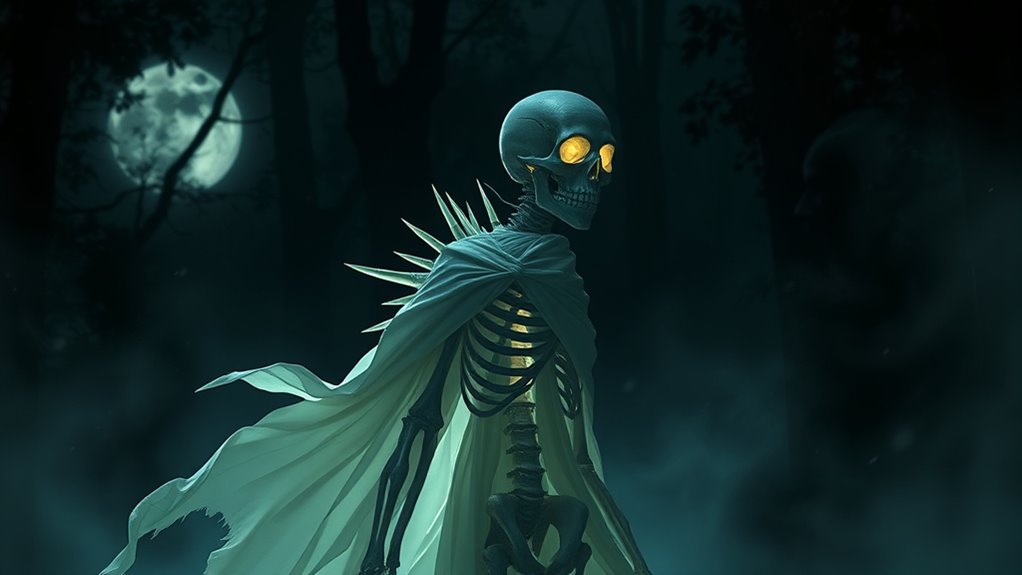

The Baigujing, or Bone Spirit, in *Journey to the West* symbolizes illusions and temptations that challenge your spiritual journey. She appears as a beautiful woman to deceive and trap unwary travelers, representing worldly distractions that hinder enlightenment. Her form-changing tricks remind you to look beyond superficial appearances and trust your inner wisdom. Overcoming her illusions highlights the importance of perseverance and insight in spiritual growth—if you keep exploring, you’ll discover how this confronts inner struggles and awakening.
Key Takeaways
- Baigujing, or Bone Spirit, appears as a beautiful woman to deceive and trap travelers in *Journey to the West*.
- Symbolizes illusions and worldly temptations that distract monks from spiritual progress.
- Represents internal struggles and challenges faced during spiritual awakening and enlightenment.
- Her defeat emphasizes the importance of wisdom, discernment, and inner strength in overcoming illusions.
- Serves as a metaphor for confronting false perceptions and the ongoing battle between illusion and truth.

Have you ever wondered about the mysterious Bone Spirit in *Journey to the West*? This figure, known as Baigujing, is a fascinating character that embodies deep folklore symbolism and offers insight into spiritual transformation. As you explore her story, you’ll see how her presence reflects the complex journey toward enlightenment and the ongoing struggle between illusion and reality.
The Bone Spirit appears as a cunning and deceptive creature, often taking the form of a beautiful woman to lure her victims. Her disguise symbolizes the allure of worldly temptations, which can distract even the most devoted on their spiritual path. In folklore symbolism, she represents the idea that true enlightenment requires seeing beyond superficial appearances. Her tricks and manipulations serve as allegories for the illusions that trap humans and hinder spiritual growth. When you encounter her in the story, it’s a reminder that spiritual transformation is a process of peeling away layers of illusion and confronting deeper truths.
Throughout her appearances, Baigujing challenges the pilgrims’ faith and discernment. She’s not merely a villain; she embodies the internal struggles faced during spiritual ascension. Her ability to change form symbolizes how illusions can adapt, making it difficult to distinguish truth from falsehood. This reflects a broader theme in folklore: the notion that enlightenment involves recognizing the true nature of things beneath deceptive façades. Her repeated attempts to deceive the monks showcase how persistent illusions are, but also how perseverance and insight can overcome them. Recognizing the self-watering pots and other innovative tools can symbolize the importance of clarity and preparation in overcoming challenges.
Your understanding of her character deepens as you see her as a catalyst for spiritual growth. Upon her defeat, the story emphasizes the importance of wisdom, inner strength, and clarity. Her defeat signifies that spiritual transformation requires not only faith but also the ability to see through false appearances. The episode highlights that overcoming illusions is essential to progressing on the path to enlightenment. As you reflect on Baigujing’s role, it becomes clear that her character serves as a metaphor for confronting inner demons and false perceptions that hinder spiritual progress.
In the end, the Bone Spirit’s story in *Journey to the West* encapsulates a crucial lesson: spiritual transformation is a continuous process of recognizing and transcending illusions. Her folklore symbolism reminds you that true enlightenment involves seeing beyond external appearances and confronting internal falsehoods. Her presence in the story underscores the enduring struggle between illusion and truth, a battle everyone must face on their journey toward spiritual awakening.
Frequently Asked Questions
What Inspired the Creation of the Baigujing Character?
You’re inspired by traditional Chinese mythological symbolism and the rich world of fantasy creatures. The Baigujing character draws from folklore’s fascination with shape-shifting spirits and supernatural beings. By embodying a fox spirit, she symbolizes cunning and temptation, reflecting cultural themes of transformation and deception. This mythological symbolism helps create a compelling, layered fantasy creature that challenges the hero and deepens the story’s mystical atmosphere.
How Does the Bone Spirit Compare to Other Mythological Spirits?
You see that the bone spirit embodies a unique mythological archetype within the spirit hierarchy, blending cunning deception with supernatural powers. Unlike other mythological spirits, it relies heavily on disguise and manipulation, highlighting its role as a trickster. Its sinister nature contrasts with more benevolent spirits, making it a compelling example of how mythological archetypes shape stories. This character challenges your expectations of spirits by embodying both danger and intelligence.
Are There Real-World Legends Behind the Bone Spirit Story?
Yes, there are real-world legends behind the bone spirit story. You’ll find that mythological creatures like the Baigujing often stem from folklore origins that blend fears, morals, and cultural beliefs. These stories reflect ancient perceptions of spirits and supernatural beings, serving as cautionary tales or explanations for natural phenomena. By exploring these legends, you gain insight into how mythological creatures are rooted in human storytelling traditions across different cultures.
What Symbolic Meanings Does the Bone Spirit Represent?
Imagine a cracked mirror reflecting hidden truths—this captures what the bone spirit symbolizes. It represents spiritual symbolism of deception, temptation, and the struggle between good and evil. Culturally, it reveals the importance of discernment and inner strength. You see, the bone spirit’s form reminds you that appearances can deceive, urging you to look beyond surface illusions to find true wisdom and moral integrity.
How Has the Portrayal of the Bone Spirit Evolved Over Time?
You see that the portrayal of the Bone Spirit has evolved through cultural reinterpretations and modern adaptations, shifting from a purely malevolent figure to more complex, layered characters. Today, creators explore her motivations and struggles, reflecting changing societal values. This evolution highlights how stories adapt over time, giving new depth and relevance, making her a symbol of transformation and resilience in contemporary narratives.
Conclusion
As you reflect on the Bone Spirit’s tale, you realize even darkness holds lessons and hidden beauty. Her story reminds you that struggles can soften with understanding, and shadows may carry gentle truths. Though her journey was filled with pain, it also hints at hope’s quiet presence. Embrace these moments, knowing that beneath every sorrow, there’s a chance for healing and grace, waiting patiently to be discovered in life’s quiet corners.