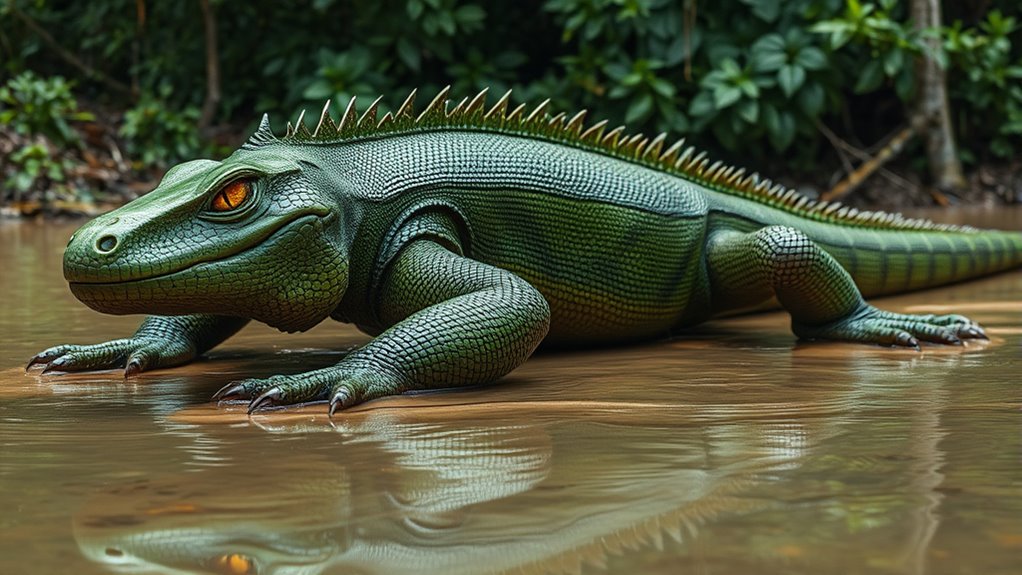

The Buru, dubbed the ‘Indian Floodplain Lizard Monster,’ is an impressive and elusive creature found in India’s floodplains. Known for its large size and unique adaptations to survive in dynamic water ecosystems, it plays a vital role in controlling insect populations and maintaining ecological balance. Its mysterious nature and habitat threats make it a fascinating subject. Keep exploring to uncover more about this remarkable species and how it impacts its environment.
Key Takeaways
- The Buru is a legendary floodplain creature reported in Indian folklore, resembling a massive, lizard-like monster.
- It is believed to inhabit the floodplain regions, emerging during floods to hunt or defend territory.
- Local legends describe the Buru as a formidable predator with a distinctive appearance, blending lizard features with mythical traits.
- No scientific evidence confirms the existence of the Buru; it remains a myth or cryptid inspired by floodplain wildlife.
- The legend of the Buru highlights cultural fears and stories tied to floodplain ecosystems and their mysterious inhabitants.
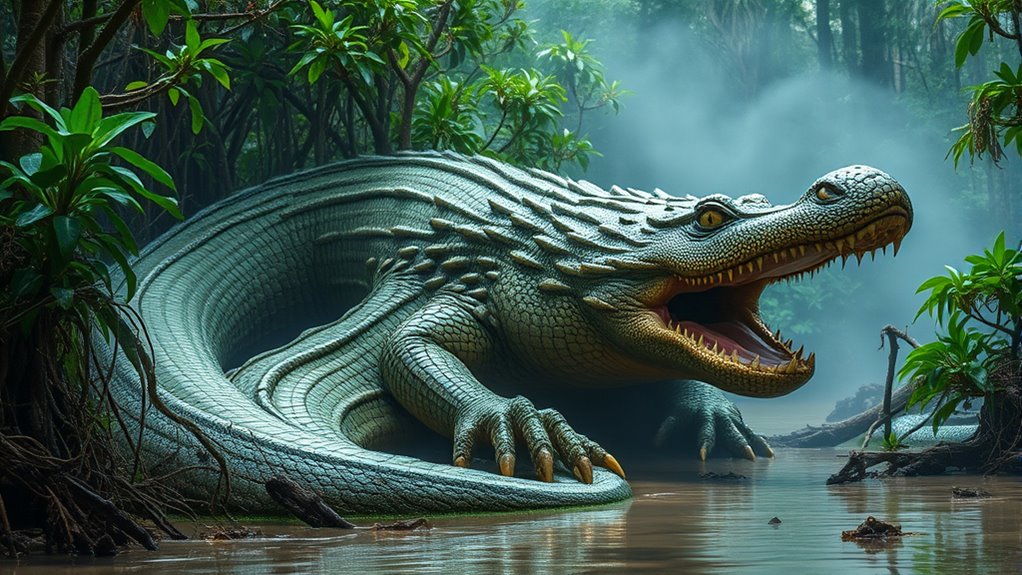
The Buru is a fascinating bird native to the Indonesian island of Buru, known for its elusive nature and distinctive appearance. Its striking plumage and secretive behavior make it a compelling subject for bird enthusiasts and conservationists alike. But beyond its visual appeal, the Buru plays a essential role in its ecosystem, influencing various ecological processes. As a predator, it helps control insect populations, maintaining a balance that benefits plant life and overall biodiversity. Its presence signifies a healthy habitat, and any disruption to its population could ripple through the local environment, affecting numerous species and ecological functions.
Because of its importance, conservation efforts have become increasingly urgent. The Buru faces threats from habitat loss due to deforestation, agricultural expansion, and logging. These activities diminish its natural habitat, forcing the bird to adapt, relocate, or face decline. Conservation programs focus on protecting and restoring Buru’s forest habitats, establishing protected areas, and promoting sustainable land-use practices. Community involvement is essential, as locals can help monitor populations and prevent illegal activities such as poaching or illegal logging that threaten the bird’s survival. Promoting biodiversity hotspots can prioritize critical areas for conservation efforts.
Conservation efforts are crucial to protect Buru’s forest habitats from deforestation and illegal activities.
You might wonder how your efforts or awareness can impact the ecological health of Buru’s environment. Supporting conservation initiatives, whether through donations or education, contributes to habitat preservation. Educating local communities about the ecological impact of deforestation and the importance of biodiversity helps foster sustainable practices. When more people understand that protecting the Buru isn’t just about saving a single species but about maintaining ecological stability, conservation efforts gain momentum. Restoring habitats not only benefits the Buru but also enhances ecosystem resilience, ensuring that other species thrive alongside it.
In addition, scientific research continues to shed light on the Buru’s ecological role, guiding conservation strategies that are more effective and targeted. These efforts include habitat corridor creation and captive breeding programs, which aim to bolster wild populations. Public awareness campaigns highlight the bird’s significance, encouraging eco-tourism and responsible land management. When you get involved or simply spread awareness, you actively contribute to the ecological impact mitigation, helping preserve this unique species for future generations.
Ultimately, protecting the Buru isn’t just about saving a bird; it’s about safeguarding a complex web of life that sustains the island’s environment. Your support and understanding can make a difference, ensuring that conservation efforts continue to thrive. By recognizing the ecological impact the Buru has within its habitat and encouraging sustainable practices, you help foster a future where this elusive bird remains a essential part of Buru’s natural heritage.
Top picks for "buru indian floodplain"
Open Amazon search results for this keyword.
As an affiliate, we earn on qualifying purchases.
Frequently Asked Questions
What Is the Buru’s Average Lifespan in the Wild?
You might be surprised to learn that the Buru’s average lifespan in the wild is around 10 years. Its ecological impact is significant, as it helps control insect populations and influences floodplain ecosystems. Conservation efforts focus on protecting its habitat from habitat loss and pollution, which are essential for its survival. By safeguarding the Buru, you’re also supporting the health of the entire floodplain environment.
How Does the Buru Hunt and Catch Its Prey?
You observe that the Buru employs stealthy hunting strategies rooted in predator-prey dynamics. It stalks its prey silently through floodplain waters and tall grasses, using its powerful limbs to ambush quickly. The Buru relies on surprise, lunging with sharp claws and a strong jaw to catch its prey off guard. Its keen senses help it detect movement and vibrations, making its hunting tactics highly effective in its floodplain habitat.
Are There Any Myths or Legends Associated With the Buru?
Imagine the Buru as a shadow cast by ancient myths, its mythical origins woven into local stories. You’ll find that it holds deep cultural significance, symbolizing nature’s fierce and mysterious power. Legends often portray the Buru as a guardian or a warning, echoing its role in community traditions. These tales keep its spirit alive, reminding you of the wild, untamed forces that nature and myth intertwine to create.
What Is the Buru’s Role in Its Ecosystem?
You see, the Buru plays a crucial role in its ecosystem by maintaining predator-prey dynamics. As a predator, it controls populations of smaller animals, preventing overgrazing and promoting biodiversity. Its ecological impact helps keep the floodplain balanced, ensuring resources remain abundant. By regulating prey populations, you can appreciate how the Buru sustains the health and stability of its environment, making it an essential piece of the ecosystem puzzle.
Can the Buru Be Kept in Captivity or as a Pet?
You probably shouldn’t try keeping a Buru as a pet, as captivity challenges make it unsuitable. For example, a researcher attempting to house a Buru in a controlled environment faced difficulties replicating its natural floodplain habitat, leading to stress and health issues. These creatures are not ideal pets due to their size, specialized habitat needs, and aggressive behavior. Their unique requirements make them better left in the wild where they thrive naturally.
Conclusion
So, next time you find yourself wandering near those lush floodplains, remember the Buru. It’s a gentle guardian of its watery home, quietly watching over its domain. Though it might seem a little mysterious, it’s just nature’s way of keeping balance. Embrace the wonder and let your imagination drift with the currents. After all, some creatures prefer to stay a little hidden, adding a touch of magic to the landscape you explore.