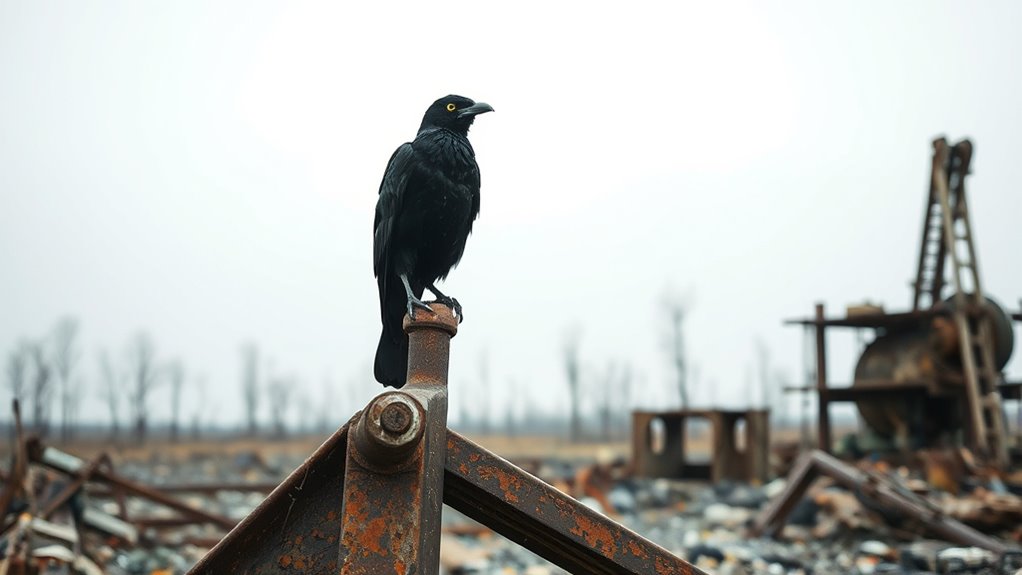

The Black Bird of Chernobyl symbolizes the lingering impacts of the nuclear disaster, blending radiation mutations with mythic warnings. Its dark feathers and piercing gaze evoke feelings of unease, representing both mutated wildlife and ominous omens. Many see it as a messenger of disaster or significant change, especially during stormy weather. If you keep exploring, you’ll discover how this mysterious creature embodies the zone’s enduring mysteries and what it might truly signify.
Key Takeaways
- The Black Bird is linked to radiation-induced mutations, symbolizing environmental devastation and lingering danger in Chernobyl’s exclusion zone.
- Its dark appearance and piercing eyes evoke mythic warnings, suggesting it may symbolize impending disaster or transformation.
- The bird’s presence during storms and overcast days amplifies its role as a supernatural omen tied to the zone’s eerie atmosphere.
- Folklore associates black birds with death and misfortune, making the Black Bird a cultural symbol of the disaster’s lasting impact.
- Sightings of the Black Bird reinforce fears of unseen threats and serve as a reminder of Chernobyl’s ongoing mysteries and dangers.

Have you ever wondered what mysterious creature might inhabit the abandoned Chernobyl exclusion zone? Rumors and legends swirl around the area, and among them, the Black Bird of Chernobyl stands out as a chilling omen. Some say it’s a product of radiation mutations, a living testament to the zone’s lingering dangers. Others believe it’s rooted in bird mythology, a symbol of impending doom. Whatever the origins, sightings of this dark, ominous bird evoke a sense of unease, as if it carries a message from the past or a warning of what’s to come.
The Black Bird of Chernobyl signals ominous warnings from a cursed, mutated zone haunted by legends and lingering dangers.
In the aftermath of the nuclear disaster, the environment was forever altered. Radiation levels soared, and over time, mutations began to appear in flora and fauna. Some animals developed abnormal features, and birds were not immune. It’s believed that the Black Bird’s dark plumage and piercing eyes are the result of radiation-induced genetic changes. These mutations can distort normal bird anatomy, creating creatures that seem almost supernatural. When you hear about a black bird with an unnaturally sleek form and an unsettling stare, it’s easy to see how these mutations can blur the line between reality and myth.
The bird mythology linked to Chernobyl adds an extra layer of intrigue. In many cultures, black birds symbolize death, misfortune, or transformation. They’re often seen as messengers from the spiritual domain, warning of disaster or change. In the context of Chernobyl, the Black Bird is perceived as a portend—a harbinger that something sinister is lurking just beneath the surface of the abandoned zone. Its sightings fuel fears that the area still holds dangerous secrets, and that nature itself is trying to communicate a warning. This deep-rooted symbolism feeds into local legends, where the bird becomes a symbol of the disaster’s lingering shadow. Additionally, studies of radiation mutations in animals suggest that such creatures can develop unusual features, further fueling these supernatural stories.
If you venture into the zone, these stories might seem fantastical, but they’re embedded in a real sense of dread. The Black Bird’s presence is often reported during overcast, stormy days, adding to the eerie atmosphere. Witnesses describe a creature that appears suddenly, flitting through the trees with an unnatural grace, its dark feathers almost absorbing the dim light. The bird’s appearance is fleeting, yet its symbolism lingers. It’s as if the creature embodies both the mutated, unpredictable effects of radiation and the mythic warnings passed down through generations. Whether a mutation, myth, or a combination of both, the Black Bird of Chernobyl remains a haunting symbol of the zone’s enduring mystery and the potential for disaster lurking beneath the surface.
Frequently Asked Questions
What Species Is the Black Bird of Chernobyl?
The black bird of Chernobyl is a rook, known for its striking black plumage. You might notice its radiation adaptation, as these birds thrive in contaminated areas, showcasing ecological significance by indicating how wildlife can survive despite high radiation levels. Their presence helps researchers understand radiation’s impact on ecosystems, making them crucial indicators of environmental health. Keep an eye on these resilient birds, as they reveal nature’s remarkable ability to adapt.
Are There Any Recent Sightings of the Bird?
Recent sightings of the black bird of Chernobyl haven’t been confirmed, but radiation effects continue to impact bird migration patterns in the area. You might notice fewer birds or altered behaviors, as radiation affects their health and navigation. While the iconic bird remains elusive, ongoing research suggests that radiation’s influence on local wildlife persists, making it a rare but significant indicator of environmental change in the Chernobyl zone.
How Does the Bird Survive Radiation Exposure?
You wonder how the black bird survives radiation exposure. It likely has radiation resistance due to unique survival adaptations, such as cellular repairs or protective genes that help it withstand high radiation levels. These adaptations enable it to survive in contaminated environments, making it an extraordinary example of nature’s resilience. While not fully understood, its ability to endure radiation highlights the remarkable ways some creatures adapt to extreme conditions.
Has the Bird Been Linked to Nuclear Accidents Before?
You might wonder if the Black Bird of Chernobyl has been linked to nuclear accidents before. While there’s no direct record, its unusual radiation effects and disrupted migration patterns suggest a connection to radioactive zones. This bird’s strange behavior raises questions about how radiation impacts wildlife, hinting that it could be an ominous sign of recent or impending nuclear disasters. Its presence fuels suspicions, making you question what unseen dangers lurk nearby.
What Cultural Myths Surround the Black Bird?
You might find that superstitions and symbolism in folklore and legends often portray black birds as omens of change or impending doom. In many cultures, these birds symbolize mystery, death, or transformation, reflecting deep-rooted fears and hopes. Some legends warn of bad luck, while others see them as messengers from the spiritual domain. Their presence is often seen as a sign to pay attention to unseen forces or upcoming events.
Conclusion
As you observe the black bird of Chernobyl, you see more than just a creature; you see a warning, a messenger, a symbol. It reminds you that nature’s signs can signal danger, that caution is necessary, that awareness is essential. Just as the bird signals disaster, so too must you heed the warnings around you. Because in recognizing the signs, in understanding their meaning, you protect yourself, you prepare yourself, and you respect the power of nature’s ominous messages.