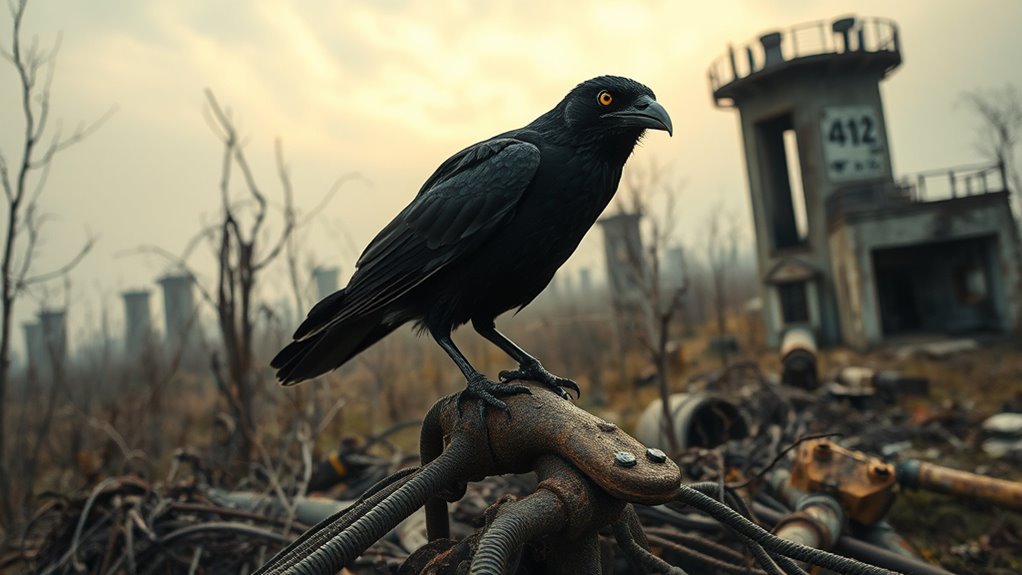

The black bird of Chernobyl is seen as a powerful symbol of the disaster’s lasting impact on wildlife. Its appearance, often in radiation-affected areas, suggests environmental disruption and adaptation. This mysterious bird may signal how radiation influences animal behavior, survival, and ecosystems. Its dark feathers help it blend into shadows, hinting at resilience amid chaos. If you explore further, you’ll discover more about how this bird embodies both warning and resilience in a transformed landscape.
Listen free for 30 days with Audible
Thousands of audiobooks and originals — cancel anytime.
As an affiliate, we earn on qualifying purchases.
Key Takeaways
- The black bird symbolizes the environmental and ecological disruptions caused by radiation in Chernobyl.
- Its presence is linked to altered bird migration and navigation patterns in radiation-affected zones.
- The bird’s dark, glossy feathers may represent adaptive survival traits amid contaminated habitats.
- Observations of the black bird serve as a warning of ongoing ecological consequences from nuclear disaster.
- The bird acts as a metaphor for resilience and the lingering shadow of Chernobyl’s environmental catastrophe.
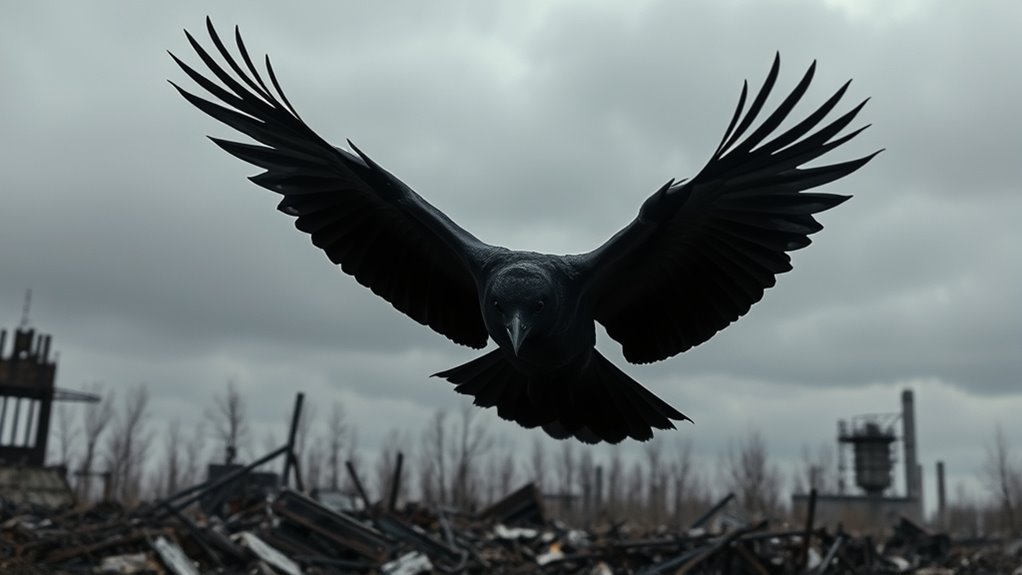
Have you ever wondered about the mysterious creature rumored to haunt the abandoned zones of Chernobyl? Among the stories and legends, one creature stands out—the black bird often seen darting through the desolate landscapes. Its presence has sparked curiosity and fear, especially because it seems to appear where the environment is most affected by radiation. The effects of radiation on living creatures are well-documented, and birds are no exception. In Chernobyl’s exclusion zone, where radiation levels remain dangerously high, many species have adapted in unpredictable ways. The black bird’s dark, glossy feathers seem to absorb the sparse sunlight, giving it an almost supernatural aura. Some believe this bird is a harbinger, a warning sign of the ongoing environmental damage caused by the nuclear disaster. Recent studies also suggest that radiation effects on ecosystems** can extend beyond individual mutations, influencing entire habitats and species interactions. What makes this bird particularly intriguing is its apparent connection to bird migration patterns. Typically, migrating birds rely on environmental cues like sunlight, magnetic fields, and weather patterns to navigate their long journeys. But in Chernobyl, these cues are disrupted by radiation and the altered landscape. The black bird seems to ignore these disruptions, soaring through the zones with an uncanny familiarity. Some scientists speculate that radiation might be affecting the birds’ navigation systems, causing them to behave unusually or even become trapped in the contaminated area. Others think the black color of the bird is an adaptive trait, helping it blend into the shadows and evade predators in this bleak environment. Its presence during migration seasons raises questions about how radiation influences avian behavior and physiology. As you consider the black bird’s role, think about how radiation effects extend beyond just mutation and decay. They influence entire ecosystems, altering animal behaviors and survival strategies. The black bird, with its mysterious sightings and eerie silhouette, might symbolize the ongoing impact of radiation on wildlife. Its migration challenges highlight how radiation can disrupt natural patterns and force creatures into unfamiliar, often dangerous territories. Whether it’s a product of mutation, an evolutionary adaptation, or simply a folklore legend, the black bird of Chernobyl remains a powerful symbol of nature’s resilience** and the lingering shadow of disaster. Its presence prompts you to reflect on the delicate balance between environmental catastrophe and survival, reminding us that even in the aftermath of human-made destruction, life finds a way to endure—sometimes in the most unexpected forms.
Top picks for "black bird chernobyl"
As an affiliate, we earn on qualifying purchases.
Frequently Asked Questions
What Specific Species Is the Black Bird Believed to Be?
You might think the black bird is a common crow or raven, but it’s believed to be a species of blackbird, serving as a radiation indicator. In folklore symbolism, this bird signals danger or disaster, making it a powerful omen. Its dark feathers and eerie presence make it stand out, warning locals of the Chernobyl disaster’s ongoing impact and highlighting the bird’s role as a natural alert system amidst radiation.
Have Similar Birds Appeared Near Other Nuclear Disaster Sites?
You might notice similar black birds near other nuclear disaster sites, and their presence often relates to radiation effects on local wildlife. These birds’ migration patterns can be disrupted or altered in contaminated areas, signaling environmental stress. While not identical species, their appearance suggests that radiation impacts ecosystems worldwide, and observing these birds can offer clues about ongoing ecological consequences of nuclear accidents.
What Cultural Significance Does the Black Bird Hold in Local Folklore?
You see a black bird, and it’s more than just a shadow in folklore; it’s a messenger carrying centuries of superstitions surrounding black birds. In local culture, these birds symbolize ominous omens, often foretelling misfortune or change. People believe they’re linked to spirits or the supernatural, making them powerful symbols in stories of warning and prophecy. Their presence is a vivid reminder of the deep-rooted fears and beliefs in the unseen world.
Are There Scientific Studies Linking the Bird’s Appearance to Radiation Levels?
Scientific studies haven’t conclusively linked the black bird’s appearance to radiation effects, but you should consider how radiation influences bird behavior. Researchers observe that radiation exposure can alter avian behavior, such as changes in nesting or migration patterns, and sometimes increase mutation rates. While there’s no direct evidence connecting these birds to radiation levels, their unusual behavior and appearance may serve as indirect indicators of environmental radiation contamination.
How Have Local Residents Historically Reacted to Sightings of the Black Bird?
You’ve likely heard that local residents historically react to sightings of the black bird with superstitions surrounding black animals, often considering them omens of misfortune. When these bird sightings occur, people tend to feel fear or unease, believing they signal impending danger or disaster. These reactions stem from long-standing beliefs rooted in historical bird sightings, which have shaped local folklore and heightened superstitions about black animals in the region.
Conclusion
So, next time you see a black bird lingering around Chernobyl’s ghost town, remember—it’s not just a bird; it’s the ominous mascot of nuclear disaster. Who knew that one feathered creature could carry such weight? Maybe it’s just trying to outshine the radioactive ruins with a touch of flair. Either way, you’ll never look at a black bird the same way again—proof that nature’s got a dark sense of humor too.
Back to school Picks
back to school
As an affiliate, we earn on qualifying purchases.