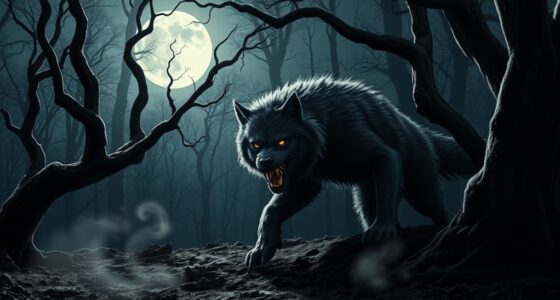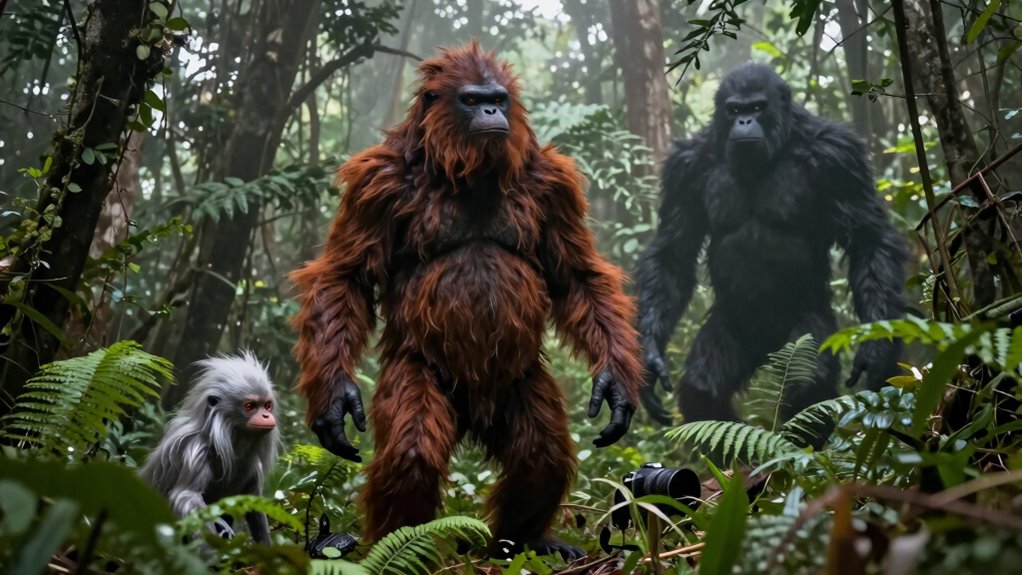

You’ll see that stories of the Yowie, the Almas, and similar creatures reveal a common human fascination with wild, ape-like beings in remote, hard-to-explore areas. These legends often symbolize fears, respect, and a connection to nature and ancestors. Despite geographical distance, cultures share themes of mysterious sightings, vocalizations, and guardian-like qualities. If you continue exploring, you’ll discover even more about how these stories reveal universal patterns and our enduring curiosity about the unknown.

Prime made for students and young adults
- Fast, free delivery for dorm and study essentials
- Prime Video and Amazon Music included
- Member-only deals
Key Takeaways
- The Yowie, Almas, and similar beings reflect a universal human fascination with large, hairy creatures in remote wilderness areas.
- These myths symbolize cultural values, ancestral connections, and collective fears or reverence for nature.
- Sightings and legends across diverse regions suggest a shared pattern of mysterious, ape-like beings inhabiting inaccessible environments.
- Such creatures may represent surviving prehistoric ancestors or serve as archetypes embodying human curiosity and caution.
- The global wild-man pattern demonstrates how cultures worldwide create myths to explain the unknown and preserve land and heritage connections.
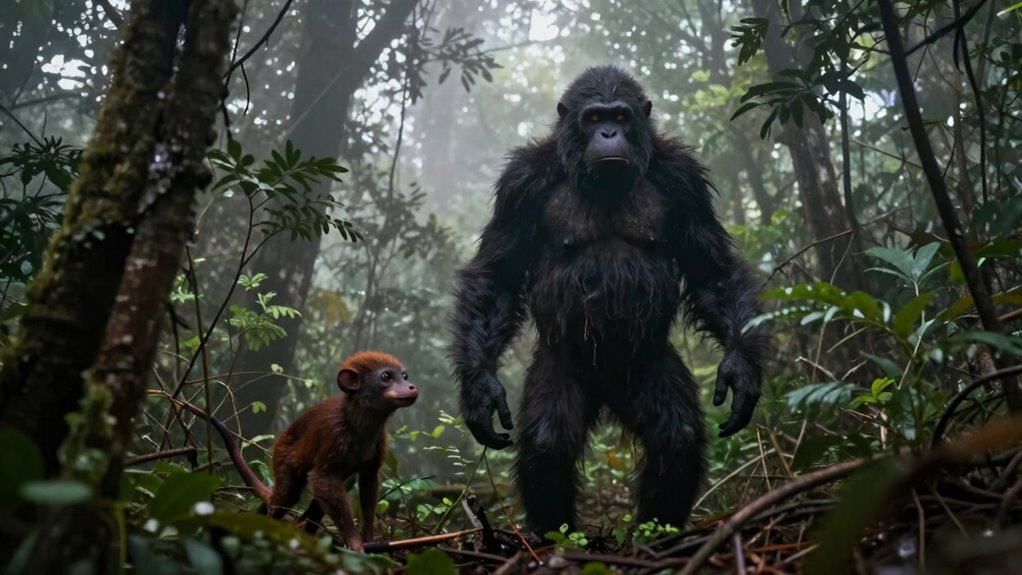
Across cultures worldwide, stories of elusive, human-like creatures—often called wild men—persist in folklore and legend. These tales aren’t just local myths; they reflect a shared human fascination with beings that blur the line between myth and reality. You might have heard of the Yowie in Australia or the Almas in Central Asia, but these creatures are part of a broader pattern seen across many regions. Their stories often emerge from cultural folklore, passed down through generations, and are reinforced by cryptid sightings reported by explorers, locals, or curious skeptics. When you hear about these sightings, it’s tempting to dismiss them as hoaxes or misidentifications. Yet, the recurring themes and similarities across distant cultures suggest a deeper, shared human experience or perhaps an ancient memory of something real. Additionally, these stories often serve as cultural archetypes that embody collective fears and reverence for the wilderness. In Australia, the Yowie is described as a tall, hairy, ape-like creature that roams the wilderness, particularly in remote rainforest areas. Indigenous stories speak of a creature that embodies wisdom, strength, and a mysterious connection to the land. These stories are reinforced by cryptid sightings, with witnesses claiming to have encountered a large, hairy being or to have heard strange vocalizations echoing through the forests. Similarly, in Central Asia, the Almas is often depicted as a human-like figure covered in thick hair, seen roaming mountain ranges and highlands. Locals have long regarded the Almas as a mysterious guardian or a remnant of ancient peoples, and occasional cryptid sightings keep the legend alive. What’s fascinating is that despite the vast geographical distances, these stories share common elements: a large, hairy, human-like creature that dwells in wild, often inaccessible areas. Some researchers suggest that tales of these beings might be inspired by prehistoric ancestors or other unknown species still lurking in remote habitats. Interestingly, modern cryptid reports tend to cluster around remote, less explored regions, which fuels speculation that these beings could be surviving remnants of prehistoric ancestors or symbolic representations of human fears and respect for nature. These stories often serve as cultural myths that help communities explain mysterious occurrences or preserve their connection to the land. Whether you believe in their literal existence or see them as cultural archetypes, these stories reveal how humans across the world grapple with the unknown, projecting fears, hopes, and mysteries onto these elusive figures that continue to haunt our collective imagination. The persistent sightings and stories hint at a shared human curiosity that spans civilizations and centuries.
As an affiliate, we earn on qualifying purchases.
Frequently Asked Questions
What Is the Estimated Population of These Creatures Worldwide?
You probably won’t find exact numbers for these cryptids’ populations because sightings are rare and often unconfirmed. Based on folklore origins and cryptid sightings, experts estimate their numbers are very low, likely just a few dozen individuals each, if they exist at all. These creatures remain mysterious, with limited evidence, making it impossible to determine precise counts. Most believe they’re elusive, thriving in remote, hard-to-access environments.
Are There Any Recent Scientific Discoveries Related to the Yowie or Almas?
Recent scientific discoveries about the Yowie or Almas remain scarce, as these creatures are mostly classified within mythical classifications rather than confirmed species. You might find that they hold deep cultural symbolism in their regions, representing more than just mysterious beings. While some researchers explore folklore and biological clues, mainstream science hasn’t verified recent findings, keeping these entities rooted in myth and cultural significance rather than scientific evidence.
How Do Local Cultures Perceive These Wild-Man Legends?
You see, local cultures often view these wild-man legends as deeply rooted in their mythical origins, symbolizing nature’s power or spiritual guardianship. They believe these beings embody cultural symbolism, representing qualities like strength, mystery, or ancient wisdom. Such stories serve to preserve traditions and connect communities to their environment. While scientific evidence remains elusive, these legends continue to shape cultural identities and inspire awe across generations.
What Evidence Exists to Support Their Existence?
You’ll find little concrete evidence to prove these creatures exist, yet mythical folklore and cryptid sightings fuel ongoing debates. Footprints, blurry photos, and eyewitness accounts often seem inconclusive, but they keep the mystery alive. While skeptics dismiss these as hoaxes or misidentifications, believers see cryptid sightings as glimpses into something unknown. The gap between myth and evidence invites fascination, keeping the legends thriving despite the lack of definitive proof.
Have Any DNA Analyses Been Conducted on Purported Sightings?
Yes, DNA analyses have been conducted on purported sightings of cryptids like the Yowie and Almas. These studies aim to separate folklore from biological reality, often revealing human or animal origins rather than unknown species. In cryptid folklore, cultural symbolism plays a vital role, shaping how sightings are interpreted and reported. While some results remain inconclusive, ongoing research continues to explore whether these legends reflect real creatures or mythic storytelling.
As an affiliate, we earn on qualifying purchases.
Conclusion
So, as you explore tales of the Yowie, Almas, and other wild men, remember you’re stepping into a mythic dance as old as the hills. Like the echoes of Bigfoot’s footsteps or the whisper of the yeti’s cry, these stories connect us to a shared human longing—an echo of the unknown that beckons us to wonder. In chasing these shadows, you carry the spirit of explorers, forever chasing the next mystery just beyond the edge of understanding.
As an affiliate, we earn on qualifying purchases.
remote wilderness exploration equipment
As an affiliate, we earn on qualifying purchases.
As an affiliate, we earn on qualifying purchases.
Fall Picks
fall essentials
As an affiliate, we earn on qualifying purchases.