The Jorōgumo, Japan’s legendary spider woman, is a myth rooted in ancient folklore that depicts a beautiful woman capable of transforming into a deadly spider. She symbolizes the dangers of deception, seduction, and the thin line between beauty and peril. Her story reflects cultural values about caution and hidden threats, blending allure with menace. If you keep exploring, you’ll uncover the deeper symbolism and intriguing history behind this enthralling myth.
Key Takeaways
- Jorōgumo is a mythological Japanese creature that can transform from a beautiful woman into a deadly spider.
- She symbolizes deception, seduction, and hidden dangers rooted in Japanese folklore.
- The spider’s web represents allure and danger, highlighting the creature’s dual nature.
- Traditionally, she serves as a warning against trusting superficial beauty and temptation.
- The legend of Jorōgumo continues to influence modern Japanese horror, art, and cultural symbolism.
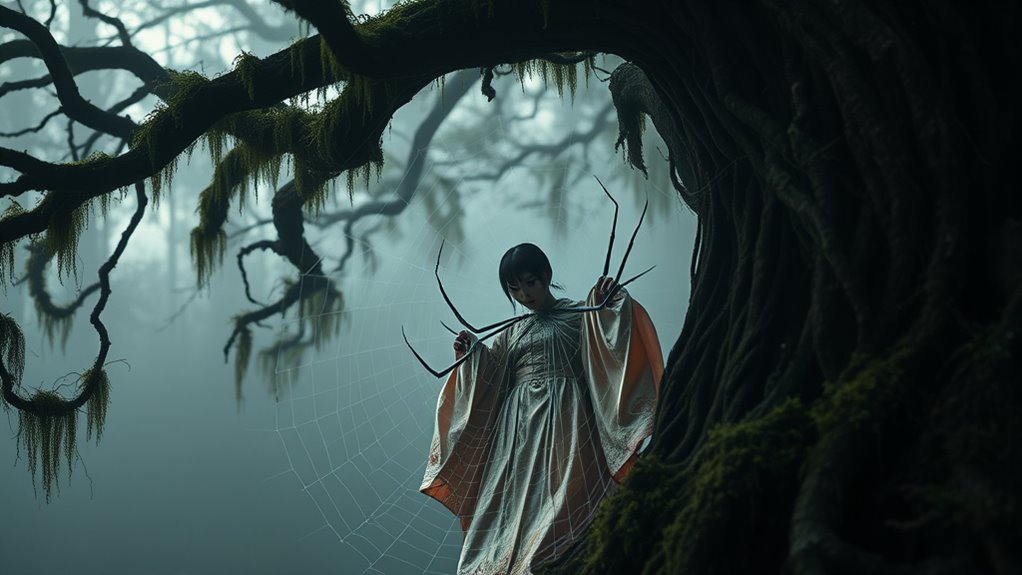
Have you ever heard of Japan’s mysterious Spider Woman? The Jorōgumo, as she’s known in Japanese folklore, weaves a spellbinding tale rooted in mythological origins and rich cultural symbolism. Her story has been passed down through generations, blending elements of fear, fascination, and moral lessons. This creature is often depicted as a beautiful woman who can transform into a deadly spider, embodying both allure and danger. Her mythological origins trace back centuries, originating from ancient stories that caution against trusting appearances and warn of hidden threats lurking beneath beauty. Over time, the Jorōgumo became more than just a monster; she evolved into a symbol representing deception, seduction, and the unpredictable nature of human desire.
In Japanese culture, the spider itself holds complex symbolism. Spiders are often seen as creators of intricate webs, symbolizing patience, cunning, and the interconnectedness of life. The Jorōgumo embodies these traits, as she lures victims into her web with charm and beauty. Yet, she also signifies peril—reminding people that danger can hide behind a beguiling facade. Her mythological origins tie into traditional stories that serve as cautionary tales for outsiders and the naïve, warning them not to be deceived by superficial appearances. Interestingly, the odorous silk associated with her web can symbolize both attraction and repulsion, enhancing her mystique as a creature of dual nature. Whether she’s depicted as a temptress or a monstrous predator, her character encapsulates a blend of admiration and fear, characteristic of many mythological symbols in Japan.
The cultural symbolism surrounding the Jorōgumo often emphasizes the duality of human nature—beauty intertwined with danger. She represents a warning to stay vigilant against temptations that seem appealing but may conceal destructive intentions. In some stories, she’s portrayed as a tragic figure—once a woman transformed by sorrow or revenge—adding layers of complexity to her mythological origins. Her presence in folklore reflects societal attitudes towards the mysterious and the unknown, reinforcing themes of caution, morality, and the thin line between the seductive and the deadly. Today, her story endures in popular culture, inspiring everything from horror stories to art, continually reminding us of the powerful symbolism embedded in her legend. The Jorōgumo remains a compelling figure, embodying the timeless lesson that appearances can deceive, and that cultural symbols often carry hidden meanings rooted deeply in history and tradition.
Frequently Asked Questions
What Is the Origin of the JorōGumo Legend?
You might wonder about the myth origin of the Jorōgumo legend, which evolved from Japanese folklore over centuries. This story likely started as a cautionary tale about dangerous women or spirits, blending spider symbolism with supernatural elements. As folklore evolved, the Jorōgumo became a symbol of seduction and deception, reflecting societal fears and moral lessons. Its story has persisted through generations, highlighting Japan’s rich myth and mythological storytelling traditions.
Are There Any Real-Life Sightings of the JorōGumo?
You won’t find verified sightings of the jorōgumo in real life because it’s mainly an urban legend rooted in folklore. People share stories of mysterious spider-women, but these folklore sightings are often just tall tales or local legends meant to entertain or warn. While the legend persists in Japanese culture, there’s no concrete evidence to suggest that a creature like the jorōgumo actually exists outside these mythic stories.
How Has the JorōGumo Influenced Modern Japanese Culture?
You see her in modern Japan’s pop culture, where the Jorōgumo’s allure lingers like a shimmering web. She influences horror movies, anime, and manga, weaving tales of seduction and danger. Fashion designers draw inspiration from her intricate, spider-like patterns, turning her myth into stylish statements. The Jorōgumo’s haunting presence continues to inspire, reminding you of the mysterious beauty and danger lurking beneath Japan’s vibrant cultural tapestry.
What Are Common Symbols Associated With the JorōGumo?
You’ll notice that spider motifs and seductive imagery are common symbols associated with the jorōgumo. These symbols highlight her dual nature—dangerous yet alluring. You might see spider webs representing entrapment, and the spider itself symbolizes cunning and seduction. These images serve to remind you of her mysterious, enchanting power, blending beauty with danger, and often appear in art, folklore, and modern pop culture inspired by her legend.
Are There Any Similar Mythological Creatures in Other Cultures?
You’ll find similar mythological creatures in many cultures, such as mythical shapeshifters and female tricksters. For example, the Greek Sirens lure sailors with their enchanting voices, while the Norse Valkyries choose fallen warriors. In African folklore, the spider goddess Anansi is a clever trickster. These beings often embody deception, transformation, and cunning, just like the Jorōgumo, highlighting universal themes of female tricksters and shapeshifters across diverse mythologies.
Conclusion
As you imagine her sitting silently in the shadows, waiting patiently, you realize the jorōgumo embodies allure and danger intertwined. She weaves her web with precision, trapping those who wander too close, just as her legend weaves through Japan’s folklore. You feel the tension, the beauty, the fear—each thread a reminder of her power. In her silence, she beckons you closer, yet warns you to beware the beauty that hides the deadly trap beneath.