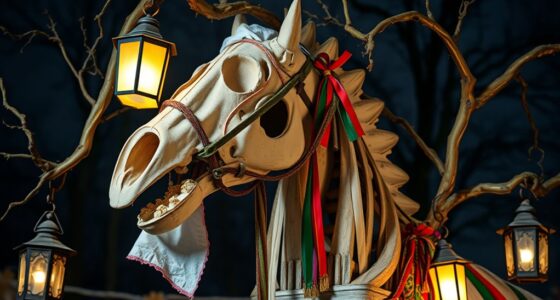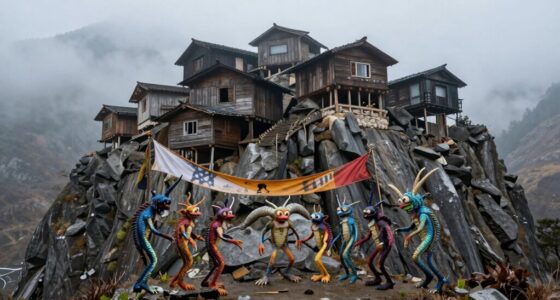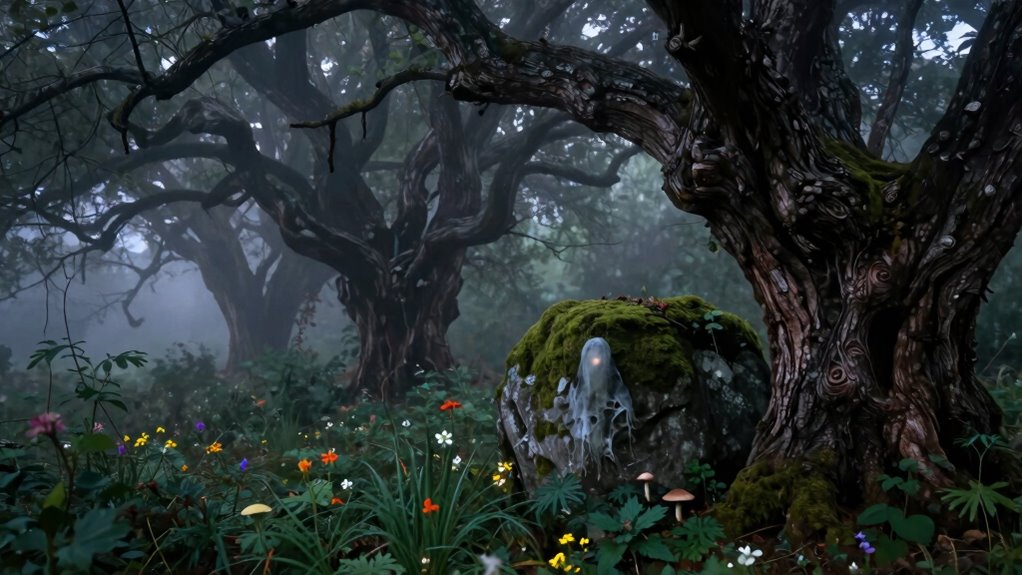

You see, many folkloric creatures stay local because their meanings are deeply tied to specific cultural fears, morals, and traditions that don’t easily translate elsewhere. They embody community-specific stories, values, and history, making them hard to understand outside their original context. Their symbolism often reflects local anxieties that couldn’t resonate universally. If you want to explore more about why these stories stay rooted, you’ll find fascinating insights into how culture shapes storytelling.

Prime made for students and young adults
- Fast, free delivery for dorm and study essentials
- Prime Video and Amazon Music included
- Member-only deals
Key Takeaways
- Creatures are rooted in specific cultural myths that carry unique symbolic meanings, limiting their universal appeal.
- Their stories often reflect local fears, morals, or social issues, making them highly contextual.
- Folklore creatures are transmitted through generations within communities, reinforcing local identity and tradition.
- The cultural significance and moral lessons tied to these creatures make reinterpretation or broad dissemination difficult.
- Their mythological origins and embedded symbolism prevent them from easily crossing cultural or linguistic boundaries.
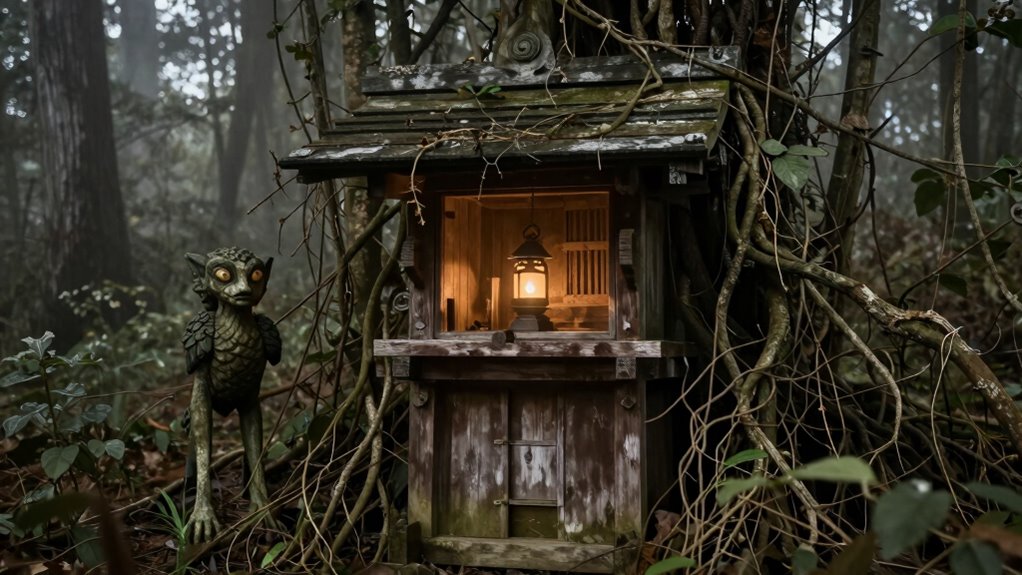
Many creatures remain trapped in folklore not because they lack significance, but because their stories tap into universal fears, morals, or cultural identities that resist modern reinterpretation. These beings often originate from mythological origins that have been passed down through generations, embedding themselves deeply into local traditions and collective consciousness. When you hear about urban legends or regional myths, you’re engaging with stories that serve specific societal functions—warnings, explanations, or moral lessons—that are difficult to translate into a broader or more scientific narrative. That’s why these creatures stay confined within their cultural borders; their relevance is rooted in the community’s history and values, not in universal scientific understanding. Additionally, their mythological origins often carry symbolic meanings that are tightly woven into the cultural fabric, making reinterpretation challenging. Take, for example, legendary monsters like the Chupacabra or the Jersey Devil. Their mythological origins are often linked to local fears or anxieties, such as threats to livestock or children, and they embody particular cultural fears. These stories are often reinforced by eyewitness accounts or local folklore, making them seem real within their communities. Because their origins are so specific—tied to particular environments, histories, and moral lessons—they rarely gain traction outside their regions. They’re less about global storytelling and more about reinforcing local identity or cautionary tales, which limits their ability to break out of folklore into popular culture. Sometimes, the cultural significance of these beings is so profound that attempts to reinterpret them tend to diminish their symbolic power, further anchoring them in tradition. The transmission of these stories across generations helps preserve their significance and prevents them from evolving into more universal narratives. Furthermore, the cultural context in which these stories are told influences how they are received and maintained within the community. Moreover, these stories often serve as a form of cultural preservation, maintaining the unique identity of the community through shared mythos. Urban legends, on the other hand, tend to be modern manifestations of these mythological origins. They’re crafted to resonate with contemporary fears—abductions, supernatural encounters, or mysterious phenomena—and often draw on familiar motifs from older myths. Despite their often sensational content, these legends remain localized or culture-specific because they reflect current societal anxieties woven into traditional storytelling methods. Because they’re rooted in specific cultural contexts, they rarely evolve into universal stories that cross borders or generations. Instead, they serve as contemporary myths that sustain a sense of community or shared experience.
Many folklore creatures embody cultural fears and morals, remaining confined within tradition due to their deep roots in community identity.
Ultimately, these creatures stay trapped in folklore because they are more than just stories; they are cultural symbols. Their mythological origins give them a depth that resists modern reinterpretation, especially when they embody moral lessons or societal fears. You can’t easily detach them from their cultural roots without losing their meaning. This is why they remain powerful within their local traditions but rarely break into the wider consciousness. Their stories are less about factual truth and more about preserving cultural identity, making them unlikely to ever transcend their folkloric boundaries.
As an affiliate, we earn on qualifying purchases.
Frequently Asked Questions
Are There Creatures That Evolve Into Modern Animals?
Some creatures from folklore have evolved into modern animals through mythical hybrids and legendary sightings. For example, the griffin’s traits can be seen in some eagle-lion hybrids, and legendary sightings of the sea serpent influenced the development of real marine research. These stories often inspire scientific inquiry, blurring the line between myth and reality. So, while pure mythical hybrids remain legend, their influence hints at a fascinating evolutionary and cultural connection.
How Do Folklore Creatures Influence Local Culture Today?
You see, folklore creatures influence your local culture through their mythic symbolism, shaping traditions, stories, and community identity. They serve as cultural preservation tools, passing down values and beliefs across generations. These creatures become symbols of shared history and morals, keeping local stories alive. By celebrating or fearing these mythical beings, your community maintains a sense of connection to its roots and enriches its cultural landscape.
Why Do Some Creatures Only Appear in Specific Regions?
You notice some creatures only appear in specific regions because their mythical habitats are closely tied to local landscapes and histories. Regional legends shape these stories, making them unique to each area. These creatures often symbolize local values or fears, so their stories stay rooted in the community’s culture. As a result, their presence remains confined to these regions, keeping their mythic origins alive through local folklore.
Can Folklore Creatures Be Based on Real Animals?
They say, “truth is stranger than fiction,” and folklore creatures often have roots in real animals. Mythical hybrids, blending features of different animals, symbolize cultural beliefs and values. You’ll find that many legendary beings are inspired by actual creatures, exaggerated or mythologized to embody local symbolism. These stories help communities preserve tradition, making the line between reality and myth blur, keeping folklore alive across generations.
Are There Scientific Studies on Folklore Creatures’ Origins?
Yes, scientific studies explore folklore creatures’ origins, focusing on mythical symbolism and cultural transmission. Researchers analyze how stories evolve and reflect societal values, often linking these creatures to real animals or natural phenomena. By examining linguistic patterns, archaeological findings, and cultural exchanges, scientists uncover how myths spread locally and globally. This helps explain why some creatures stay confined to specific folklore, maintaining their cultural significance through generations.
Mythology and cultural folklore collectibles
As an affiliate, we earn on qualifying purchases.
As an affiliate, we earn on qualifying purchases.
Conclusion
So, next time you hear a tale about a mysterious creature, remember that some stories stick because they’re woven into the fabric of local culture. These legends serve as cautionary tales or cultural touchstones, never quite making it to the broader stage. Sometimes, it’s best to accept that certain stories are meant to stay close to home. After all, some things are better left as small, treasured sparks rather than blazing fires that burn out of control.
As an affiliate, we earn on qualifying purchases.
As an affiliate, we earn on qualifying purchases.
Halloween Picks
halloween
As an affiliate, we earn on qualifying purchases.