
Legends of Madagascar’s man-eating plants blend myth and ecology, revealing the island’s fascination with its unique flora. Local stories portray giant, carnivorous plants that trap animals and even humans, reflecting fears and respect for nature’s power. These tales often serve as warnings about habitat destruction and ecological imbalance. To uncover how these legends intertwine with Malagasy culture and environment, you’ll discover fascinating insights that deepen your understanding of Madagascar’s mysterious natural world.
Key Takeaways
- Malagasy legends depict giant, predatory plants that threaten humans and animals, blending myth and ecological concerns.
- Stories serve as cautionary tales emphasizing respect for Madagascar’s unique and fragile ecosystems.
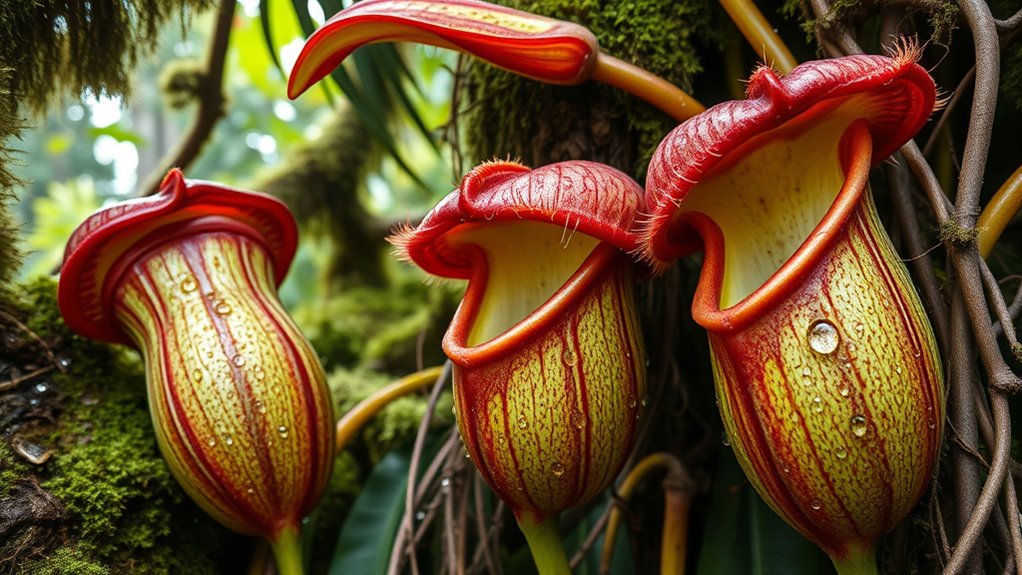
- Real plant adaptations, like carnivorous pitcher plants, inspire myths of large veggie predators.
- Legends symbolize complex relationships between culture and nature, promoting ecological awareness and conservation.
- These stories reflect local beliefs about nature’s power, acting as moral lessons and cultural identifiers.
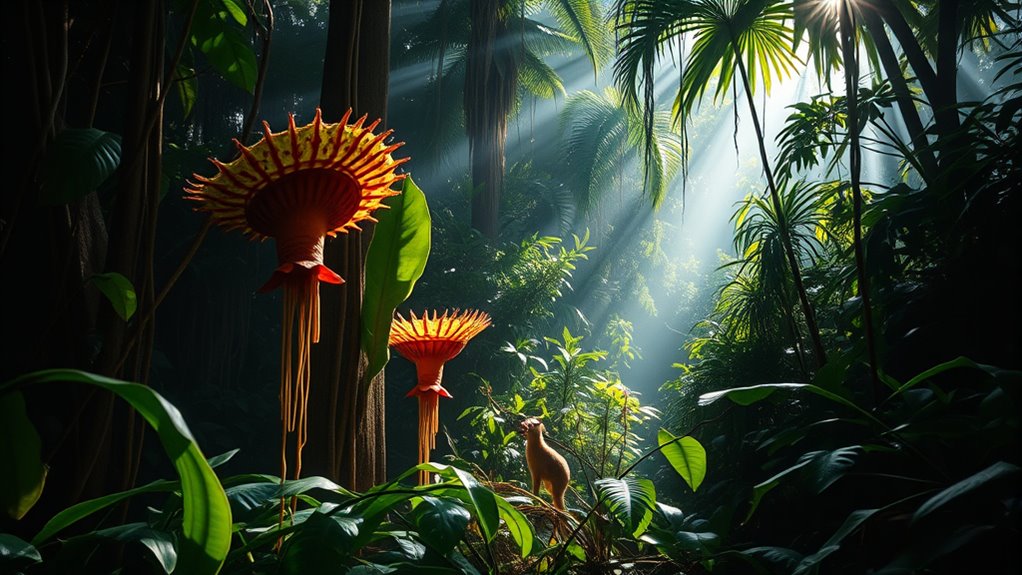
Throughout history, tales of veggie predators have fascinated and mystified people around the world. Among these stories, the legend of the man-eating plants of Madagascar stands out, blending cultural myths with real ecological concerns. These stories often emerge from local communities, passed down through generations, and serve as cautionary tales or explanations for mysterious disappearances in dense jungles. As you explore these myths, you’ll notice how they reflect deeper cultural beliefs about nature’s power and unpredictability. Indigenous groups might portray these plants as ancient guardians or vengeful spirits, emphasizing their significance within local cosmologies. These narratives help preserve cultural identity and transmit moral lessons about respecting the environment.
However, beyond their mythological allure, the idea of man-eating plants influences ecological perceptions. Some believe that these stories warn of the dangers lurking within Madagascar’s unique ecosystems, which are home to an astonishing array of flora and fauna found nowhere else on Earth. While the legends exaggerate, they highlight real ecological impacts—such as how invasive species, habitat destruction, and climate change threaten native plants and animals. These ecological shifts can lead to the emergence of unusual plant behaviors, like rapid growth or aggressive predation, which, in turn, fuel local fears and stories of monstrous flora. You might wonder if these tales are purely myth, but they serve as symbolic reminders of nature’s delicate balance and the consequences of human interference. Additionally, understanding local ecological issues can help contextualize these stories within real environmental challenges.
In Madagascar’s diverse landscape, some plants do have remarkable adaptations that can seem almost predatory. Certain pitcher plants and carnivorous species trap insects, and in rare cases, larger animals might be at risk if they venture too close. These real phenomena inspire legends that portray plants as predators capable of devouring larger creatures, feeding into cultural myths about monstrous vegetation. Such stories reinforce the idea that nature is both wondrous and dangerous, demanding respect and caution. They also serve to educate communities about preserving ecosystems, emphasizing that these plants are essential components of Madagascar’s ecological fabric.
Ultimately, the legends of the man-eating plants symbolize more than just fear—they reflect a complex relationship between humans and their environment. They reveal how cultural myths shape perceptions of ecological realities, encouraging a sense of reverence and responsibility. As you consider these stories, recognize that they are deeply rooted in Madagascar’s natural history and cultural traditions. Whether rooted in fact or fiction, they remind us that nature’s power is immense, and understanding it requires both respect and curiosity.
carnivorous pitcher plants
As an affiliate, we earn on qualifying purchases.
As an affiliate, we earn on qualifying purchases.
Frequently Asked Questions
Are These Plants Real or Myth?
These plants are myths rooted in folklore origins, not real creatures. You might hear stories comparing them to mythical creatures, but there’s no scientific evidence to support their existence. Legends of veggie predators in Madagascar have captured imaginations, yet you should understand they’re part of local storytelling rather than actual botanical phenomena. While fascinating, these man-eating plants remain a enthralling myth rather than a verified reality.
What Specific Species Are Considered Man-Eaters?
Like predators stalking prey in a jungle, certain species embody carnivorous adaptations that fuel myth versus reality. The most notable is the *Nepenthes* pitcher plant, known for trapping insects, but no plant truly preys on humans. While some *Drosera* and *Sarracenia* species trap insects effectively, the idea of man-eating plants remains a myth. You can appreciate these plants’ fascinating survival strategies without fearing they’ll hunt you down.
How Do These Plants Hunt Their Prey?
You see, these plants use clever carnivorous plant mechanisms to hunt prey. They attract insects or small animals with nectar, bright colors, or scent trails, acting as prey attraction strategies. Once the prey lands or touches the trap, the plant quickly seals it, often with rapid movements like snapping or folding. This efficient process guarantees the plant captures nutrients essential for survival in nutrient-poor environments.
Have Any Humans Been Harmed by These Plants?
In the myth vs reality debate, you might think humans have fallen victim to these legendary plants, but in truth, no one has been harmed. These stories hold cultural significance, symbolizing nature’s mysterious power. You can rest assured that while the plants are fascinating, they haven’t endangered humans. Instead, they serve as powerful allegories of nature’s unpredictability, inspiring awe rather than fear.
Can These Plants Be Cultivated Outside Madagascar?
You can attempt to cultivate these plants outside Madagascar, but it’s challenging. Cultivation challenges arise because they require specific conditions like high humidity, warm temperatures, and nutrient-poor soils. Botanical research is ongoing to understand their needs better and develop effective growing methods. If you’re enthusiastic to grow them, prepare for a demanding process that mimics their native environment closely, and stay updated with scientific advancements.
Madagascar native plants
As an affiliate, we earn on qualifying purchases.
As an affiliate, we earn on qualifying purchases.
Conclusion
So, as you explore Madagascar’s mysterious menacing marvels, remember these legendary leafy predators. Marvel at their monstrous might, memorize their mythical menace, and marvel again at Mother Nature’s mischievous mastery. By understanding these legendary veggie predators, you’ll better believe in the bizarre beauty of nature’s bizarre battlegrounds. Keep curiosity curious, and never underestimate the wild, wicked wonders lurking in the lush, leafy labyrinths of Madagascar.
insect trapping plants
As an affiliate, we earn on qualifying purchases.
As an affiliate, we earn on qualifying purchases.
carnivorous plant terrarium
As an affiliate, we earn on qualifying purchases.
As an affiliate, we earn on qualifying purchases.