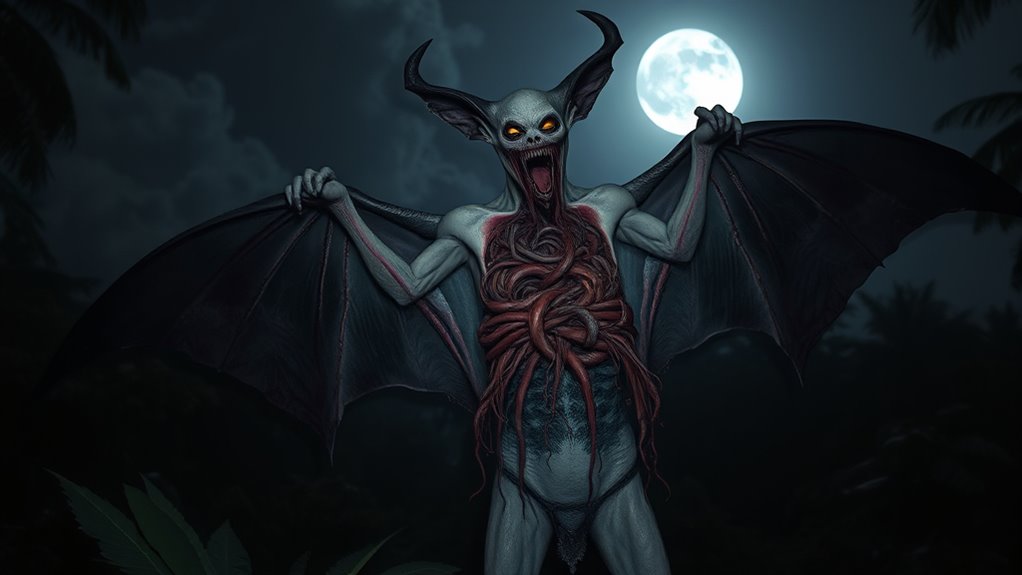

The Manananggal is a frightening creature from Filipino folklore that transforms from a woman into a night-flying monster. At night, it severs its upper body and uses bat-like wings to hunt for victims, especially pregnant women, to feed on their internal organs and blood. It’s a symbol of dark fears, societal taboos, and hidden dangers. If you keep exploring, you’ll uncover more about its origins, traits, and the cultural ways people protect themselves.
Key Takeaways
- The Manananggal is a Philippine folklore creature that separates from its lower body to fly and hunt at night.
- It preys on victims’ internal organs, especially targeting pregnant women and vulnerable individuals.
- Identified by her silhouette or lack of wings during the day; warded off with garlic, salt, or religious symbols.
- Serves as a cultural symbol warning against darkness, secrets, and societal taboos.
- Represents fears of the unknown, female vulnerability, and societal anxieties in Filipino tradition.
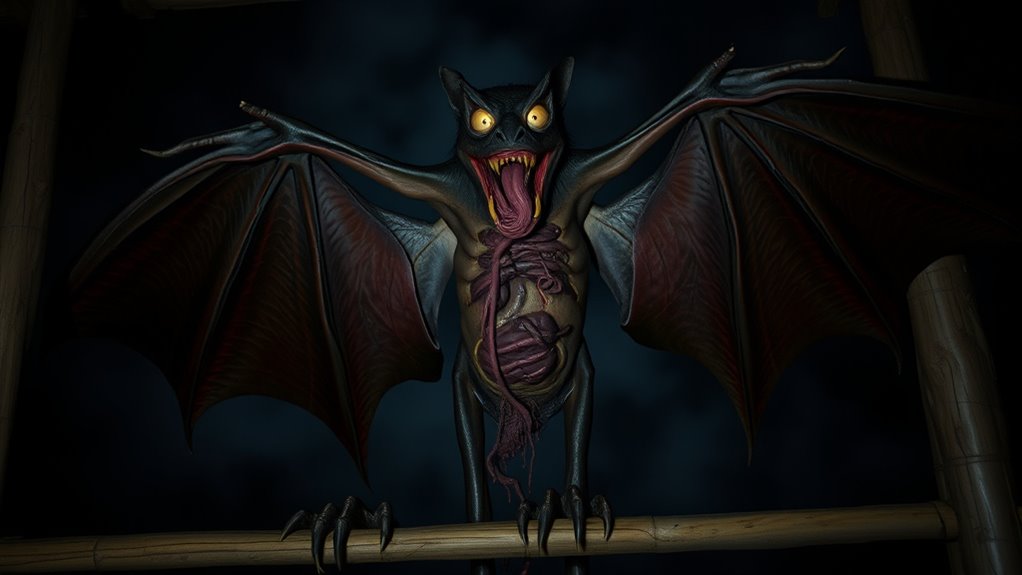
The Manananggal Viscera Sucker is a terrifying creature from Filipino folklore that preys on unsuspecting victims. Its origins are rooted in myth, with its mythical origins tracing back centuries in the Philippines. This creature is often associated with the night and is considered a malevolent spirit that embodies fears of the unknown and the dark. In local stories, the Manananggal is believed to be a woman by day, but at night, she transforms into a terrifying creature capable of severing her upper torso from her lower body. As she does so, she sprouting wings, allowing her to fly through the night searching for victims. The creature’s insatiable hunger for human viscera makes her especially feared, as she preys on pregnant women or those with vulnerable health, seeking to feast on their blood and internal organs.
The folklore significance of the Manananggal extends beyond mere fright; it serves as a cautionary tale and a symbol of societal anxieties. Many stories warn against staying out late or revealing secrets, as the Manananggal is believed to target those who neglect traditional customs or who harbor secrets. Her ability to detach and fly makes her a metaphor for hidden dangers lurking in the darkness, reminding communities to stay vigilant and respectful of cultural taboos. The creature also embodies fears of female vulnerability and the supernatural’s influence on women, often linked to themes of envy, power, and the unknown aspects of womanhood.
In Filipino culture, the Manananggal is more than just a myth; it’s a symbol woven into the fabric of local beliefs and rituals. People perform specific protective measures to ward off the creature, such as using garlic, salt, or religious symbols around their homes. Some stories describe how to identify a Manananggal—by her silhouette, or by the absence of her wings during daylight, revealing her true form. The folklore significance helps communities cope with fears of death, disease, and the unknown, transforming a terrifying myth into a cultural safeguard. Over generations, the legend has been passed down through oral tradition, maintaining its relevance and reinforcing cultural identity. The Manananggal remains a powerful figure in Filipino folklore, embodying the fears, morals, and mysteries that continue to fascinate and haunt the collective imagination.
Frequently Asked Questions
Are There Any Real Sightings of the Manananggal?
You won’t find any verified sightings of the manananggal, as it’s mostly part of urban legends and Filipino folklore stories. People share tall tales or mysterious encounters, but there’s no concrete evidence to prove it exists. These folklore sightings often serve as cautionary tales or explanations for strange events. So, while the stories are intriguing and spooky, they remain rooted in myth rather than reality.
How Can One Protect Themselves From a Manananggal?
Ever wondered how to stay safe from a manananggal? You can protect yourself with traditional practices like using protective charms, such as salt or garlic, around your home. Keep windows and doors sealed before dawn, when the creature is most active. Some believe that religious symbols or holy objects also ward off evil spirits. Do you think these methods truly keep you safe, or is there more to uncover?
Is the Manananggal Associated With Any Specific Philippine Regions?
You’ll find the manananggal mainly in the Visayas and Mindanao regions, where regional folklore highlights its eerie presence. Its stories hold deep cultural significance, warning communities about evil spirits and social taboos. These legends serve as cautionary tales, reinforcing local beliefs and traditions. If you visit these areas, understanding the folklore helps you appreciate the cultural context, and you might even hear local stories that keep the manananggal’s myth alive.
What Are the Origins of the Manananggal Legend?
You might think the manananggal’s origins are simple, but they actually stem from complex folklore origins and myth evolution. This legend likely evolved from pre-colonial beliefs about spirits and shape-shifters, influenced by Spanish colonization, blending local myths with new cultural elements. The story serves as a cautionary tale, warning against behaviors or beliefs, and reflects deeper societal fears, making it a powerful part of Filipino cultural identity.
Are There Any Modern Adaptations or Depictions of the Manananggal?
You’ll find modern adaptations of the manananggal in urban legends and pop culture, especially in movies, TV shows, and comic books. Filmmakers often portray her as a terrifying creature, blending folklore with horror. You might see her in Filipino horror films or international media inspired by Philippine legends. These depictions keep the legend alive, enthralling audiences with her eerie, supernatural presence while adapting her story for contemporary audiences.
Conclusion
Now that you know about the manananggal, you realize it’s more than just a spooky story—it’s a reminder that some things are better left undisturbed. Keep your wits about you, especially when the night falls and shadows grow long. Remember, even the fiercest monsters have their weaknesses; sometimes, the best defense is staying informed. Don’t let fear run wild—knowledge is your best weapon, and it’s better to be safe than sorry when facing the unknown.