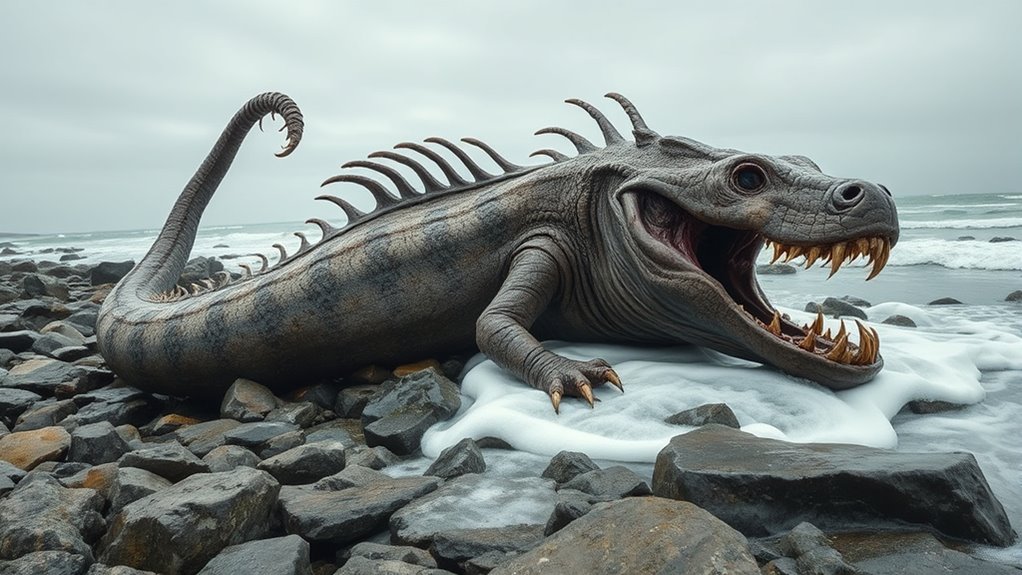

In 1808, a mysterious carcass washed ashore on the coasts of Orkney, sparking intrigue about a possible sea monster. Its elongated body, strange features, and enormous size captured imaginations, fueling rumors of sea serpents and cryptids. Some believed it was a decomposed whale, while others thought it was an unknown creature. Its story blends science, folklore, and myth, and if you explore further, you’ll uncover the enduring legacy of the Stronsay Beast.
Key Takeaways
- The Stronsay Beast was a mysterious carcass washed ashore in Orkney in 1808, sparking curiosity and myth.
- Its unusual elongated body and features resembled sea serpents from maritime folklore.
- Scientists debated whether it was a decomposed whale, giant squid, or an unknown creature.
- The carcass influenced local legends, cryptid sightings, and ongoing fascination with oceanic mysteries.
- Its true identity remains unknown, symbolizing the ocean’s hidden secrets and inspiring curiosity.
In 1808, a mysterious carcass washed ashore on the coasts of Orkney, igniting widespread curiosity and speculation. News spread quickly among locals and sailors, who had never seen anything quite like it. The creature’s size, strange features, and unfamiliar appearance sparked intense debate about its origins. Some believed it was a rare marine animal, while others considered it a cryptid—a creature from marine folklore that defies scientific explanation. As the carcass was examined, it became a symbol of the unknown, fueling rumors of sea serpents and legendary monsters lurking beneath the waves.
A mysterious carcass in Orkney fueled legends of sea monsters and cryptids in 1808.
This event marked a turning point in local storytelling, blending fact and myth into a *fascinating* narrative about the mysterious creature. Over the years, the Stronsay Beast became a fixture in cryptid sightings, with many enthusiasts and skeptics alike pondering whether it was a bizarre animal or a product of superstition. The creature’s elongated body, with a long neck and a tail, resembled descriptions of sea serpents found in maritime folklore around the world. Such stories often feature enormous, serpentine beings seen swimming in the depths, and the Stronsay carcass seemed to fit perfectly into this tradition. Its strange, leathery skin and unusual proportions only heightened the curiosity, prompting many to think it might be a previously unknown species or a cryptid hiding in the depths of the ocean.
Despite the fascination, scientists at the time struggled to identify the carcass. Some believed it was a decomposed whale or a giant squid, while others insisted it was an entirely different creature. The ambiguity fueled rumors of sea monsters that had long haunted sailors’ tales, becoming a tangible connection to marine folklore that persisted through generations. Interestingly, the case also exemplifies how cultural symbols can influence interpretations of mysterious events, blending scientific inquiry with mythology. The story of the Stronsay Beast exemplifies how cryptid sightings often reflect humanity’s desire to understand the mysterious and the unknown. It invites you to *ponder* how stories evolve over time, blending observations with imagination, creating legends that endure long after the carcass was gone.
Today, the carcass’s true identity remains a mystery, but its impact on local culture and marine folklore is undeniable. The story reminds you of how the ocean’s depths still hold secrets, and how tales of sea serpents continue to *fascinate* your imagination. Whether it was a misunderstood animal or a legendary beast, the Stronsay Beast remains a compelling chapter in the history of cryptid sightings, inspiring curiosity and wonder about what might still be lurking beneath the waves.
Frequently Asked Questions
Has the Stronsay Beast Ever Been Officially Identified?
The Stronsay Beast has never been officially identified by scientific classification. Experts have examined the carcass and reached a consensus that it’s most likely a decomposed whale or basking shark, but no definitive identification exists. You should know that, despite curiosity and speculation, the expert consensus remains that the creature remains a mystery, with no formal scientific classification assigned to it.
Are There Modern Sightings Similar to the Original Carcass?
You might have heard recent reports of marine cryptids resembling the original carcass, sparking ocean mysteries debates. While no definitive sightings match the Stronsay Beast’s size or shape, locals and explorers occasionally report strange, unexplainable creatures, fueling speculation. These stories keep the intrigue alive, and modern sightings continue to contribute to the ongoing fascination with ocean mysteries, but concrete evidence remains elusive, leaving the true nature of these marine cryptids uncertain.
What Theories Exist About the Creature’s True Nature?
You might think the creature’s true nature is a cryptid originating from marine mystery, with theories suggesting it’s a giant squid, a whale, or even a misidentified marine animal. Some believe it’s a hoax or a natural carcass misinterpreted as a sea serpent. Theories vary widely, but many experts consider it a fascinating example of cryptid origins rooted in marine mystery, sparking ongoing debates among enthusiasts and scientists alike.
How Did Local Folklore Evolve Around the Carcass?
You might think the folklore around the carcass evolved from simple marine legends, but investigations suggest it was shaped by local communities seeking explanations for strange sightings. Over time, stories grew more elaborate, blending fear and fascination, which fueled the folklore evolution. This process transformed a mysterious carcass into a legendary sea serpent, reflecting cultural beliefs and the community’s desire to make sense of the unknown waters surrounding Orkney.
Could the Carcass Have Been a Hoax or Misidentification?
You might consider that the carcass was a hoax or misidentification, as some hoax theories suggest it was deliberately faked, while misidentification claims propose it was a known marine animal mistaken for a sea serpent. Given the limited evidence and the mysterious nature of the find, it’s plausible that the whole event was either staged or a natural creature wrongly identified, fueling ongoing debates and curiosity.
Conclusion
As you ponder the mysterious carcass of the Stronsay beast, you realize how myth and reality intertwine in the depths of the sea. Just like the legend defies scientific explanation, the ocean’s secrets remain elusive, blending wonder with skepticism. You stand at the edge of certainty and doubt, gazing at the horizon where the unknown beckons. In this dance of mystery, both truth and folklore find their place, forever shaping the stories we tell.