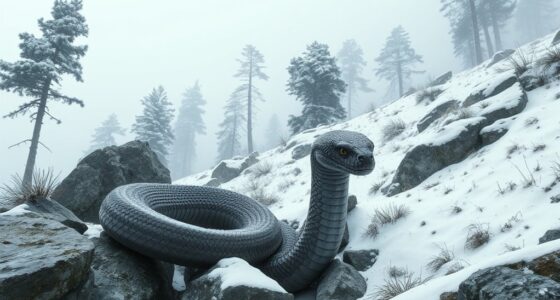
Across Austria and Switzerland, people report seeing strange tracks, fleeting shadows, and serpentine shapes in forests and mountain caves, fueling tales of the elusive Tatzelwurm. Many sightings occur during twilight or in remote areas, where the creature’s blending abilities make it hard to spot clearly. These stories keep the legend alive, embodying the wild allure of the Alps. If you keep exploring, you’ll uncover even more fascinating details about this mysterious creature.
Key Takeaways
- Sightings of the Tatzelwurm are reported mainly in remote alpine regions of Austria and Switzerland.
- Witnesses describe fleeting glimpses and strange tracks consistent with the creature’s serpentine, feline-like appearance.
- Encounters often occur during twilight or in inaccessible mountain areas, supporting the creature’s elusive reputation.
- Folklore from both countries links the Tatzelwurm to local legends, fueling ongoing reports and stories.
- Modern investigations consider environmental and storytelling factors, but the creature remains a popular symbol of alpine mystery.
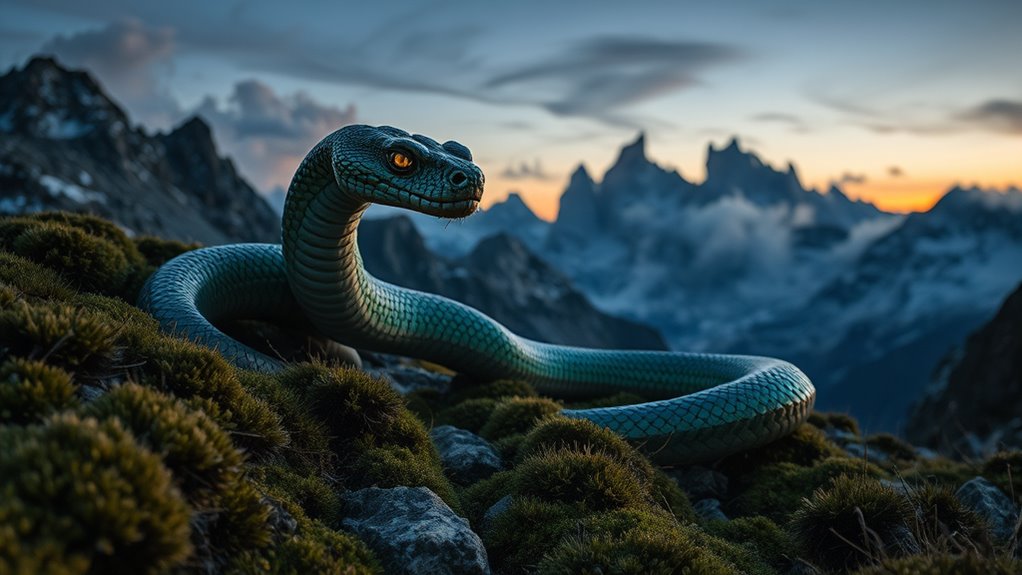
Many locals and hikers in Austria and Switzerland have reported sightings of the elusive Tatzelwurm, a legendary creature said to resemble a serpentine lizard with feline features. This cryptid folklore has persisted for centuries, fueling stories passed down through generations. You might wonder what makes this creature so enthralling in the alpine ecosystems where it’s believed to dwell. The Tatzelwurm is often described as a strange, elongated beast with a cat-like face, sharp claws, and a sinuous body that burrows or slithers through rocky crevices and dense forests. Its elusive nature keeps it shrouded in mystery, but the reports persist, especially among those familiar with the rugged terrain of the Alps.
The elusive Tatzelwurm, with feline and serpentine features, hides in alpine caves and forests, captivating explorers and folklore enthusiasts alike.
The alpine ecosystems provide the perfect hiding spots for such a creature. The jagged peaks, deep caves, and thick underbrush create a natural camouflage that helps the Tatzelwurm evade detection. Locals and adventurers alike have encountered strange tracks or seen fleeting glimpses of a serpentine form moving swiftly through the undergrowth. These sightings often occur during twilight or in remote areas where few outsiders venture. The creature’s ability to blend into the rocky landscape fuels speculation about its origins, with some believing it’s a surviving relic from ancient times, while others see it as a product of local cryptid folklore that adds mystery to the mountain wilderness.
Interestingly, some researchers suggest that cryptid sightings may be influenced by local storytelling traditions and environmental factors that trigger misidentifications. You may find it interesting that the tales surrounding the Tatzelwurm reflect a broader tradition of alpine folklore, where many cultures tell stories of mysterious beasts lurking in highlands and forests. These stories serve as cautionary tales or explanations for strange phenomena in the wild. The creature’s reported behaviors—appearing suddenly, disappearing just as quickly, or leaving behind strange tracks—add to its legend. As you explore the alpine ecosystems, you might notice how these stories contribute to a sense of wonder and the enduring human desire to understand the unknown.
Despite the lack of concrete evidence, the sightings and stories continue to attract enthusiasts and skeptics alike. The Tatzelwurm remains a fascinating part of cryptid folklore in the Alps, embodying the wild, untamed spirit of the mountains. Whether you believe in its existence or see it as a captivating legend, the tales of this serpentine beast enrich the rich tapestry of alpine mythology, inspiring curiosity and adventure in those who venture into its rugged habitat.
Frequently Asked Questions
What Is the Origin of the Tatzelwurm Legend?
You might find it fascinating that the legend of the tatzelwurm originates from early Alpine cryptid ecosystems, where local villagers told tales of a mysterious, dragon-like creature. These legendary creatures likely emerged from fears of unknown mountain dangers and misidentifications of real animals. Over time, stories grew, blending myth and reality, creating a myth that persists today as a symbol of Alpine mystery and intrigue.
Are There Any Scientific Explanations for Sightings?
There are no solid scientific explanations for the cryptid sightings of the Tatzelwurm, as many are likely misidentifications of known animals or natural phenomena. Your curiosity about folklore origins suggests these sightings may stem from local legends passed down through generations. While some believe sightings are evidence of a mysterious creature, most scientists see them as part of cultural folklore rather than proof of an actual cryptid.
How Does Local Folklore Interpret the Creature?
Have you ever wondered how local folklore sees cryptid creatures like the Tatzelwurm? In Alpine regions, people interpret it as a mythical creature, a guardian of the mountains or a lurking beast with supernatural powers. These stories reflect deep-rooted beliefs and add mystery to the landscape. Mythical creatures like the Tatzelwurm become symbols of local identity, blending folklore with the natural environment, fueling imagination and cultural heritage.
Have There Been Any Recent Verified Sightings?
Recent verified cryptid encounters with the Tatzelwurm remain rare, but local reports persist, fueling folklore origins. You might hear about sightings in remote Alpine areas, where witnesses describe mysterious, snake-like creatures. While these reports often lack concrete evidence, they keep the legend alive, blending folklore with ongoing curiosity. If you venture into these regions, stay aware of local tales—they can offer fascinating insights into these mysterious cryptid encounters.
What Precautions Do Hikers Take in Areas With Sightings?
When hiking in areas with Tatzelwurm sightings, you should stay alert and stick to designated trails. For example, hikers in Austria often carry whistles and walk in groups to guarantee trail safety. These precautions help protect wildlife conservation and ensure you’re prepared for unexpected encounters. Always respect local guidelines, avoid disturbing the environment, and stay vigilant to enjoy your hike safely while minimizing impact on the ecosystem.
Conclusion
As you explore the Alps, keep your eyes peeled for the elusive tatzelwurm, a shadow lurking between myth and reality. Its sightings weave a tapestry of mystery across Austria and Switzerland, inviting you to believe in the unknown. Like whispers carried on the wind, these stories remind you that some legends are too enchanting to dismiss. So, stay curious and open-minded—you might just stumble upon the next chapter in this ancient, winding tale.