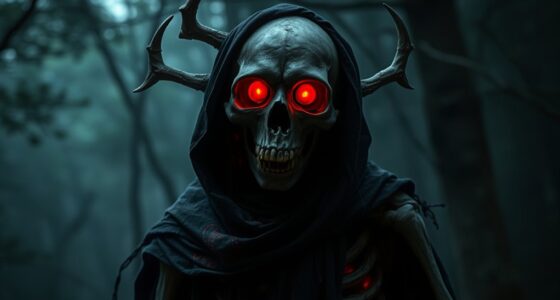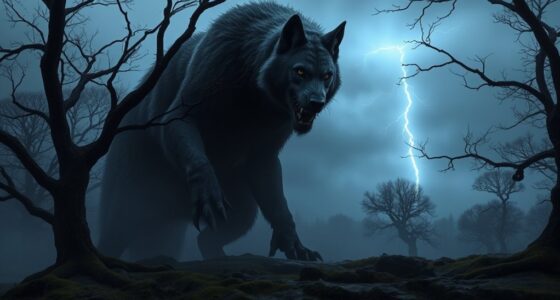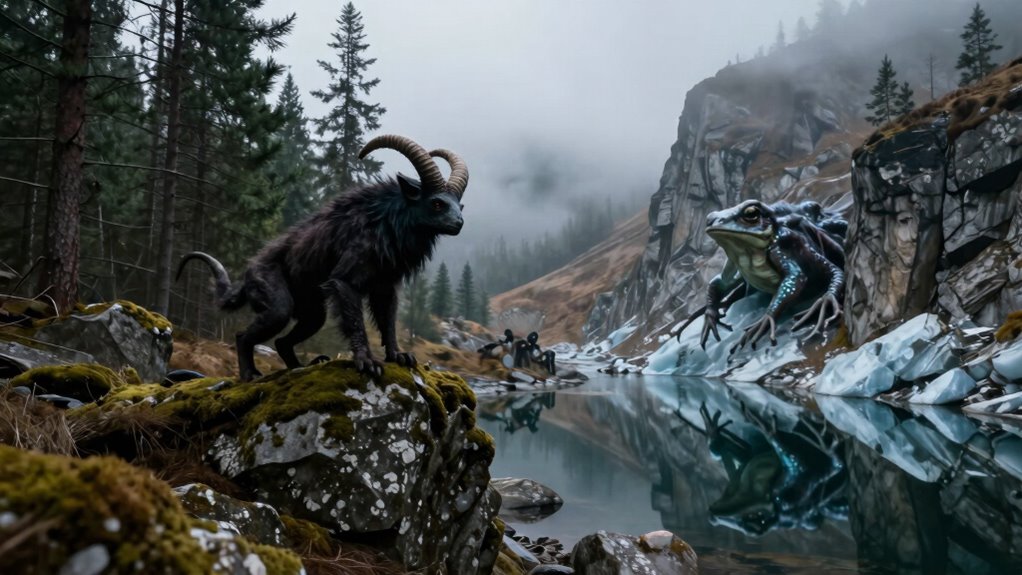

Many regional cryptids embody their environment’s climate, terrain, and isolation. For example, in dense forests or remote mountains, legends like Bigfoot and the Yeti reflect fears of the unknown in rugged landscapes. In swampy areas, water-dwelling creatures like the Rougarou symbolize the dangers of unpredictable waters. In harsh deserts or isolated islands, creatures like the Chupacabra and Moa highlight resilience amid extreme conditions. To explore how these stories reveal local struggles and cultural identity, keep exploring more.

Prime made for students and young adults
- Fast, free delivery for dorm and study essentials
- Prime Video and Amazon Music included
- Member-only deals
Key Takeaways
- Cryptids in forested and mountainous regions, like Bigfoot and Yeti, symbolize isolation and rugged terrain challenges.
- Water-based cryptids, such as Rougarou and Dobhar-chú, reflect swampy environments and the dangers of unpredictable waters.
- Desert cryptids like Chupacabra and Moa embody resilience and adaptation to harsh, arid climates.
- Folklore evolution is shaped by local geography, explaining unexplainable phenomena in specific climates and terrains.
- Regional cryptids serve as cultural symbols, embodying environmental fears, hopes, and societal values tied to their landscapes.
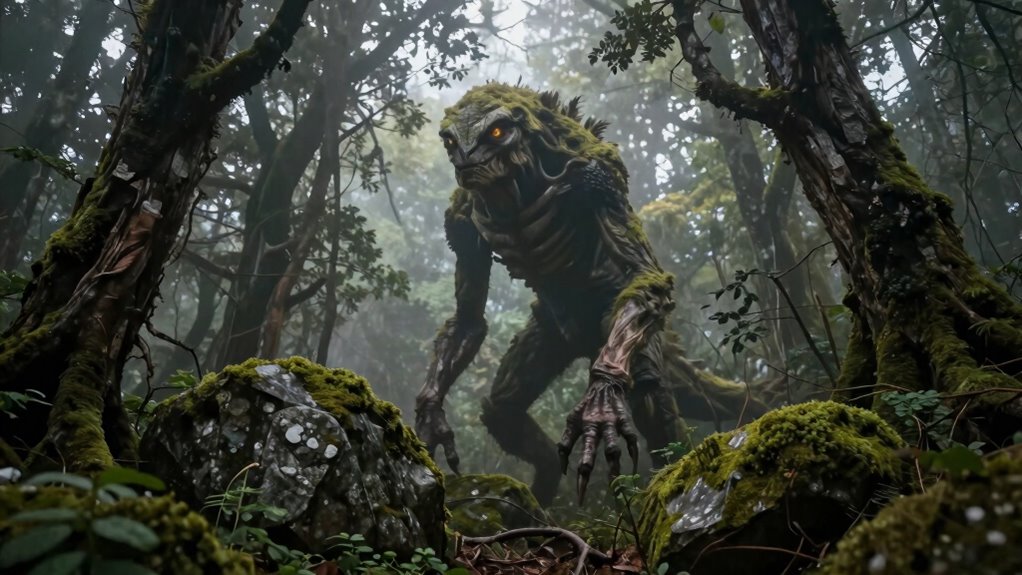
Throughout the world, different regions have their own mysterious creatures known as cryptids—beings that defy scientific explanation and ignite local legends. These creatures often reflect the unique climate, terrain, and isolation of their environments, shaping their mythic origins and the evolution of cryptid folklore. You might find that the landscape you’re exploring influences the stories passed down through generations, giving each cryptid a distinct identity linked to its surroundings.
For example, in dense forests or rugged mountain ranges, stories of elusive creatures like Bigfoot or the Yeti develop. Their mythical creature origins are rooted in the isolation and difficult terrain that make them hard to verify but easy to mythologize. As these stories travel through oral tradition, they evolve to embody the fears, hopes, and cultural values of local communities. Over time, the cryptid folklore of these regions adapts to reflect changing environments, societal fears, or even modern influences, reinforcing the creature’s place in local identity.
In swampy or marshy areas, the legends often center around water-dwelling cryptids such as the Louisiana Rougarou or the Irish Dobhar-chú. These stories highlight the mysterious qualities of water, which can be both life-giving and dangerous. The mythical creature origins of these cryptids frequently tie back to ancient water spirits or monsters, shaping their folklore evolution from simple cautionary tales to complex legends that warn of the unseen dangers lurking beneath the surface. The terrain’s fluidity and unpredictability help explain why these cryptids are often described as shape-shifting or elusive. Additionally, water-related phenomena influence how these stories develop, emphasizing the mysterious and unpredictable nature of water environments.
In arid deserts or remote islands, cryptids like the Chupacabra or the Moa reflect the harshness of their environments. Their mythic origins often include themes of survival and adaptation, mirroring the resilience required to thrive in challenging climates. As these stories spread, they grow to symbolize the resilience of local cultures against adversity or the mysteries of unexplored territories. The isolation of these regions fosters a sense of mystery, making the cryptids’ folklore evolution a way to explain the unexplainable in harsh, unforgiving landscapes. Additionally, the geographical features of these areas influence how stories develop, often emphasizing the importance of resourcefulness and resilience. Moreover, the environmental conditions further shape the legends, highlighting how specific climates impact folklore.
Ultimately, the cryptids you hear about are more than just strange creatures—they’re living stories woven from the fabric of their environment. Their mythic origins and folklore evolution reveal how climate, terrain, and isolation shape the legends, giving each cryptid a special place in regional identity and collective imagination.
As an affiliate, we earn on qualifying purchases.
Frequently Asked Questions
Are There Scientific Explanations for Any Regional Cryptids?
Yes, some regional cryptids have scientific explanations rooted in biological anomalies or misidentifications. You might find that folklore authenticity often stems from sightings of rare animals or misunderstood creatures. For example, large amphibians, misidentified known animals, or natural phenomena can create legends. These explanations help demystify cryptids, showing how biological anomalies and human perception contribute to the enduring stories, even if no concrete evidence supports their existence.
How Do Local Legends Influence Cryptid Sightings?
You might think local legends are just stories, but they deeply influence cryptid sightings through cultural symbolism. When you encounter a cryptid, your perception is shaped by local folklore, which colors your interpretation of ambiguous sightings. These stories create a shared identity and reinforce beliefs, making sightings seem more real. Like a modern-day “telephone,” legends evolve and spread, blurring the line between myth and reality, fueling the mystery and fascination around regional cryptids.
Have Any Cryptids Been Officially Documented by Researchers?
Most cryptids haven’t been officially documented by researchers, as their origins often stem from folklore and local legends. Still, some have inspired scientific investigations driven by cultural impact and curiosity. You’ll find that cryptid origins are rooted in stories passed down through generations, but the lack of concrete evidence keeps them in the domain of myth. Despite this, these tales influence local culture and continue to fascinate enthusiasts worldwide.
What Role Do Indigenous Stories Play in Cryptid Folklore?
Think of indigenous stories as ancient tapestries, woven with cultural symbolism and rich oral tradition. They play a vital role in cryptid folklore, acting as living narratives that preserve local beliefs and environment-specific knowledge. You can see this in how these stories shape perceptions of mysterious creatures, often embodying nature’s power or spiritual significance. These tales connect you to history, offering insight into how communities interpret the unknown through generations.
Are There Modern Technologies Used to Investigate Cryptid Reports?
Modern technologies like trail cameras, drones, and thermal imaging help you investigate cryptid reports more effectively today. These technological advancements allow you to gather evidence without disturbing the environment, aiding folklore preservation by providing visual proof. You can analyze sightings more objectively, increasing credibility. By combining tech with traditional storytelling, you enhance both cryptid research and the cultural significance of regional folklore, making investigations more engaging and scientifically grounded.
As an affiliate, we earn on qualifying purchases.
Conclusion
Just like hidden gems buried deep within diverse landscapes, regional cryptids are treasures that reveal the soul of their environments. They’re echoes of the terrain, whispers of climate, and reflections of isolation—mysterious guardians of local stories. As you uncover their secrets, remember, these creatures are like shadows cast by the land itself, forever intertwined with the very essence of the places they call home. Keep exploring, and let their legends illuminate your curiosity.
As an affiliate, we earn on qualifying purchases.
As an affiliate, we earn on qualifying purchases.
Columbus Day / Indigenous Peoples' Day Picks
long weekend sales
As an affiliate, we earn on qualifying purchases.