
Discover the Tlahuelpuchi, an infamous vampire witch from Mexican folklore. Known for transforming into a beautiful woman by day and a bloodthirsty creature at night, she preys on children and pregnant women. Folk traditions involve rituals, charms, and taboos to protect against her dangers. These stories reflect cultural beliefs about morality, societal fears, and spiritual practices. If you continue exploring, you’ll uncover how these legends reveal deeper insights into Mexican culture and community life.
Key Takeaways
- Tlahuelpuchi are legendary vampire witches from Mexican folklore, known for transforming into beautiful women by day and predators at night.
- They feed on blood, particularly targeting children and pregnant women, embodying societal fears of nocturnal danger.
- Rituals and charms are used by communities to detect, ward off, or banish the Tlahuelpuchi, combining indigenous and Catholic traditions.
- The legend reflects cultural beliefs about morality, societal order, and explanations for mysterious illnesses or deaths.
- Folklore practices are organized within specific community spaces, reinforcing cultural identity and social cohesion.
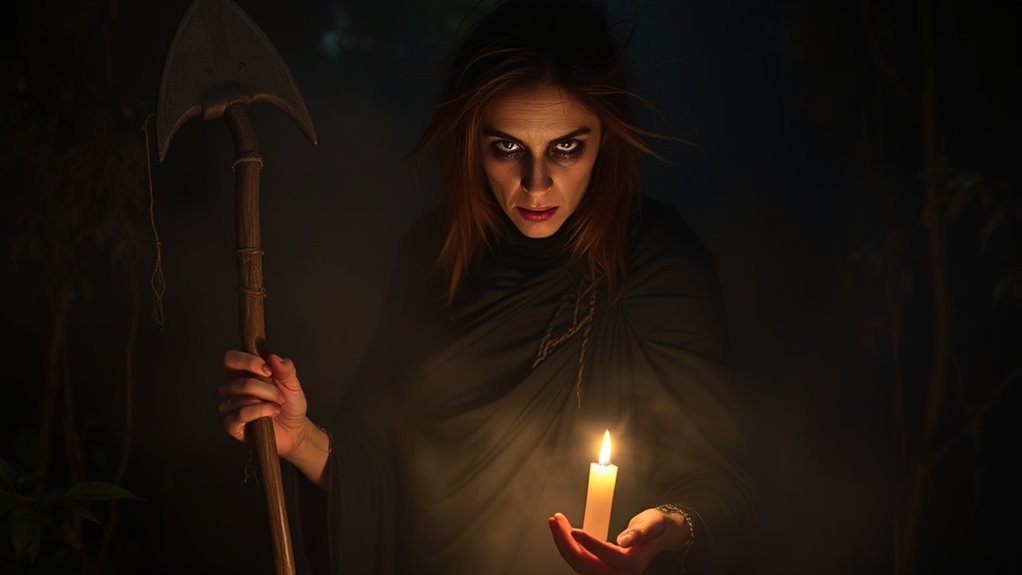
In the remote villages of Mexico, tales of the Tlahuelpuchi, a sinister vampire witch, continue to circulate among locals. These stories are deeply rooted in folk beliefs that have been passed down through generations, forming an essential part of Mexico’s rich folklore traditions. You might hear elders recount how this creature transforms into a beautiful woman by day and turns into a bloodthirsty predator by night. Such narratives are woven into the cultural fabric, blending superstition with community warnings, and serve as cautionary tales to keep people alert and respectful of unseen forces.
In Mexican villages, tales of the Tlahuelpuchi warn and reinforce cultural beliefs through stories of transformation and nocturnal danger.
You’ll find that the concept of the Tlahuelpuchi is more than just a spooky story; it’s a reflection of the local understanding of good and evil, life and death. Folk beliefs surrounding this creature often involve magical rituals and specific taboos, which community members believe can protect them from its wrath. For instance, some folk traditions prescribe certain charms or prayers to ward off these witches, emphasizing the importance of spiritual defense rooted in indigenous and Catholic syncretic practices. These traditions aren’t just superstition—they serve as social glue, reinforcing cultural identity and shared history.
The folklore surrounding the Tlahuelpuchi also highlights the community’s fear of the unknown and the power of storytelling to explain mysterious illnesses or deaths. People believe that the witch preys on vulnerable individuals, especially children and pregnant women, during the night. The stories often describe how the creature feeds on their blood, emphasizing the danger it poses to the community’s well-being. You might notice that these tales are often accompanied by descriptions of rituals performed to detect or banish the witch, reflecting a collective effort to protect their families and homes through folk practices.
Throughout these traditions, the figure of the Tlahuelpuchi embodies more than just a supernatural threat; it symbolizes societal anxieties and moral lessons. Folk beliefs serve to reinforce social cohesion by encouraging vigilance, morality, and respect for cultural customs. From generation to generation, these folklore traditions keep alive the stories that warn against greed, betrayal, or moral lapses—behaviors believed to invite the wrath of the witch. In this way, the legend of the Tlahuelpuchi isn’t just about fear; it’s a cultural mirror, illustrating how communities interpret and cope with the mysteries of life through shared stories and spiritual practices.
Additionally, understanding the role of space and organization in these traditions reveals how communities create designated zones for rituals and gatherings, which help maintain social order and cultural continuity.
Frequently Asked Questions
Are Tlahuelpuchi Believed to Still Exist Today?
You might wonder if Tlahuelpuchi, mythical creatures from Mexican folklore, still exist today. While many believe in their stories, there’s no scientific evidence to prove their existence. Some locals still talk about them, helping preserve folklore traditions. However, most see Tlahuelpuchi as part of cultural mythology rather than real beings. Whether as folklore preservation or legend, these stories continue to fascinate and keep cultural heritage alive.
What Rituals Are Associated With Tlahuelpuchi Practices?
You might imagine vampire rituals as shadowy dances in the moonlight, where witchcraft ceremonies involve secret chants and symbolic offerings. Tlahuelpuchi practices often include rituals like anointing themselves with herbs, casting protective spells, or performing nocturnal prayers to ward off evil spirits. These ceremonies, passed down through generations, blend indigenous beliefs and folklore, creating a mystic tapestry of ritual that binds the community in a shared supernatural tradition.
How Do Communities Typically Identify a Tlahuelpuchi?
You typically identify a tlahuelpuchi through community suspicion and witch identification signs. People might notice unusual behaviors, strange injuries, or nocturnal activities linked to them. Rumors and local stories often raise suspicion, prompting others to watch for specific traits or patterns. Community members may also rely on traditional knowledge or elders’ insights to spot these witches, but suspicion can quickly spread, making identification a collective effort.
Are There Any Cures or Protections Against Tlahuelpuchi?
You can safeguard yourself from a tlahuelpuchi by using medicinal remedies and wearing protective charms. Traditional remedies might include herbal infusions or specific rituals believed to ward off their influence. Protective charms, such as amulets or symbols, are also commonly used to keep these witches at bay. Stay aware of local customs and seek advice from community elders to ensure you’re using the most effective methods.
How Has Modern Culture Influenced Beliefs About Tlahuelpuchi?
You might notice how pop culture and media influence have softened beliefs about tlahuelpuchi, making them seem more like folklore than real threats. Movies, TV shows, and urban legends shape perceptions, often blending myth with entertainment. This modern portrayal can diminish fear, turning the once-terrifying figure into a cultural symbol or spooky story, rather than a genuine concern rooted in tradition.
Conclusion
You might wonder if the Tlahuelpuchi legend is just folklore, but some believe there’s truth behind the stories, hinting at cultural fears and historical realities. While modern science dismisses vampires, these tales could reflect society’s struggles with illness, death, or moral judgment. Whether myth or metaphor, the Tlahuelpuchi remains a powerful symbol of Mexico’s rich and complex cultural history—reminding you that sometimes, legends hold deeper truths than they seem.