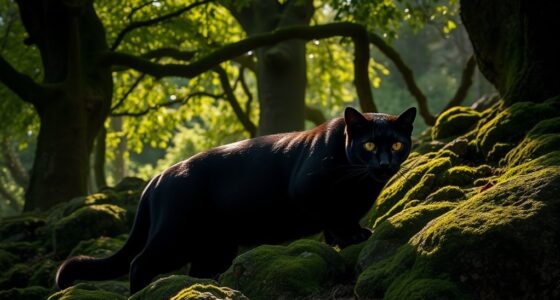
The yara-ma-yha-who is an eerie Australian folklore creature that lurks in treetops, waiting to ambush unsuspecting travelers. It’s a small, red, blob-like being with sharp teeth, long limbs, and a wide mouth. It tricks victims by mimicking sounds or voices, then drops to bite and feed on their blood before swallowing and regurgitating them. To discover the full chilling story behind this mythical predator, keep exploring its dark and mysterious origins.
Key Takeaways
- The Yara-ma-yha-who is a small, red, tree-dwelling creature from Australian Aboriginal folklore that resembles a vampire.
- It lurks in treetops, dropping to attack and feed on passersby by biting and sucking blood.
- It can mimic familiar voices and sounds to deceive and trap victims in the wilderness.
- The creature serves as a cautionary symbol warning against venturing alone into unknown or dangerous areas.
- Its myth emphasizes respecting nature’s mysteries and highlights the dangers lurking in Australian wilderness.

The Yara-ma-yha-who is a mysterious creature from Australian Aboriginal folklore known for its disturbing appearance and behavior. As you explore the world of mythical creatures, you’ll find that this creature’s origins are deeply rooted in the folklore origins of Aboriginal storytelling, serving as a cautionary figure for travelers and children alike. The Yara-ma-yha-who is said to resemble a small, red, blob-like being with no hair, a wide mouth filled with sharp teeth, and long, spindly limbs. Its most unsettling trait is its habit of lurking in the treetops, waiting patiently for an unwary person to pass beneath. When someone walks underneath, it drops from the branches to attack, but its attack isn’t just violent—it’s cunning.
Once it’s on you, the Yara-ma-yha-who will bite and suck your blood, but that’s only part of its sinister plan. After feeding, it often swallows its victim whole, only to regurgitate them later, often smaller and weaker than before. This cycle of feeding and regurgitation means it can repeatedly drain a person’s strength and vitality, making it a terrifying predator in the folklore. Its behavior is unique among mythical creatures, blending aspects of vampire legends with tree-dwelling predators, which adds to its eerie reputation.
The Yara-ma-yha-who drains vitality through feeding, swallowing victims whole, then regurgitating them weaker—an eerie predator of folklore.
What makes the Yara-ma-yha-who particularly frightening is its ability to mimic the voices of loved ones or familiar sounds, luring travelers into its trap. This clever deception plays on common fears, making it even more unsettling. Aboriginal stories warn that if you hear strange voices or see a small red figure in the trees, you should stay away—because the creature’s folklore origins serve as a warning about the dangers lurking in the wilderness. It’s believed that the Yara-ma-yha-who embodies the perils of venturing into the unknown alone or straying too far from safety.
Furthermore, the creature’s mythic status has been used to teach children about respecting nature and understanding indigenous storytelling as a way to preserve cultural knowledge. Throughout generations, the tales of the Yara-ma-yha-who have been passed down to warn children about the risks of wandering off or not paying attention to the environment. Its mythic status as a tree-dwelling vampire-like creature emphasizes the importance of respecting nature and its mysteries. While it’s a creature born from folklore origins, the Yara-ma-yha-who continues to capture imaginations, standing as a chilling reminder of the darker side of the mythical creatures that populate indigenous stories. If you ever find yourself in the Australian wilderness, remember these stories—lest you encounter the Yara-ma-yha-who lurking in the branches above.
Frequently Asked Questions
What Is the Origin of the Yara-Ma-Yha-Who Legend?
You might find the mythological origins of the yara-ma-yha-who rooted in Aboriginal storytelling, symbolizing cultural lessons or warnings. This legend serves as cultural symbolism, warning people about the dangers of unfamiliar environments and the importance of respecting nature. Over generations, it’s been passed down, embodying fears and values of the indigenous communities. By understanding its roots, you gain insight into how stories shape cultural identity and moral lessons.
Are There Any Known Sightings of the Yara-Ma-Yha-Who Today?
Like whispers carried by the wind, modern sightings of the yara-ma-yha-who remain rare and debated. You won’t find concrete evidence, as folklore debates keep this creature in the domain of legend. Some say locals have glimpsed strange figures in the treetops, but skeptics dismiss these as illusions or misidentifications. Until verified, the yara-ma-yha-who stays a myth, lurking in stories rather than in reality.
How Does the Yara-Ma-Yha-Who Compare to Other Australian Myth Creatures?
You’ll find that the yara-ma-yha-who stands out among Australian mythical comparisons because of its unique creature symbolism as a vampire-like tree. Unlike other creatures, it embodies both nature and danger, symbolizing lurking threats in the wilderness. Its eerie, parasitic behavior contrasts with the more mystical or protective roles of other myth creatures like the bunyip or the rainbow serpent, making it a distinctive and haunting symbol in Aboriginal stories.
What Is the Cultural Significance of the Yara-Ma-Yha-Who in Aboriginal Communities?
You recognize that the yara-ma-yha-who holds deep spiritual symbolism in Aboriginal communities, representing lessons about respect and caution in the natural world. Through storytelling traditions, it teaches younger generations about boundaries and the importance of harmony with nature. Its presence in oral stories reinforces cultural values, serving as a reminder to honor the environment and uphold societal norms, making it an essential part of their spiritual and cultural identity.
Has the Yara-Ma-Yha-Who Appeared in Modern Media or Pop Culture?
You’ll find the yara-ma-yha-who in modern adaptations and pop culture references, especially in Australian media and horror stories. It appears in books, TV shows, and even video games, where creators reimagine this legendary creature to fit contemporary storytelling. These appearances help keep the myth alive, sparking curiosity and intrigue among audiences unfamiliar with the original Aboriginal tales. Its presence in pop culture amplifies its eerie, enthralling reputation today.
Conclusion
So, next time you wander through the Australian bush, keep an eye out for the Yara-ma-yha-who, a creature as tricky as a fox in a henhouse. Its sneaky, vine-like form hides a dangerous secret, ready to catch the unwary. Remember, this vampire tree isn’t just a story — it’s a shadow lurking in the whispers of the forest, waiting to pull you into its tangled web. Stay alert, and never underestimate what lurks in the wilderness.