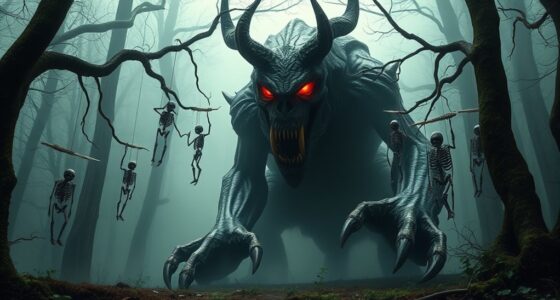
Female creatures of legend often embody societal fears and cultural values, reflecting how gender roles shape myth and folklore. They are commonly portrayed as seductive, dangerous, or powerful, reinforcing stereotypes about femininity and morality. These monsters symbolize societal anxieties about women stepping outside traditional roles or asserting independence. By exploring these stories further, you’ll discover how cultural narratives reveal underlying anxieties, hopes, and attitudes towards female power and identity across different societies.
Key Takeaways
- Female monsters often embody societal fears about female independence, sexuality, and power, reflecting cultural anxieties.
- Portrayals frequently depict female monsters as seductresses or dangerous beings to reinforce gender stereotypes.
- Legends mirror societal attitudes, portraying female creatures as either threatening or victimized, highlighting gendered power dynamics.
- Visual and narrative elements emphasize gendered features to reinforce stereotypes about female unpredictability and danger.
- Female monsters symbolize cultural values and anxieties surrounding femininity, agency, and societal roles across different societies.
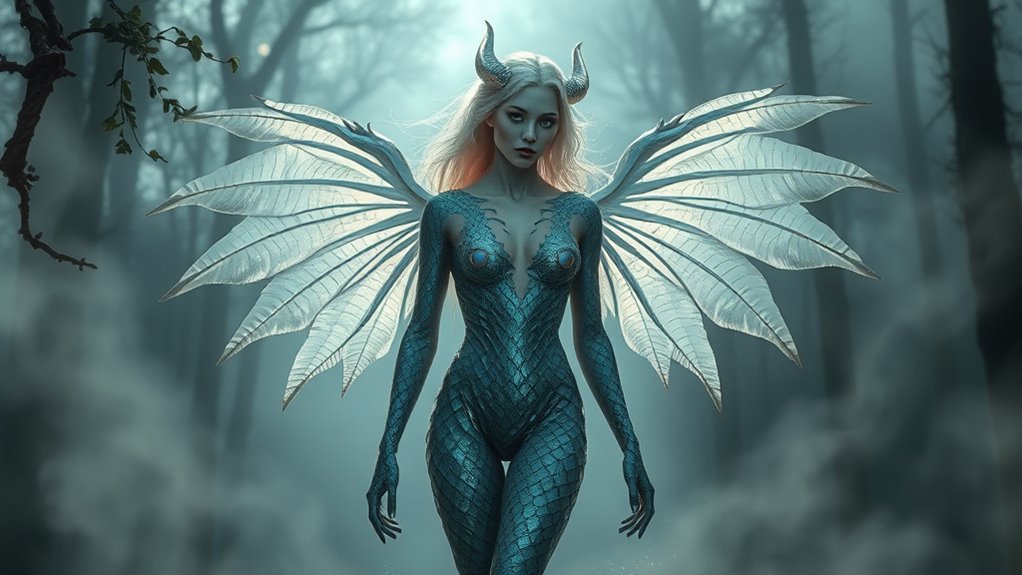
Have you ever wondered how gender influences the way we see monsters in stories and myths? It’s a fascinating question because our perceptions of these creatures aren’t formed in a vacuum. Instead, they’re shaped by sociocultural influences and gender role representations that have been passed down through generations. These influences color how we interpret female monsters—whether they’re seen as dangerous temptresses, tragic figures, or misunderstood beings. Society’s expectations about gender roles often dictate how female monsters are portrayed, reinforcing certain stereotypes about femininity, power, and vulnerability. For example, in many myths, women who become monsters are depicted as embodying chaos or moral decay, reflecting societal fears about women stepping outside traditional roles. These stories serve as cautionary tales, warning against female independence or assertiveness by transforming women into monsters who threaten societal order.
Sociocultural influences shape the narratives we tell about female monsters, and these stories often mirror the broader gender dynamics within a culture. In patriarchal societies, female monsters are frequently portrayed as seductresses or sirens designed to tempt men and lead them astray, reinforcing the idea that women are inherently dangerous or morally corrupt. Conversely, in some cultures, female monsters embody the power of nature or spiritual forces, reflecting a different set of gender role representations that see women as connected to mystical or primal energies. These portrayals aren’t random; they serve to uphold or challenge existing gender norms. The way female monsters are depicted often echoes societal anxieties about female agency, sexuality, and independence, either demonizing or romanticizing these traits. Additionally, the visual representation of female monsters often emphasizes certain gendered features that reinforce these stereotypes.
You might notice that these gendered representations influence how you perceive female monsters. They aren’t just terrifying beings; they symbolize cultural fears, hopes, and values about what it means to be a woman. When stories depict female monsters as cunning, lethal, or seductive, they reinforce stereotypes that women are unpredictable or dangerous when they deviate from prescribed roles. Alternatively, some stories portray female monsters as victims or tragic heroines, highlighting societal discomfort with female power but also eliciting sympathy. These contrasting portrayals reveal how deeply gender role representations are embedded in myth and folklore, often serving to reinforce societal expectations rather than challenge them. By understanding this, you can see that the monsters themselves are less about the creatures and more about the cultural meanings assigned to gender, serving as mirrors to the complex ways societies view femininity and power.

Medusa Female Monster Snakes Hair Mythology Statue Sculpture Casting Stone
Handmade in Greece – Hand painted
As an affiliate, we earn on qualifying purchases.
As an affiliate, we earn on qualifying purchases.
Frequently Asked Questions
How Do Female Monsters Differ Culturally Worldwide?
You’ll notice female monsters differ culturally worldwide because they often symbolize mythical fertility or serve as sacred protectors. In some cultures, they embody nurturing qualities, representing life and abundance, while in others, they warn or punish. These creatures reflect local beliefs and values, shaping how societies view femininity and power. Their roles and symbolism adapt to cultural contexts, making each female monster a unique mirror of its society’s worldview.
Are Female Monsters Often Portrayed as Nurturing or Destructive?
Think of female monsters as dual-sided mirrors reflecting society’s fears and hopes. Sometimes, they embody nurturing motherly archetypes, offering protection or care, yet at other times, they become femme fatales, symbolizing destructive power and seduction. You see this tension in legends worldwide—where they can be both nurturing figures and dangerous threats—highlighting the complex, often contradictory roles women play in myth and storytelling.
What Symbolism Is Associated With Female Monsters in Legends?
You see that female monsters in legends often symbolize both protective and destructive forces through their symbolic power. They embody matriarchal symbolism, representing authority, fertility, and chaos. These creatures challenge traditional gender roles, highlighting the duality of nurturing and destruction. Their symbolism reveals society’s complex view of female power, blending reverence with fear, and illustrating how female monsters serve as potent symbols of both creation and destruction in mythic narratives.
How Have Female Monsters Evolved in Modern Media?
In modern media, female monsters evolve from symbols of mythical fertility and serpent symbolism into complex characters often challenging traditional roles. You see them portrayed as powerful, autonomous beings who embody both danger and allure. They break stereotypes by highlighting strength, resilience, and ambiguity. This shift allows audiences to explore themes of transformation, independence, and the multifaceted nature of femininity, moving beyond mere myth to nuanced, compelling characters.
Do Female Monsters Challenge Traditional Gender Roles?
Did you know that over 60% of female monsters in modern media challenge traditional gender stereotypes? You’ll see them breaking power dynamics, embodying strength, independence, and complexity. These creatures often defy the passive or submissive roles historically assigned to women, actively challenging societal expectations. By doing so, they reshape perceptions and empower audiences, encouraging a more nuanced understanding of gender roles in storytelling and highlighting that female monsters can be as powerful and multifaceted as their male counterparts.

PTC 9.75 Inch Satyr Creature Mythological Being Resin Statue Figurine
Perfect gift for those that love Greek
As an affiliate, we earn on qualifying purchases.
As an affiliate, we earn on qualifying purchases.
Conclusion
As you explore deeper into these legends, you’ll find that female creatures often symbolize complex truths about society and ourselves. Their stories whisper softly, hinting at hidden fears and desires beneath the surface. Embrace the mystery they hold, for in their shadows, you might discover reflections of your own unspoken thoughts. These monsters remind us that beneath every myth, there’s a delicate dance between power and vulnerability—waiting quietly to be uncovered.

Race the Sands: A Dark Fantasy Epic Featuring Monster Racing and Female Empowerment
As an affiliate, we earn on qualifying purchases.
As an affiliate, we earn on qualifying purchases.

Fantasy Dragon Wall Art 11×14 – Epic Medieval Poster – Red Dragon Wall Decor for Bedroom, Home Office, Living Room – Mythical Creature Art Print for Game Room – Gift for Fantasy Lovers
11×14 UNFRAMED PRINTS – NOT Canvas or Tin Sign
As an affiliate, we earn on qualifying purchases.
As an affiliate, we earn on qualifying purchases.