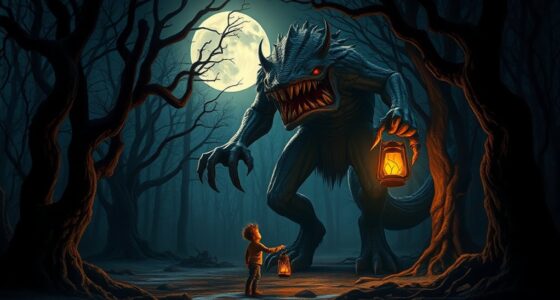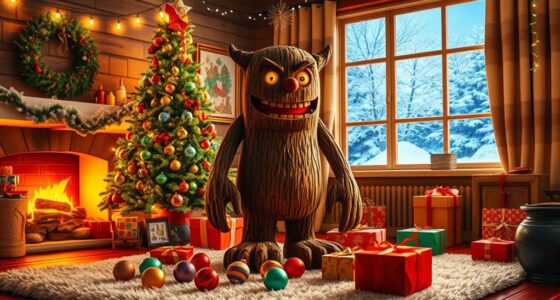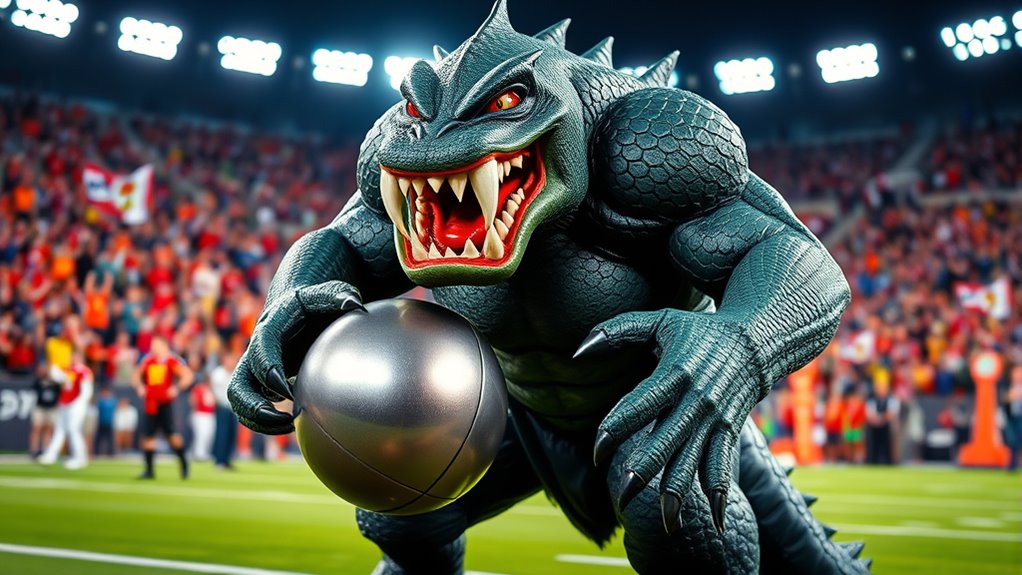

Many sports teams choose monsters or beasts as mascots to symbolize strength, courage, and resilience. These intimidating creatures inspire fans and players alike, reflecting qualities like bravery and dominance. Beast mascots also carry cultural significance, connecting teams to history and tradition. The striking visuals help build strong brand identities and rally support. To discover more about how these monsters shape team spirit and culture, keep exploring the powerful stories behind these iconic mascots.

Prime made for students and young adults
- Fast, free delivery for dorm and study essentials
- Prime Video and Amazon Music included
- Member-only deals
Key Takeaways
- The monster mascot symbolizes power, fearlessness, and dominance, aligning with the qualities of beast-named sports teams.
- Teams often choose monster or beast-themed mascots to evoke strength and intimidate opponents visually and psychologically.
- Monster mascots can incorporate cultural and mythological elements, enhancing team identity and fan engagement.
- The striking and memorable design of monster mascots serves as a powerful marketing tool and brand symbol.
- Using beast or monster mascots fosters team unity, pride, and a fierce competitive spirit among supporters.

Have you ever wondered why so many sports teams choose beast names to represent their spirit? The answer lies in the powerful symbolism that beasts carry and their deep cultural significance across the globe. When teams pick a beast as their mascot, they’re not just selecting a fierce or majestic creature—they’re tapping into a rich tradition of conveying strength, resilience, and competitive edge. Mascot symbolism plays a fundamental role here; animals like lions, tigers, and bears embody qualities that inspire both players and fans. These creatures are often associated with bravery, dominance, and agility, traits that teams want to project on the field. By adopting a beast as their mascot, a team visually and psychologically aligns itself with these admirable qualities, creating a sense of unity and purpose.
Beast mascots embody strength, resilience, and courage, inspiring teams and fans with their powerful symbolism and cultural significance.
Cultural significance amplifies the appeal of beast mascots. Many animals hold revered status in various societies, representing ideals or spiritual beliefs. For instance, the lion is often called the “king of beasts” and symbolizes royalty, courage, and leadership—values that sports teams aim to exemplify. Similarly, the eagle, revered in many indigenous cultures, signifies freedom and keen vision, qualities that resonate with a team’s desire for clarity and excellence. These cultural associations give teams more than just a fearsome image; they forge a deeper connection with history and tradition, enriching the team’s identity and fostering pride among supporters. When a team chooses a beast with cultural roots, it’s not just adopting a mascot but embracing a symbol that carries on a legacy, making their identity more meaningful and resonant.
Additionally, the visual impact of a beast mascot can be a powerful marketing tool, helping to build a strong brand identity that fans can rally around.
beast mascot costume for sports teams
As an affiliate, we earn on qualifying purchases.
As an affiliate, we earn on qualifying purchases.
Frequently Asked Questions
How Do Teams Choose Their Beast Mascot?
You choose your beast mascot by considering mythical creatures and cultural symbolism that resonate with your team’s identity. Think about animals or beasts that embody strength, courage, or resilience, drawing inspiration from legends or local history. You want a mascot that inspires fans and intimidates opponents, so select a creature with powerful symbolism. This connection helps foster team spirit and creates a memorable, meaningful symbol for your fans and community.
Are Beast Mascots Based on Local Wildlife?
Are beast mascots based on local wildlife? Sometimes, yes, but often they draw inspiration from mythical creatures and cultural symbolism to create a sense of awe and power. Think of dragons or griffins—beasts that symbolize strength and bravery across cultures. These legendary figures make teams feel larger-than-life, transcending everyday wildlife. So, while local animals influence some mascots, many are rooted in myth and cultural stories that ignite fans’ imaginations.
What Psychological Impact Do Beast Mascots Have on Fans?
Beast mascots evoke fear and loyalty, shaping how you connect with your team. They foster a sense of identity, making you feel part of something larger, while also intimidating opponents. This dual effect boosts your confidence and passion, encouraging fierce loyalty. When you see a beast mascot, it taps into primal instincts, reinforcing your team’s strength and unity, and inspiring you to stand firm during tough moments.
Have Any Teams Changed Their Beast Mascot Over Time?
Yes, many teams have changed their beast mascot over time due to branding changes or mascot evolution. You might notice teams updating their mascots to stay current or reflect new team identities. These branding changes often aim to energize fan support and modernize the team’s image. As a result, the mascot evolution keeps teams relevant, while fans develop new connections with the revamped or entirely new beast mascots.
Are Beast Mascots Used More in Certain Sports?
Beast mascots are more common in high-energy sports like football and hockey, where animal symbolism boosts team spirit like a roaring lion. You’ll see these mascots often because mascot design trends favor fierce, memorable creatures that embody strength and agility. In contrast, sports like baseball tend to use more approachable or humorous mascots. So, if you’re looking for adrenaline and competitiveness, beast mascots are your go-to, especially in contact-heavy sports.
As an affiliate, we earn on qualifying purchases.
Conclusion
As you step back and look at these beastly mascots, they become more than just symbols—they’re fierce guardians of team spirit, roaring through the noise like thunder. These creatures embody strength, courage, and resilience, reminding you that, like beasts, you too can face challenges head-on. When you cheer for these teams, you’re joining a wild, unstoppable force, a roaring reminder that within you lies a fierce beast ready to conquer any obstacle in your path.
As an affiliate, we earn on qualifying purchases.
As an affiliate, we earn on qualifying purchases.
Halloween Picks
halloween
As an affiliate, we earn on qualifying purchases.