Monster syncretism happens when different cultures blend their mythological creatures, creating hybrid monsters that reflect shared stories, fears, and values. These combinations often result from centuries of cultural exchange through trade, exploration, and storytelling. As a result, familiar creatures merge into new forms, symbolizing universal themes like power or protection. If you keep exploring, you’ll discover how these mythical hybrids reveal deeper connections between societies and their evolving legends.
Key Takeaways
- Different cultures blend mythological creatures by combining attributes, creating hybrid monsters that reflect shared themes and fears.
- Mythological blending occurs through cultural exchanges, trade, and storytelling, enriching legends with diverse creature traits.
- Hybrid monsters symbolize universal virtues or fears, embodying qualities like strength, protection, chaos, or divine power.
- Shared stories evolve as explorers and travelers introduce foreign creatures, leading to the creation of new mythic hybrids.
- Monster syncretism illustrates interconnectedness of cultures and how mythologies adapt and merge over time through cultural exchange.
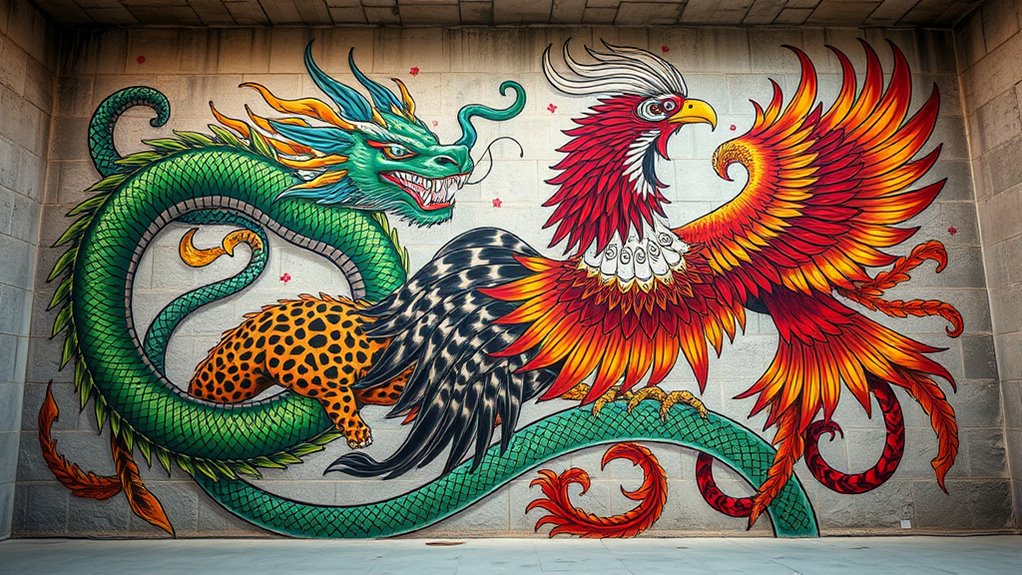
Monster syncretism refers to the blending and merging of different mythological creatures and legendary beings across cultures, creating new hybrid entities that reflect shared stories and beliefs. When you explore this phenomenon, you see how mythological blending transforms simple legends into complex, interconnected narratives. It’s a process where cultural creature fusion occurs, blending attributes from diverse mythic beings to craft something entirely new. These hybrid monsters often symbolize universal themes, like protection, chaos, or divine power, and their creation highlights how human societies exchange ideas and adapt stories to fit their unique worldview.
Monster blending creates hybrid creatures that symbolize universal themes across diverse cultures.
As you probe into mythological blending, you find that many monsters we recognize today are the result of centuries of cultural exchanges. For example, a dragon from Chinese mythology might share traits with European serpents, leading to hybrid forms like the Chinese lung or the European wyvern. These creatures, while rooted in specific cultural contexts, embody shared fears, hopes, and moral lessons, demonstrating how different societies influence each other’s mythic landscapes. This cultural creature fusion doesn’t erase original stories but instead enriches them, allowing each culture to interpret familiar themes through new lenses.
In some cases, mythological blending results in creatures that combine elements from various beings into entirely new entities. Think of how the griffin merges the body of a lion with the head and wings of an eagle, symbolizing strength and vigilance. Such creatures often serve as symbols of power or guardianship, showcasing how mythic blending can produce figures that embody multiple virtues or fears simultaneously. The process of mythological blending isn’t accidental; it’s a reflection of human curiosity and storytelling ingenuity, where the boundaries between worlds, animals, and spirits blur to create monsters that resonate across different cultures.
This kind of cultural creature fusion also plays a role in the evolution of myths. As traders, explorers, and travelers moved between regions, they carried stories with them, weaving new layers into existing mythologies. Over time, this led to the emergence of hybrid monsters that combine traits from various traditions, making their legends more complex and meaningful. You can see this in how local monsters are adapted or merged with foreign mythic figures, forming new legends that speak to the shared human experience. Ultimately, monster syncretism reveals how interconnected cultures are and how stories evolve through continuous mythological blending, enriching the tapestry of world folklore. Additionally, understanding copyright and trademark principles helps to protect these rich cultural stories and their unique identities.
Frequently Asked Questions
How Do Myths Influence Modern Pop Culture Representations of Monsters?
Myths influence modern pop culture representations of monsters by inspiring mythical hybrids that captivate audiences. You see, creators often use cultural reinterpretation to adapt these legends, giving monsters new traits or combining different mythologies. This process keeps stories fresh and relevant, allowing you to connect with diverse backgrounds. As a result, myth-inspired monsters become iconic in movies, games, and books, blending ancient symbolism with contemporary storytelling.
What Role Do Religious Beliefs Play in Monster Syncretism?
Religious beliefs play a significant role in monster syncretism by shaping mythological influence and infusing monsters with spiritual symbolism. You’ll find that many creatures reflect divine or demonic qualities, blending spiritual themes with cultural stories. This fusion helps communities interpret the supernatural, giving monsters deeper meaning tied to their faith. As a result, religious beliefs guide how these creatures evolve across cultures, creating complex symbols rooted in spiritual symbolism and mythological influence.
Are There Historical Examples of Monster Syncretism Affecting Societal Norms?
You can see examples of monster syncretism affecting societal norms through historical cultural amalgamations. When societies encounter each other, mythological evolution occurs, blending creatures and beliefs, which influences norms and values. For instance, the integration of dragon legends across cultures shaped societal attitudes toward strength and protection. These amalgamations often reinforce social cohesion or challenge existing norms, demonstrating how mythic creatures impact societal development over time.
How Do Geographic Boundaries Impact the Merging of Creature Myths?
Did you know that 65% of mountain myths and island legends involve unique creature hybrids? Geographic boundaries markedly influence how these myths merge or stay distinct. Mountains often act as natural barriers, leading to diverse creature stories, while islands foster unique legends due to isolation. You’ll find that these boundaries shape cultural exchanges, either limiting or encouraging the blending of creature myths, which creates fascinating variations across regions.
Can Monster Syncretism Be Linked to Political or Territorial Conflicts?
Yes, monster syncretism can be linked to territorial disputes and cultural identity. When groups clash over land, they often blend their mythologies to assert dominance or preserve cultural pride. By merging creature myths, you reinforce shared history and territorial claims, making the monsters symbols of collective identity. This blending becomes a way to negotiate power, resist outsiders, or solidify cultural bonds amid ongoing conflicts.
Conclusion
As you explore these blended myths, you realize that monster syncretism isn’t just about legends—it’s a bridge linking us across time and space. Every creature, from ancient dragons to modern cryptids, reflects shared fears and hopes, like a well-worn playlist echoing through history. So, next time you hear a story, remember: even in this digital age, these myths remind us we’re all connected, just like the heroes in those timeless tales, fighting shadows together.