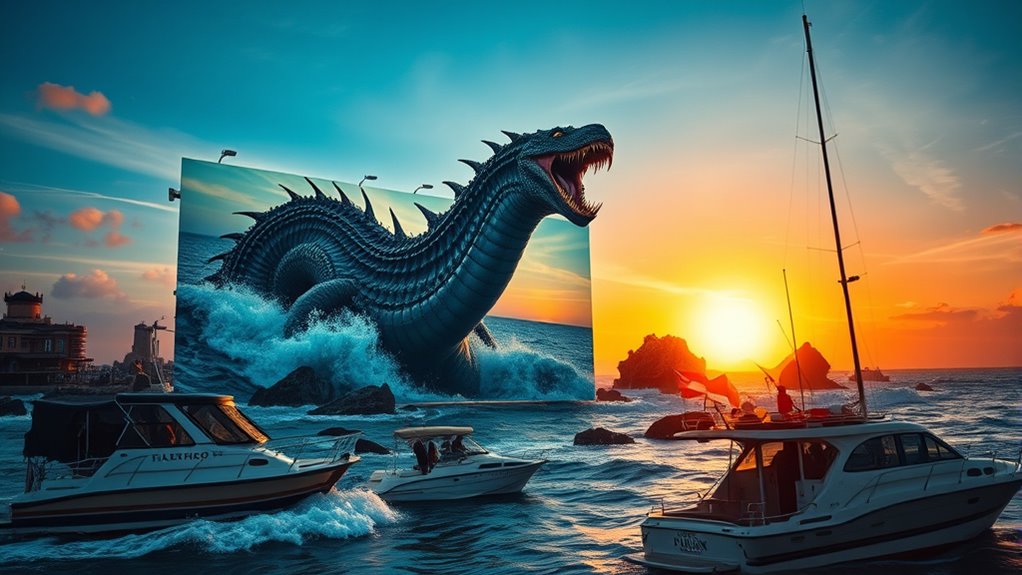

Monster myths like Bigfoot and Nessie are powerful tools in advertising and tourism. They spark curiosity, evoke adventure, and create a sense of mystery that draws visitors and customers alike. Towns and brands use these legends to boost local economies and attract attention through festivals, stories, and marketing campaigns. The allure of the unknown keeps the myths alive, encouraging exploration and wonder. If you keep exploring, you’ll discover how these stories shape culture and generate excitement worldwide.
Key Takeaways
- Cryptids are used in advertising to evoke curiosity and adventure, leveraging their mysterious and mythical appeal.
- Tourist destinations promote legends and sightings of monsters like Nessie or Bigfoot to attract visitors.
- Mythical creature stories boost local economies through monster festivals and themed attractions.
- Legends enhance cultural identity by symbolizing mystery and encouraging exploration beyond ordinary experiences.
- Advertising exploits cryptid ambiguity to generate intrigue, promising excitement and breaking routine for audiences.
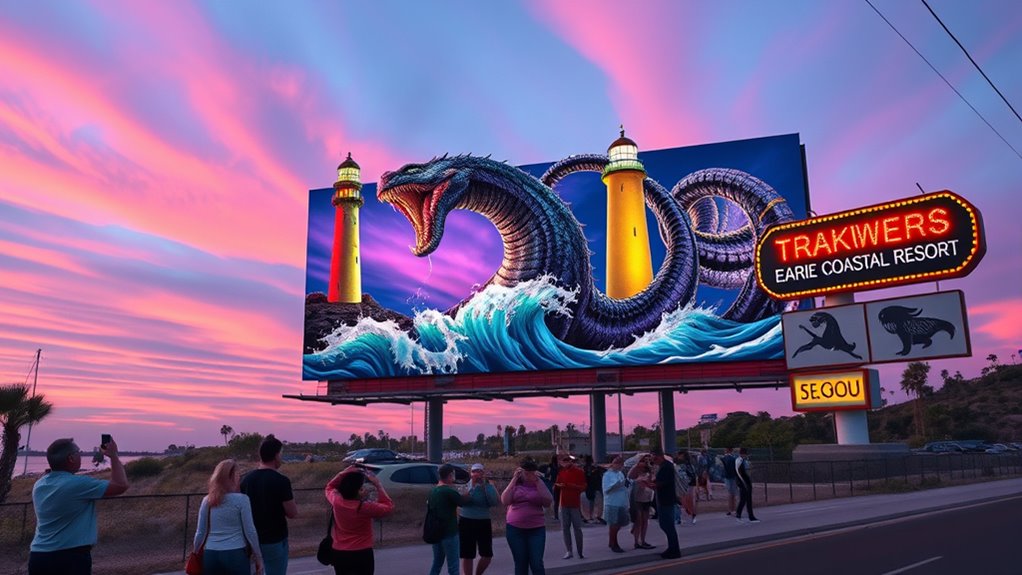
Many advertising campaigns and tourist attractions rely on the allure of monsters to captivate audiences and boost interest. This strategy taps into our fascination with cryptid sightings and legendary creatures, which have long fueled stories and myths that spark curiosity. When you see a billboard or visit a local site claiming to be home to a mysterious beast, it’s no accident—these stories play on our desire for adventure and the unknown. Cryptids like Bigfoot, the Loch Ness Monster, or the Chupacabra aren’t just legends; they’re cultural phenomena that stir the imagination. They serve as powerful symbols of mystery, inviting you to explore beyond the ordinary. Interestingly, some of these stories persist despite minimal evidence, highlighting the enduring power of myth in popular culture.
Tourist destinations often leverage these mythical creatures to attract visitors eager for a taste of the supernatural. For example, towns might host monster festivals or claim sightings to generate buzz and bring in tourism dollars. You might find yourself drawn to a lake purportedly haunted by Nessie, or a forest rumored to be the home of Bigfoot. These stories create a sense of intrigue and adventure, encouraging you to explore the landscape with a sense of wonder. Sometimes, the legends are supported by minimal evidence, but that doesn’t diminish their power to attract tourists or boost local economies. In fact, the more elusive and mysterious the creature, the more captivating the story becomes.
Advertising campaigns often play on the ambiguity surrounding legendary creatures, using cryptid sightings to evoke curiosity. They might feature grainy images, eyewitness stories, or folklore that suggest something extraordinary is lurking nearby. You might be enticed to visit a theme park that promises encounters with mythical monsters or to buy souvenirs inspired by these stories. These tactics turn mythical monsters into marketing tools, making them part of a broader narrative that promises adventure, excitement, and a break from the mundane. The allure of these creatures lies in their mystery—they’re often just out of reach, yet tantalizing enough to keep your imagination engaged.
Frequently Asked Questions
How Do Monster Myths Influence Consumer Behavior Beyond Advertising?
Monster myths influence your behavior by shaping myth-based branding that taps into deep-seated fears and desires. Fear-driven marketing uses these stories to create urgency, making you more likely to engage with products or experiences that promise safety or excitement. You might avoid certain brands or destinations or be drawn to others that evoke a sense of adventure or security, as these myths tap into your subconscious and influence your decision-making.
Are There Cultural Differences in How Monster Myths Are Perceived Globally?
You’ll find that cultural variations paint different pictures of monster myths worldwide, shaping unique perceptions. In some places, monsters symbolize fear and chaos, while in others, they embody wisdom or protection. These global perceptions act like a kaleidoscope, reflecting diverse values and beliefs. Recognizing these cultural nuances helps you understand that monster myths are not universal; instead, they are vibrant threads woven into each society’s unique fabric.
What Psychological Effects Do Monster Myths Have on Tourists’ Perceptions?
You might find that monster myths trigger fear reinforcement, making some tourists feel more cautious or anxious about unfamiliar places. At the same time, these stories stimulate curiosity, encouraging you to explore beyond your comfort zone. This dual effect influences perceptions, making destinations seem both intriguing and potentially threatening. Your reactions depend on how the myths are presented and your personal experiences, shaping your overall impression of the location.
How Do Companies Ethically Leverage Monster Myths in Marketing Strategies?
You can ethically leverage monster myth commercialization by focusing on storytelling that respects cultural roots and promotes local heritage. Emphasize authentic narratives that celebrate legend without exploiting fears or stereotypes. By prioritizing ethical storytelling, you build trust with your audience and create meaningful experiences. Use these myths to inspire curiosity and wonder, rather than manipulation, ensuring your marketing strategy honors tradition while engaging consumers responsibly.
Can Monster Myths Contribute to Sustainable Tourism Development?
Monster myths can positively contribute to sustainable tourism development by promoting eco tourism development and encouraging responsible travel. When you use mythical creature branding, you attract visitors interested in local legends, fostering cultural preservation and environmental awareness. This approach helps create unique experiences that support local communities while protecting natural resources. Embracing these myths sustainably guarantees tourism growth benefits everyone involved without harming the environment or cultural heritage.
Conclusion
As you navigate advertising and tourism, remember how myths shape perceptions—like the legend of Loch Ness, which keeps visitors searching for the unknown. Just as that mythical monster draws curiosity and excitement, your stories can spark wonder and trust. When you harness these myths thoughtfully, you turn ordinary destinations into magical places that invite exploration. So, embrace the power of myth—because sometimes, believing in a little magic is what makes a journey unforgettable.