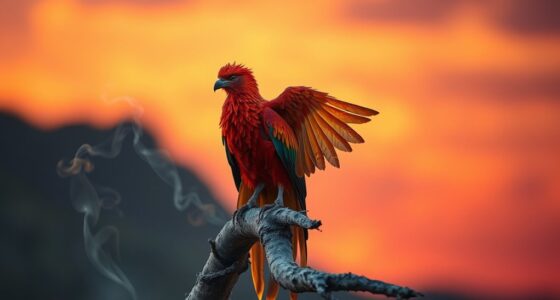
In mythology, monsters play dual roles as both guardians and villains. As protectors, they guard sacred spaces or treasures, testing heroes’ strength and morality, embodying natural forces rather than evil. Conversely, villains symbolize chaos, death, and the unknown, representing internal and external struggles humanity faces. These creatures remind us that fearsome beings aren’t always malevolent—they often reflect important moral truths. Explore further to understand how these roles reveal deeper insights into human nature.
Key Takeaways
- Monsters often serve as guardians, protecting sacred spaces or treasures, embodying primal forces essential for cosmic balance.
- As villains, monsters threaten order, symbolizing chaos, death, and humanity’s fears of the unknown.
- Their dual roles reflect the complex nature of mythological creatures as both protectors and challenges, depending on context.
- Monsters’ origins reveal attempts to understand and categorize mysteries, illustrating societal values and moral struggles.
- Both guardian and villain roles highlight the importance of confronting fears and respecting the natural and supernatural worlds.
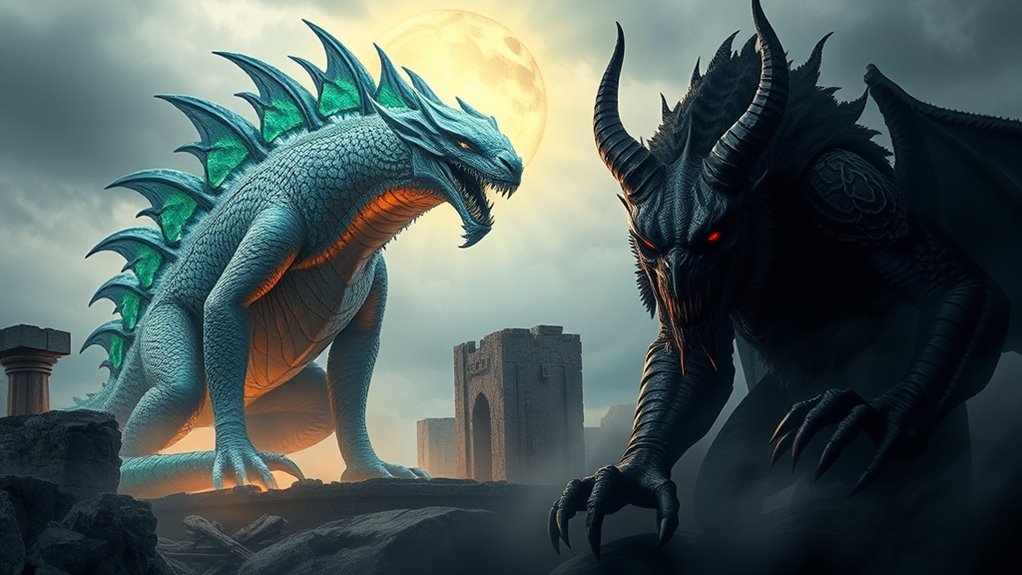
Have you ever wondered why monsters play such a prominent role in mythology? It’s because they embody powerful symbols that go beyond simple storytelling—they represent deeper ideas about human nature, fears, and the unknown. When you look at monster symbolism, you realize these creatures often serve as mirrors for our own vulnerabilities and moral struggles. Their mythological creature origins are rooted in ancient cultures trying to explain the world around them. These creatures weren’t just random beasts; they were crafted from stories that reflected societal values, fears, and hopes. Some monsters symbolize chaos and destruction, while others stand as protectors or guardians, depending on the context.
Monsters in mythology mirror human fears, moral struggles, and societal values, embodying chaos, protection, and sacred symbolism.
As you explore how monsters function in myths, you’ll see that not all are villains. Many serve as guardians, standing at the thresholds of sacred places or guarding treasures that must be earned or respected. In these stories, monsters symbolize challenges that test a hero’s strength, courage, and morality. They aren’t inherently evil but represent the primal, untamed forces of nature that humans must confront and understand. Their mythological creature origins often link back to ancient visions of the divine or the wild, giving them a sacred or semi-divine status. These guardian monsters remind you that sometimes, what seems frightening at first glance is actually a protector, a necessary part of a larger cosmic balance.
Furthermore, the symbolic significance of monsters often reflects the cultural values and beliefs of the societies that created them, illustrating how mythology serves as a mirror to human psychology and societal structure. On the other hand, villains often take the form of destructive monsters that threaten order and stability. These monsters symbolize chaos, death, and the darker aspects of human consciousness. Their mythological creature origins tend to be rooted in fears of the unknown—unknown lands, mysterious forces, or even inner demons. When you see monsters cast as villains, it reflects humanity’s struggle to control chaos and impose order on a chaotic world. These monsters challenge heroes to face their fears, often representing internal conflicts or external threats that must be overcome to restore harmony.
Ultimately, monsters in mythology serve dual roles—they’re both symbols of chaos and protectors of sacred spaces. Their symbolism is complex, rooted in mythological creature origins that reveal our ancestors’ attempts to understand and categorize the world’s mysteries. Whether as guardians or villains, monsters embody essential truths about human nature, reminding us that confronting our fears and respecting the unknown are ongoing parts of our journey. Their stories continue to resonate because they invite you to reflect on your own struggles with chaos, order, and the boundaries between the two.
Frequently Asked Questions
How Do Different Cultures Interpret Monster Symbolism?
You see that different cultures interpret monster symbolism through their unique mythological archetypes, reflecting their values and fears. In some societies, monsters symbolize chaos or evil, warning against moral failings, while in others, they serve as guardians that protect sacred spaces. These cultural symbols embody complex ideas, shaping how communities understand the world around them and illustrating the diverse ways mythological archetypes influence cultural storytelling and moral lessons.
Are Monsters Always Malevolent in Mythology?
Think of monsters as mirrors reflecting your inner struggles, not just villains. They aren’t always malevolent; many embody moral ambiguity, representing both chaos and protection. Monster archetypes often symbolize fears, challenges, or essential forces. In mythology, some serve as guardians, while others threaten, showing their complexity. So, you see, monsters aren’t inherently evil—they embody the multifaceted nature of human experience, blurring the line between good and evil.
What Are the Origins of Monster Myths Worldwide?
You might find that monster myths worldwide stem from ancient creature origins, where early humans used these stories to explain natural phenomena or fears. Mythical beast symbolism often represents chaos, danger, or moral lessons, which are passed down through generations. These stories encode cultural values and fears, transforming real animals or fears into legendary beings that serve as warnings, guardians, or villains, shaping societies’ understanding of the unknown.
How Do Monsters Influence Modern Storytelling?
Imagine if monsters had Wi-Fi—your storytelling would be totally different! Today, monsters symbolize fears, chaos, or strength, shaping characters and plots. They influence modern storytelling by evolving from ancient myths into complex symbols, reflecting societal fears and values. This monster symbolism helps create engaging narratives, showing how storytelling evolution keeps myths relevant, making monsters resonate with audiences in movies, books, and games. You see their impact everywhere!
Can Monsters Symbolize Natural Forces or Human Fears?
You see, monsters often symbolize natural forces or human fears through cosmic symbolism and psychological archetypes. They embody chaos, destruction, or primal instincts, reflecting our inner struggles or external threats. By confronting monsters, you explore deeper fears and universal truths, turning myth into a mirror of your psyche. This symbolism helps you understand the unknown and confront the fears that shape your perceptions of the world around you.
Conclusion
As you explore mythologies, you see monsters as both guardians and villains—like mirrors reflecting human fears and hopes. They challenge you, protect you, and teach you lessons, much like a fierce but loyal guardian dog. Whether terrifying or noble, monsters shape stories that inspire and warn. Their dual roles remind you that even the scariest creatures can hold a deeper meaning, guiding you through life’s mysteries just as a lighthouse guides ships through stormy seas.