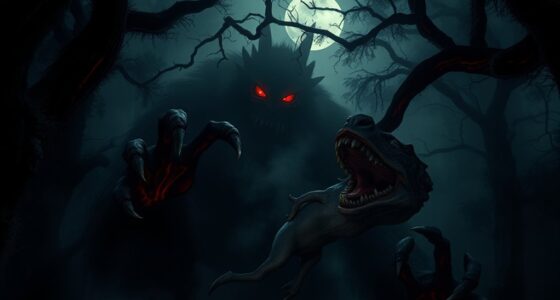
Monsters in folktales often symbolize fears, moral lessons, or societal warnings. They serve as external challenges that test characters’ virtues like courage, honesty, and humility. By confronting and overcoming these monsters, stories reinforce virtues and warn against vices like greed or deceit. Cultural differences shape these symbols, reflecting diverse values and fears. Exploring these tales reveals how monsters act as powerful tools for moral guidance—if you stay curious, you’ll discover even more hidden lessons.
Key Takeaways
- Monsters often symbolize moral vices or societal dangers, serving as warnings to promote virtuous behavior.
- Confronting monsters in folktales teaches virtues like courage, humility, and honesty through moral challenges.
- Monsters act as boundary markers, highlighting behaviors to avoid and virtues to develop for societal harmony.
- Folktales use monsters as allegories for internal fears or societal issues, guiding moral understanding across cultures.
- The defeat of monsters symbolizes the triumph of virtue over vice, reinforcing moral lessons in storytelling.

Monsters in folktales have long captured our imaginations, serving as symbols of fears, challenges, or moral lessons. These creatures often embody the darker aspects of human experience, acting as allegories for internal struggles or societal dangers. When you explore the symbolism in folklore, you’ll notice that monsters aren’t just random monsters—they’re carefully crafted representations that convey deeper meanings. For example, a dragon might symbolize greed or overreaching ambition, while a witch can embody deceit or malicious intent. These symbols aren’t universal; they vary widely across cultures, reflecting different values, fears, and lessons. In Western traditions, vampires often symbolize temptation or the fear of death, whereas in Eastern stories, monsters like the Nian represent chaos that must be overcome to restore peace. Cultural variations influence how monsters are portrayed and what they stand for, shaping the moral lessons embedded in these stories.
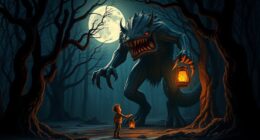
In many folktales, monsters serve as tests or obstacles that characters must face to grow or prove their worth. These creatures often act as external manifestations of internal conflicts, such as fear, greed, or hubris. By confronting and overcoming monsters, characters learn essential morals—courage, humility, honesty—that they carry into real life. The monster’s role as a warning is central; it warns audiences about behaviors to avoid or virtues to cultivate. For instance, stories about greedy giants warn against selfishness, while tales of cunning foxes highlight the importance of wit and intelligence. The monsters’ frightening appearances and dangerous actions grab your attention, making the moral lessons more memorable. These stories often end with the monster’s defeat, symbolizing the triumph of virtue over vice, reinforcing cultural values.
You’ll also find that monsters in folktales act as boundary markers, distinguishing between the known and the unknown. They represent fears of the unfamiliar, whether it’s foreign lands, different peoples, or hidden aspects of oneself. By facing these monsters, characters—and by extension, the audience—learn to confront fears and accept complexities. The cultural variations in these tales show that what’s terrifying or symbolic in one society might be different in another, reflecting unique histories and morals. Understanding these differences helps you appreciate how folklore functions as a mirror of cultural identity, warning or guiding society through stories of monsters and moral lessons. Ultimately, these creatures are more than just frightening figures—they’re powerful tools for transmitting values across generations.
Frequently Asked Questions
How Do Monsters Symbolize Human Fears in Folktales?
Monsters symbolize human fears in folktales by acting as fear manifestations of your subconscious anxieties. You see these creatures as external representations of what you dread—whether it’s danger, moral failings, or the unknown. Through facing monsters, you confront hidden fears, learning lessons or gaining strength. They serve as cautionary symbols, helping you understand and manage your deepest anxieties in a safe, narrative space.
Are There Cultural Differences in Monster Portrayals Across Folktales?
You might think monsters are the same everywhere, but cultural variations reveal rich folklore diversity. Different societies portray monsters to reflect unique fears, morals, and values. For example, Japanese folklore features yokai with complex symbolism, while European tales often depict monsters as blunt threats. These cultural differences deepen storytelling, helping you connect with diverse traditions and understand how shared fears shape unique monster portrayals worldwide.
What Are Some Common Themes Associated With Monsters in Stories?
You’ll notice that monsters often symbolize fears, moral failings, or societal issues, serving as powerful narrative devices. They represent the unknown or dangerous parts of ourselves, helping you explore moral lessons and warnings. These themes highlight the importance of virtues like bravery, honesty, or kindness. By confronting monsters, stories teach you about personal growth and societal values, making them compelling tools for conveying universal truths and moral lessons.
How Do Monsters Reinforce Moral Lessons in Folktales?
Think of monsters as dark shadows symbolizing the consequences of immoral choices. You see, they reinforce moral lessons by embodying traits like greed, cruelty, or dishonesty, which lead to their downfall. This monster morality teaches you that bad behavior has repercussions, making the lesson stick. Through their defeat or transformation, these tales reinforce that good morals and virtue are the true paths to safety and success.
Can Monsters in Folktales Represent Societal Issues?
You can see monsters in folktales as symbols that reflect societal issues like urban decay and gender stereotypes. These creatures often embody fears about social decline or challenge traditional gender roles, prompting audiences to question or confront these problems. By representing such issues, monsters serve as powerful allegories, encouraging reflection on the state of society and prompting change, all while fitting within the folktale’s moral framework.
Conclusion
As you’ve seen, monsters in folktales serve more than just scary stories—they carry powerful lessons and warnings. But what if the true danger isn’t just the creature itself, but what it represents? Will you recognize the lessons before it’s too late? Sometimes, the real monsters are hidden in plain sight, lurking behind familiar faces or comforting tales. Stay alert, because the next warning might be closer than you think—waiting just around the corner.