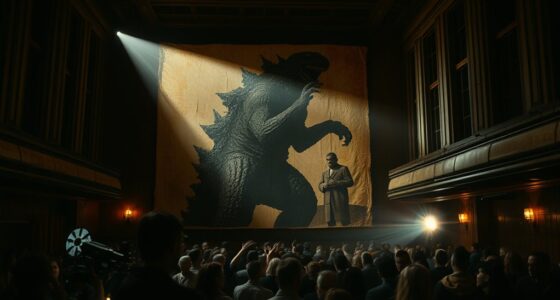
In folktales, monsters symbolize fears, moral failings, or societal dangers to teach important lessons. They often represent chaos, greed, or arrogance, warning you about the consequences of negative traits. Facing and overcoming these monsters reflects personal growth and moral strength. These stories mirror cultural beliefs and values, using monsters as cautionary figures. Keep exploring, and you’ll uncover deeper insights into how these creatures embody universal lessons about human nature.
Key Takeaways
- Monsters symbolize moral failings like greed or arrogance, warning characters and audiences to uphold ethical values.
- Defeating monsters often signifies personal growth, emphasizing virtues such as bravery, kindness, and wisdom.
- Folktales use monsters as cautionary figures to reinforce societal norms and ethical boundaries.
- Monsters reflect collective fears and cultural morals, serving as tools for moral instruction across generations.
- Encounters with monsters teach moral lessons by illustrating consequences of immoral behavior and promoting virtue.
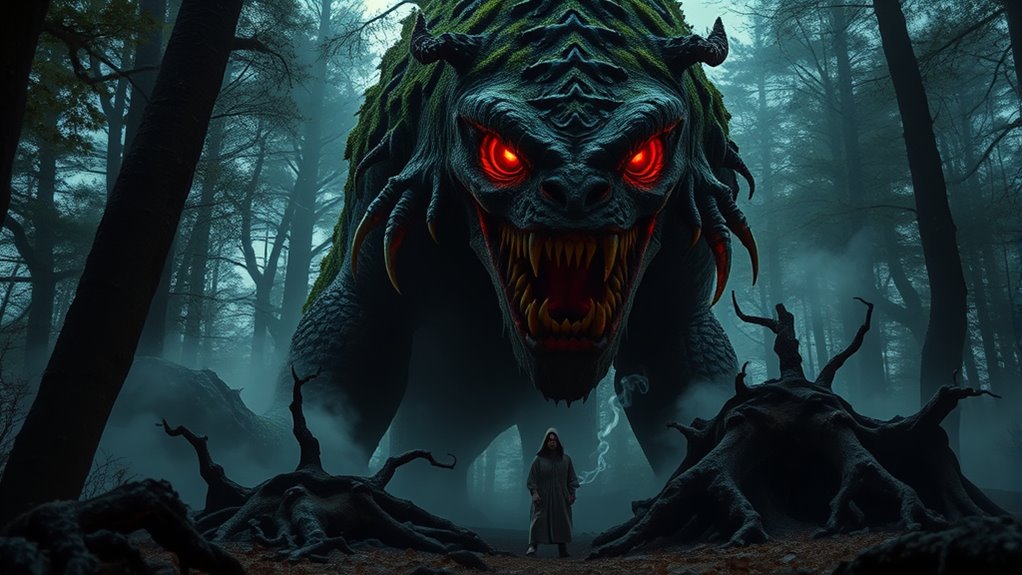
Monsters in folktales have long captured our imaginations, serving as symbols of fear, challenges, or moral lessons. These creatures often embody the darker aspects of human nature or societal fears, making them powerful tools to convey important messages. The symbolism of monsters varies widely across cultures, reflecting different values, beliefs, and historical contexts. In some traditions, monsters represent chaos and destruction, warning people to maintain order and seek harmony. In others, they symbolize internal struggles, such as greed, envy, or hubris, teaching lessons about virtue and humility. These creatures aren’t just mindless beasts; they carry deep meanings that resonate within their cultural frameworks. For example, in Western folktales, monsters often symbolize the unknown or the primal fears lurking in the subconscious. They serve as obstacles that heroes must confront and overcome, emphasizing bravery, resilience, and moral integrity. Conversely, in many Asian stories, monsters might symbolize spiritual imbalance or societal transgressions, urging harmony with nature or adherence to moral codes. The cultural variations in monster symbolism highlight how different societies interpret fear and morality, shaping the stories they tell and the lessons they pass down through generations.
You might notice that some monsters serve as cautionary figures, warning characters—and by extension, the audience—against specific behaviors. These monsters often embody the consequences of moral failings like greed, dishonesty, or arrogance. When characters face such monsters, their encounters serve to reinforce societal norms and ethical boundaries. For instance, a greedy creature might guard treasure, punishing those who desire more than they need, therefore reminding you to value moderation and humility. In many folktales, the monster’s defeat signifies a moral victory, reinforcing that good qualities like courage, kindness, or wisdom can triumph over evil or chaos. Sometimes, monsters symbolize challenges you must face in life—fears, doubts, or temptations—and overcoming them becomes a metaphor for personal growth. These stories aren’t just about defeating a creature; they’re about understanding what that creature represents and learning crucial lessons about morality and human nature.
Ultimately, the symbolism of monsters and their cultural variations serve as reflections of what societies consider important or threatening. They act as mirrors of collective fears and moral standards, offering warnings and lessons that remain relevant across generations. By confronting monsters in folktales, you’re also engaging with fundamental questions about morality, bravery, and the nature of good versus evil. These stories, rich in symbolism, continue to teach us about ourselves and the world around us—reminding us that monsters are not only fears to be faced but also symbols to be understood.

The Reading Lesson: Teach Your Child to Read in 20 Easy Lessons (1) (The Reading Lesson series)
As an affiliate, we earn on qualifying purchases.
As an affiliate, we earn on qualifying purchases.
Frequently Asked Questions
How Do Monsters Symbolize Societal Fears in Folktales?
You see, monsters in folktales symbolize societal fears through mythical symbolism, embodying the anxieties people hold about unknown threats or moral dangers. They serve as tangible representations of what society fears losing or confronting, such as safety, morality, or order. By confronting these monsters, you’re also engaging with collective societal anxieties, allowing the community to process these fears in a symbolic way, often reinforcing moral lessons or warnings.
Are There Cultural Differences in Monsters’ Moral Lessons?
Think of monsters as mirrors reflecting cultural stereotypes, shaping their moral lessons. In some cultures, monsters warn against greed or dishonesty, while in others, they symbolize chaos or evil. Folklore variations show how different societies interpret these creatures, emphasizing local values and fears. This cultural diversity influences the monsters’ roles, making their lessons unique to each tradition, and highlighting how morality is shaped by societal beliefs and norms.
What Psychological Effects Do Monster Stories Have on Children?
When you tell children monster stories, you influence their fear conditioning and resilience building. These stories can create healthy fears that teach caution, helping them recognize danger. At the same time, facing monsters in stories helps children build resilience, showing them they can overcome fears. This balance teaches kids to manage anxiety and develop courage, ultimately strengthening their emotional coping skills through engaging and often moral-driven narratives.
How Have Monster Stories Evolved Over Different Historical Periods?
Think of monster stories as a river flowing through time, constantly shaping and reshaping. Over different historical periods, their mythical evolution reflects cultural fears and values, transforming from simple beasts into complex symbols of morality or societal issues. This storytelling transformation keeps you hooked, showing how monsters adapt to resonate with each era’s concerns, making each tale a mirror of its times and a reflection of human imagination’s endless depth.
Can Monsters in Folktales Promote Positive Moral Behaviors?
Yes, monsters in folktales can promote positive moral behaviors. By illustrating monster kindness or consequences for moral choices, you’re encouraged to reflect on your actions and develop moral growth. These stories show that even monsters can embody virtues like compassion, teaching you that kindness and understanding are essential. As you engage with these tales, you learn valuable lessons about morality while fostering empathy and ethical behavior.

Little Critter: Monster Truck: A Fun Story about Monster Trucks for Children (Ages 4-8) (My First I Can Read)
As an affiliate, we earn on qualifying purchases.
As an affiliate, we earn on qualifying purchases.
Conclusion
By battling beasts and braving battles, you learn that monsters mirror your morals. They challenge your courage, caution, and character. Remember, monsters aren’t just menaces—they mirror your morals. Facing fears fosters growth, guiding you from greed to goodness, from darkness to daring. Embrace encounters with these creatures as chances to change, challenge, and chart your course. Ultimately, monsters serve as mirrors, urging you to become a more mindful, moral, and mighty version of yourself.

Korean Folktales: Classic Stories from Korea's Enchanted Past
As an affiliate, we earn on qualifying purchases.
As an affiliate, we earn on qualifying purchases.

The People Could Fly: American Black Folktales
As an affiliate, we earn on qualifying purchases.
As an affiliate, we earn on qualifying purchases.