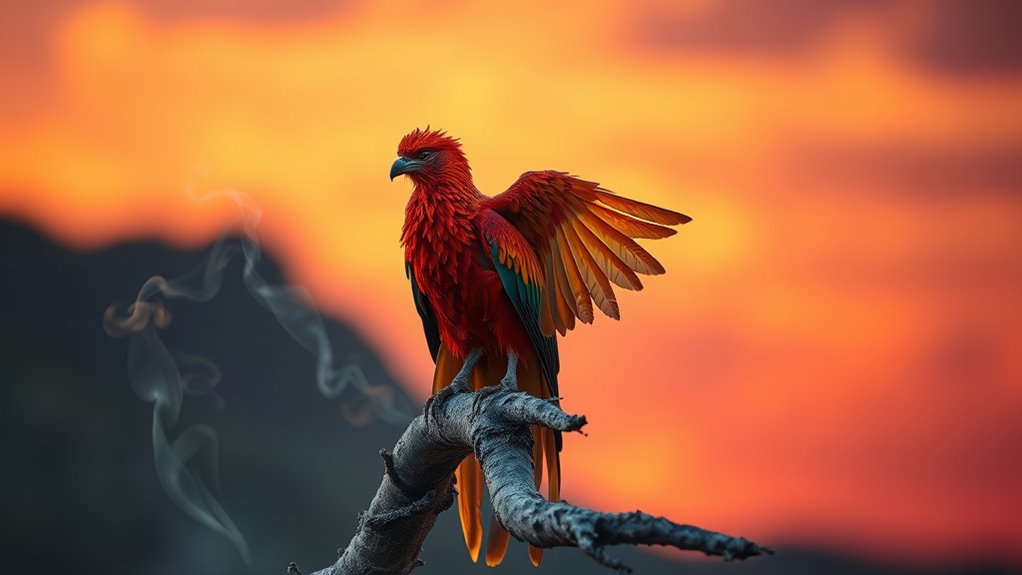

The mythic phoenix’s cycle of fiery death and rebirth closely parallels real bird behaviors like molting and migration. Just as the phoenix bursts into flames and emerges renewed, birds shed old feathers or migrate seasons to start fresh. These cycles symbolize resilience and transformation, blending cultural stories with biological processes. Exploring this connection reveals how myths reflect natural phenomena, offering deeper insight into renewal across cultures and species—continue to uncover the fascinating links between myth and biology.
Key Takeaways
- The mythic phoenix undergoes fiery death and rebirth, symbolizing spiritual renewal, paralleling birds’ biological processes like molting and migration.
- Both myth and biology depict cycles of decay and renewal, emphasizing resilience and transformation across cultures and nature.
- The phoenix’s rebirth from ashes mirrors birds emerging from eggs or after molting, representing continuity and regeneration.
- Mythic descriptions focus on symbolic resurrection, while biological cycles involve tangible processes essential for survival and adaptation.
- Cultural variations of the phoenix highlight universal themes of hope and immortality, similar to the universal significance of bird life cycles.
The Myth of the Phoenix: Origins and Symbolism
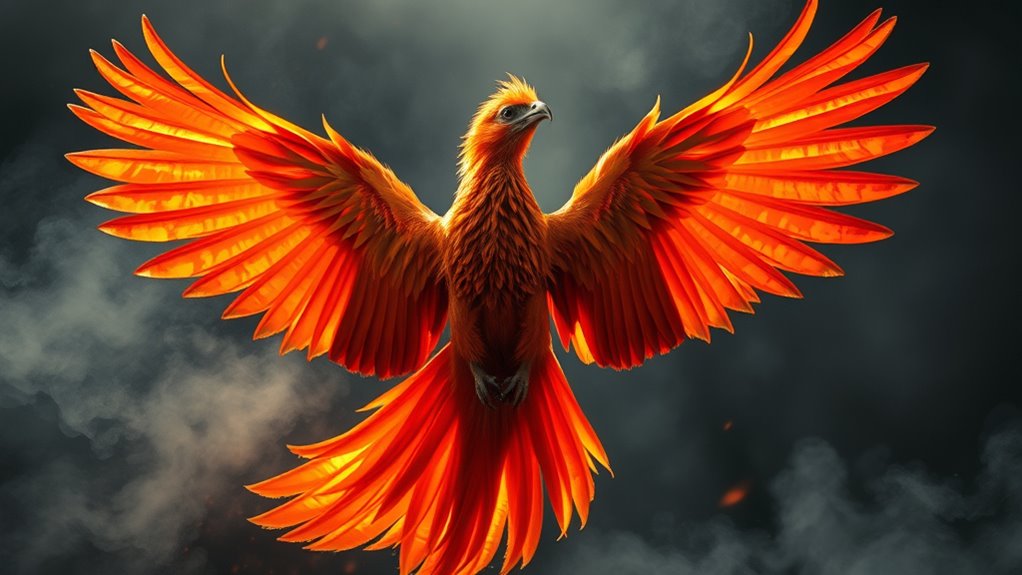
Have you ever wondered where the myth of the phoenix originated and what it truly symbolizes? The myth’s roots trace back to ancient cultures like Egypt, Greece, and China, where it embodied mythical symbolism representing renewal and immortality. As part of your cultural heritage, this legendary bird embodies the cycle of life, death, and rebirth, inspiring stories of hope and resilience. The phoenix’s fiery resurrection signifies transformation and the perpetual renewal of spirit and strength. Its symbolism has endured across centuries, reflecting universal themes that resonate with many societies. By understanding its origins, you appreciate how this myth has shaped cultural narratives, emphasizing the importance of rebirth and perseverance in human history and collective consciousness.
The Life Cycle of the Mythic Bird
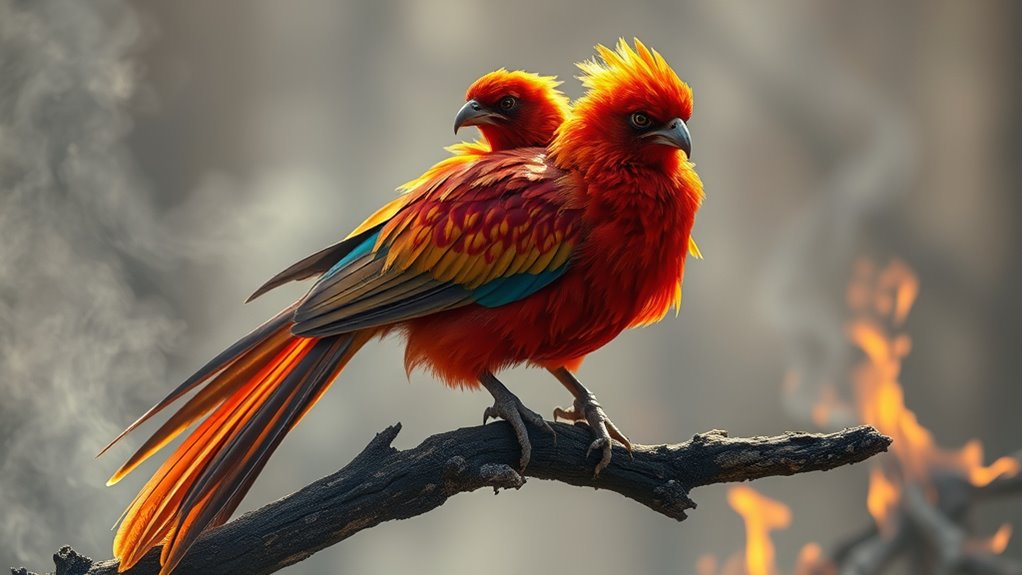
What does the life cycle of the mythic phoenix really look like? It begins with the bird’s fiery death, symbolizing renewal in ancient symbolism. Artistic representations often depict the phoenix bursting into flames, representing destruction leading to rebirth. From the ashes, a new phoenix emerges, growing stronger and more vibrant, embodying eternal renewal. This cycle repeats over centuries, emphasizing transformation and resilience. In myth, the phoenix’s life span varies, but its core process remains consistent: death, decay, and rebirth. You see this symbolism reflected in countless artworks, where the bird’s fiery rebirth underscores themes of renewal and immortality. The mythic bird’s life cycle beautifully captures the idea of constant renewal, echoing the natural cycles observed in many cultures and artistic traditions alike.
Rebirth and Renewal in Nature: The Real Birds
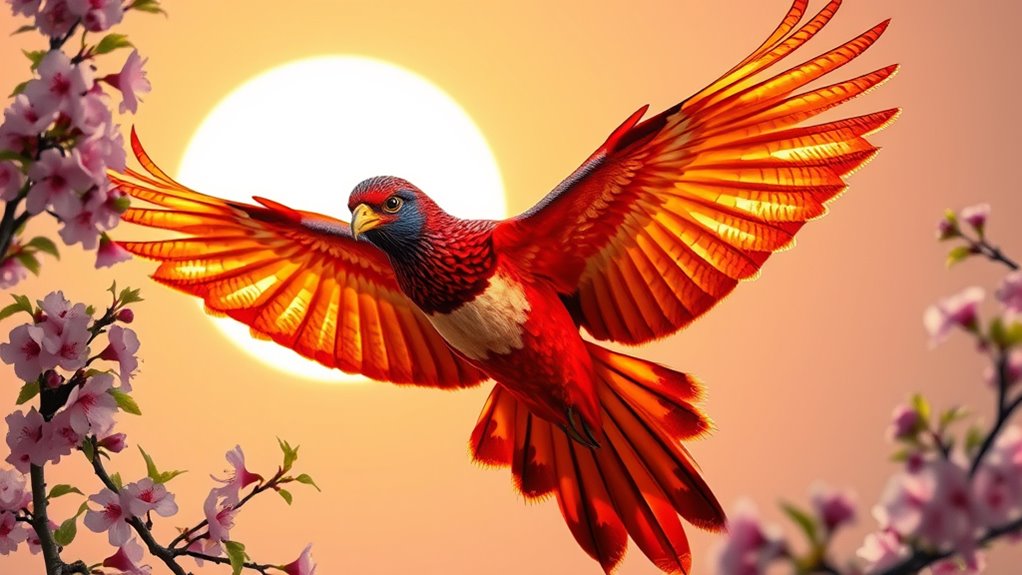
You can see rebirth in nature through processes like molting and feather replacement, which refresh a bird’s appearance and strength. Migration signals seasonal restarts as birds travel to find food and suitable breeding grounds. These stages of the life cycle demonstrate how real birds embody renewal and continual growth.
Molting and Feather Replacement
Molting is a crucial process in a bird’s life, serving as a natural cycle of renewal. During molting, you’ll notice feather renewal as old, worn feathers are replaced with new ones, maintaining your bird’s ability to fly, insulate, and display vibrant colors. Molting cycles vary among species, but they generally follow a predictable pattern, often occurring once or twice a year. This process can take several weeks, during which your bird might seem a bit off—less energetic or more irritable. Despite this, molting is essential for health and survival, ensuring feathers stay in peak condition. Understanding molting helps you appreciate how birds continuously renew themselves, mirroring mythic themes of rebirth and renewal in the natural world.
Migration and Seasonal Restarts
Migration marks a remarkable phase in a bird’s life, embodying the themes of rebirth and renewal that mirror the natural cycles of the seasons. During avian migration, you observe seasonal behaviors that signal a fresh start, as birds travel thousands of miles to breeding or wintering grounds. This journey isn’t random; it’s driven by environmental cues like daylight and temperature. Migration also involves restarts, where birds shed old routines and adapt to new habitats. Understanding these patterns reveals how nature’s cycles promote renewal. Below is a simplified overview of migration patterns:
| Season | Typical Behavior | Destination Focus |
|---|---|---|
| Spring | Returning to breeding grounds | Reproduction |
| Summer | Nurturing young, establishing territory | Raising offspring |
| Fall | Preparing for migration, feeding | Fat storage, travel prep |
| Winter | Wintering in warmer regions | Survival |
| Year-round | Seasonal adjustments and restarts | Renewal in nature |
Life Cycle Stages
Have you ever wondered how birds renew themselves throughout their lives? In their life cycle stages, birds embody aesthetic symbolism of rebirth and renewal, much like mythic storytelling portrays the phoenix rising anew. During each stage—egg, hatchling, fledgling, adult—they symbolize resilience and transformation. The egg represents potential, a silent promise of renewal, while hatching signifies rebirth. As they grow, birds shed old feathers and adapt, mirroring cycles of death and rebirth. These stages highlight nature’s artistry, reinforcing stories of renewal across cultures. Understanding these biological phases reveals how real birds mirror mythic themes of rebirth, reminding us of life’s persistent capacity to renew itself amid change. Their life cycle exemplifies the timeless dance of death and rebirth woven into both nature and myth.
Comparing Symbolic and Biological Renewal Processes

While both symbolic and biological renewal processes serve as powerful representations of transformation, they operate in fundamentally different ways. Sacred symbolism uses mythic archetypes to convey deep cultural meanings of rebirth, emphasizing spiritual renewal and moral lessons. These stories often depict the phoenix as a symbol of eternal life and resurrection, inspiring hope and resilience. In contrast, biological renewal involves physical processes like molting, hatching, or regeneration, driven by natural mechanisms. While mythic archetypes create a shared cultural understanding of renewal’s significance, biological processes are observable, measurable, and essential for species survival. Both highlight cycles of death and rebirth, but one engages the mind and spirit through symbolism, and the other reflects nature’s actual, tangible biological functions.
Cultural Variations in Phoenix and Bird Lore
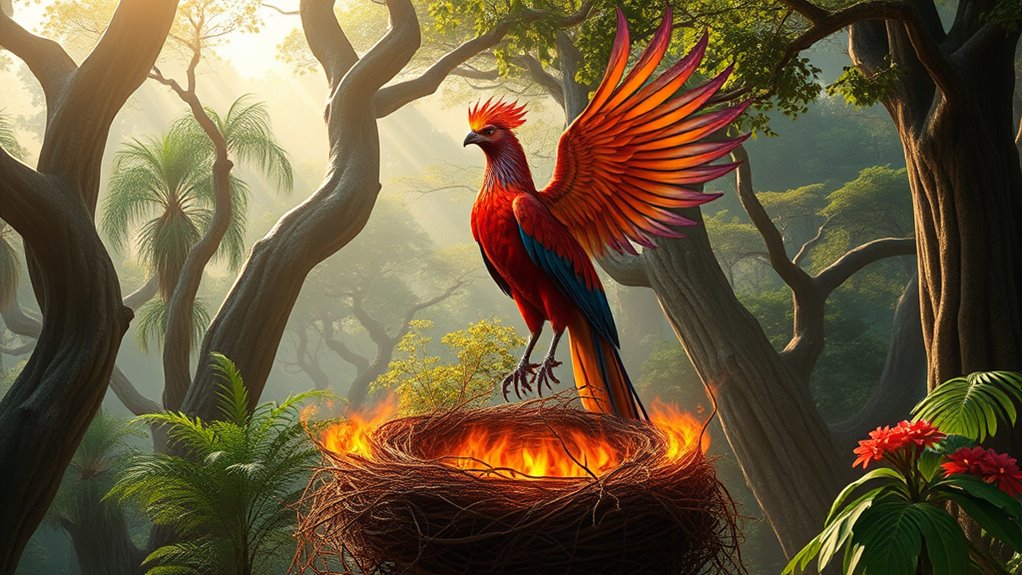
Different cultures see the phoenix and similar birds as symbols with unique meanings and significance. You’ll notice regional bird myths also reflect these varied beliefs and traditions. Exploring these differences reveals how bird lore shapes cultural identities worldwide.
Cultural Significance and Symbolism
Ever wondered how the phoenix’s fiery rebirth symbolizes renewal across cultures? You see, in many societies, the phoenix embodies concepts like resurrection, immortality, and hope. Artistic representations highlight these themes, shaping modern symbolism that inspires resilience. Different cultures assign unique meanings; for example, in Chinese tradition, the Fenghuang signifies harmony, while in Western lore, the phoenix often represents eternal life. Understanding these nuances deepens your appreciation of how symbolism evolves. Here’s a comparison:
| Culture | Symbolic Meaning |
|---|---|
| Greek | Immortality and renewal |
| Chinese | Harmony and balance |
| Egyptian | Rebirth and divine cycles |
| Western | Resurrection and resilience |
| Modern | Hope and personal transformation |
This diversity enriches the artistic representations, giving the phoenix a universal yet culturally distinct significance.
Regional Bird Myths
Have you ever noticed how bird myths vary around the world, reflecting each culture’s unique values and beliefs? Regional bird myths reveal diverse mythic symbolism, shaping how societies interpret these creatures. In some cultures, birds symbolize freedom and transcendence, while others associate them with death or rebirth. For example, the Egyptian Bennu bird mirrors the phoenix, embodying renewal and immortality. In China, the Fenghuang represents harmony and virtue, differing from Western notions of resurrection. These myths highlight cultural priorities, blending natural observations with spiritual meaning. By examining regional bird myths, you gain insight into how different societies interpret life, death, and transformation through mythic symbolism. This diversity underscores the universal fascination with birds as powerful symbols across cultures.
Insights Gained From Myth and Science
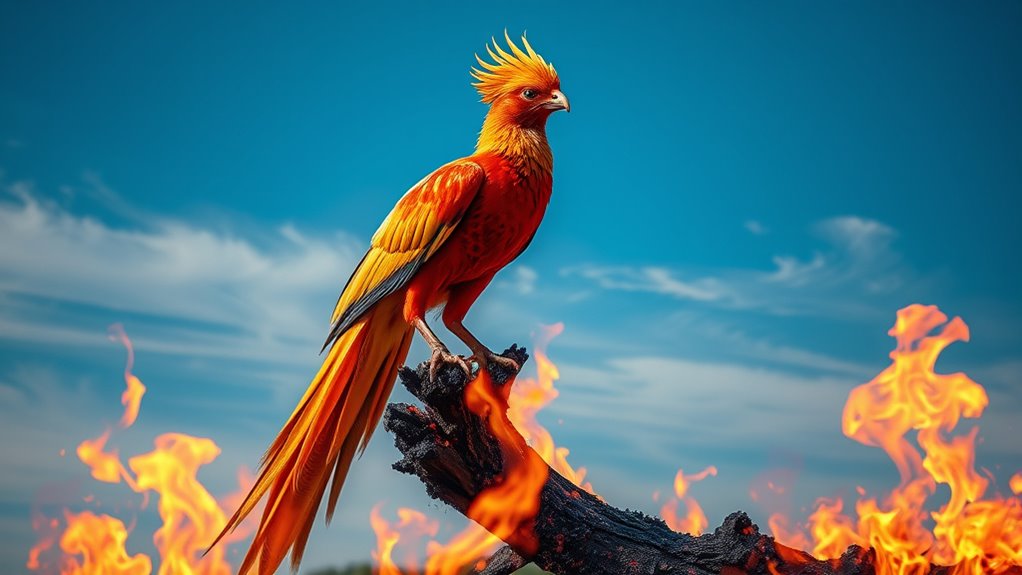
Myth and science both offer valuable insights into life’s cycles, revealing patterns that resonate across cultures and disciplines. Phoenix symbolism embodies renewal, death, and rebirth, highlighting humanity’s deep fascination with transformation. Similarly, bird migration demonstrates biological cycles driven by environmental cues, illustrating natural renewal through seasonal movements. These perspectives show that cycles are fundamental to understanding life’s resilience and continuity. Mythic stories of the phoenix emphasize inner renewal, while scientific studies of bird migration reveal physical adaptations for survival. Together, they deepen our appreciation for the interconnectedness of life, suggesting that renewal—whether mythic or biological—is essential for evolution. By comparing these views, you recognize that cycles provide both cultural meaning and biological necessity, shaping the way species and societies adapt over time.
Frequently Asked Questions
How Do Phoenix Legends Influence Modern Environmental Conservation Efforts?
You see, phoenix legends inspire modern environmental awareness by highlighting cultural symbolism of renewal and rebirth. When you embrace these stories, you’re reminded of nature’s resilience and the importance of protecting ecosystems. These myths motivate you to support conservation efforts, fostering a deeper connection to the environment. By viewing the phoenix as a symbol of renewal, you become more committed to sustainable practices and preserving our planet for future generations.
Are There Other Mythological Creatures With Life Cycles Similar to the Phoenix?
Imagine stumbling upon an ancient dragon or a mythical griffin, their stories echoing through time. Like the phoenix, these creatures symbolize renewal and transformation, often tied to epic life cycles. While less detailed, some legends hint at rebirth or regeneration, mirroring the phoenix’s fiery renewal. These mythic beings, with their powerful symbolism, remind us that many cultures view life as a continuous cycle of death and rebirth.
What Are the Genetic Factors That Enable Some Birds to Live Longer or Rejuvenate?
You might wonder what genetic factors contribute to a bird’s longevity or ability to rejuvenate. Genetic longevity involves specific genes that protect cells from aging and damage, while rejuvenation mechanisms allow some birds to repair tissues and maintain health longer. These adaptations include efficient immune responses and cellular renewal processes. Understanding these genetic traits could reveal how certain birds live longer and sometimes even regain vigor, similar to mythic phoenix rebirths.
How Does Climate Change Impact the Habitats of Real Rebirth-Associated Bird Species?
You see, climate change threatens rebirth-associated bird species by causing habitat fragmentation and reducing climate resilience. As temperatures rise and weather patterns shift, these birds lose crucial nesting and foraging areas, making survival harder. You can help by supporting conservation efforts that protect their habitats and promote climate resilience. This way, you’ll contribute to safeguarding their populations and ensuring their incredible life cycles continue despite environmental challenges.
Can Studying Mythic Phoenix Stories Help Improve Bird Conservation Strategies?
Sure, studying mythic phoenix stories might seem like just a fancy bedtime story, but it actually offers insight into symbolic regeneration and cultural symbolism. By understanding how cultures view renewal, you can craft conservation messages that resonate emotionally. This emotional connection motivates people to protect real rebirth-associated bird species, inspiring hope and action. So, your myth-inspired approach isn’t just poetic fluff — it’s a clever way to boost bird conservation efforts.
Conclusion
You might think myths and science are worlds apart, but they both reveal life’s resilience. While the phoenix symbolizes rebirth, real birds like eagles and swans also demonstrate renewal through their life cycles. Don’t dismiss myth as mere stories; they reflect human hopes and nature’s truths. By exploring both, you see how ancient symbols and modern biology together deepen your understanding of life’s enduring capacity to renew itself.