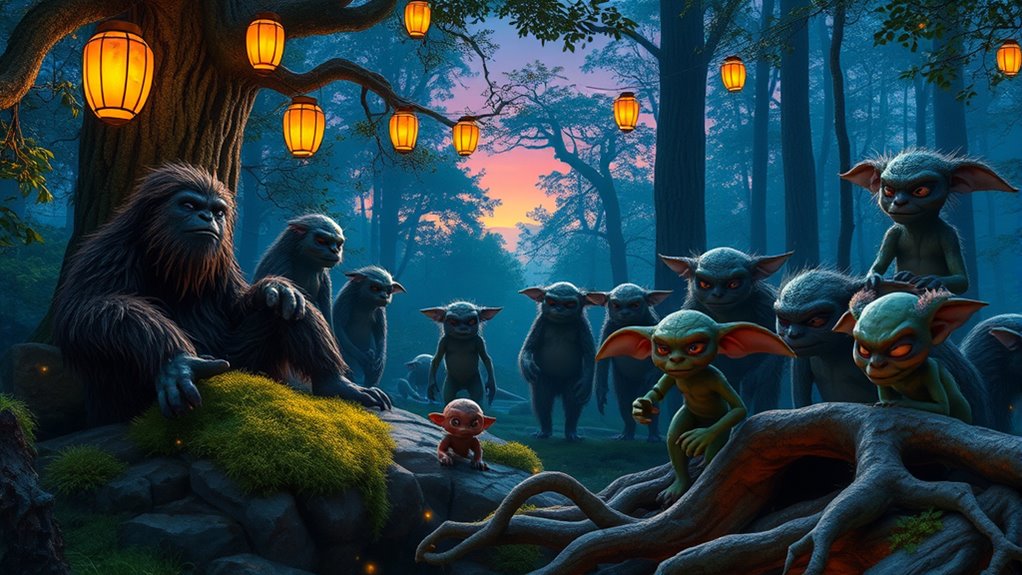
You might think monsters are just solitary or mindless beings, but they actually have complex social lives. From Sasquatches forming small family groups to goblin communities with hierarchies and alliances, these creatures cooperate, compete, and negotiate. Leadership shifts based on strength or cunning, and relationships can include diplomacy or rivalry. Their social structures are just as intricate as human societies, showing there’s much more to explore beyond their fearsome reputations. Keep going to discover how these monsters organize their worlds.
Key Takeaways
- Monsters form complex social structures, including alliances, hierarchies, and clans, similar to human societies.
- Solitary monsters like Sasquatches exhibit minimal social interaction, while goblin communities display intricate cooperation.
- Leadership roles among monsters are earned through strength, cunning, or strategic alliances, not just dominance.
- Social behaviors such as trust, rivalry, diplomacy, and cooperation shape monster relationships and community dynamics.
- Recognizing these social lives reveals monsters as organized, strategic entities beyond their fearsome reputations.
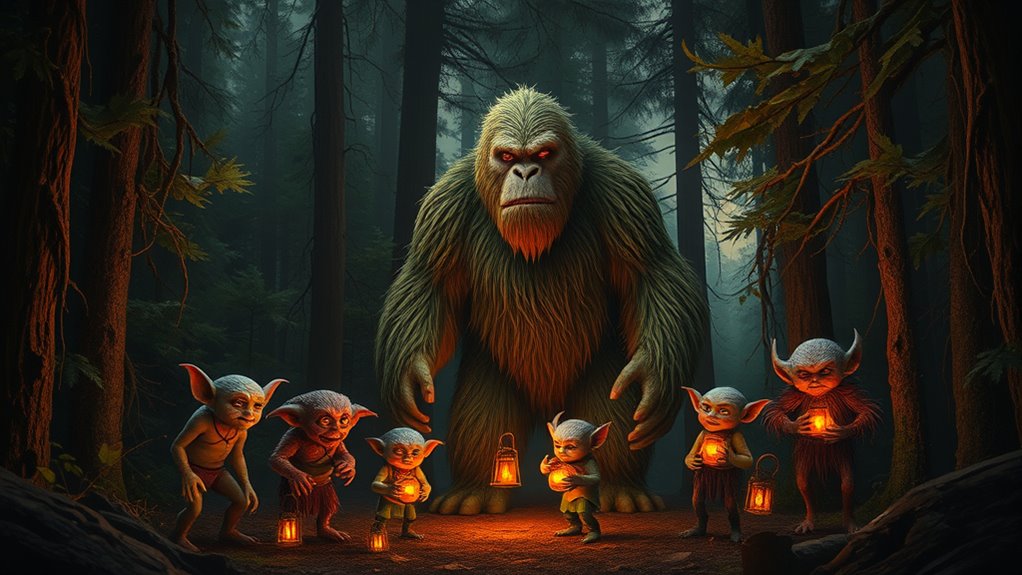
Monsters often evoke images of fear and chaos, but behind their terrifying facades, they lead complex social lives that reveal surprising facets of their personalities. While many assume they’re solitary beings lurking in shadows, evidence from legends and stories suggests they form intricate bonds and alliances that resemble human societies. In the sphere of myth, monsters often participate in mythical alliances—formal or informal networks that help them secure resources, defend territories, or strengthen their influence. These alliances aren’t always friendly; some are rooted in mutual benefit, while others involve cunning manipulation or dominance. You might imagine a beast forging an alliance with a dragon and a giant to ward off intruders or to hunt in coordinated packs. These partnerships showcase their ability to cooperate, negotiate, and even strategize, much like human communities. Additionally, some monsters demonstrate traits of leadership and social organization that resemble personal development, revealing their capacity for growth and adaptation.
Within these alliances, social hierarchies naturally develop. Some monsters emerge as leaders—mighty, respected figures who command loyalty and wield power through strength or cunning. Others occupy subordinate roles, supporting the hierarchy without challenging the top figures. As you observe, social hierarchies among monsters aren’t static; they shift based on circumstances, rivalries, and alliances. A goblin chieftain may rule through wit and agility, while a troll might rely on brute force. These roles reflect their personalities and skills, shaping how they interact within their communities. You’ll find that leadership isn’t always about dominance but often about earning respect through demonstrated prowess or strategic alliances.
Despite their fearsome reputations, monsters exhibit social behaviors that mirror human traits—trust, competition, cooperation, and even diplomacy. They form clans, negotiate territories, and sometimes cooperate with humans or other species to achieve shared goals. When you look beyond their terrifying images, you see social hierarchies that organize their worlds, allowing them to thrive in environments where chaos might otherwise reign. These structures reveal that monsters aren’t just mindless predators; they are social beings with complex relationships, strategies, and alliances that shape their lives. Understanding their social dynamics gives you a richer picture of their worlds, where myth and reality intertwine to create societies as nuanced as any human community.
Frequently Asked Questions
Are Monsters Capable of Forming Romantic Relationships?
Yes, monsters can form romantic relationships. You might observe their unique monster mating rituals, which often strengthen bonds and guarantee the continuation of their species. These creatures typically have complex monster family structures, fostering close-knit communities and lifelong partnerships. Their social behaviors suggest that, despite their terrifying appearances, monsters are capable of love and companionship, just like humans, and they actively build relationships to support their survival.
How Do Monsters Communicate Across Different Species?
You see, monsters communicate across species through a variety of methods like unique vocalizations, gestures, and even scent marks. Monster vocalizations serve as a universal language, helping different creatures understand each other. These interactions often lead to interspecies alliances, where monsters collaborate for survival, protection, or shared goals. Such communication fosters complex social bonds, demonstrating that even diverse species can coexist and work together effectively.
Do Monsters Have Social Hierarchies or Leadership?
You might think monsters are just lone creatures, but they often form alliances that reveal clear social hierarchies. Leadership dynamics vary, with some monsters rallying around powerful figures, while others operate through consensus. These alliances help them coordinate, defend, and thrive. So, yes, monsters definitely have social hierarchies, with leadership roles that guarantee the stability and success of their communities.
What Role Does Territory Play in Monster Communities?
Territory is essential in monster communities because it defines their territorial boundaries, helping them protect resources and maintain social order. You’ll find that monsters often defend their territory fiercely, ensuring access to food, shelter, and mates. This resource defense fosters cooperation within groups and establishes dominance. By controlling specific areas, monsters reduce conflicts and secure their survival, making territory a central aspect of their social and ecological lives.
How Do Monster Social Behaviors Compare to Human Societies?
Imagine stepping into a world where monsters mirror your own society. You see them engaging in cultural rituals, much like human celebrations, and fulfilling parenting roles that nurture their young. Their social behaviors echo human community life—cooperative, structured, and sometimes complex. Though different in form, they share fundamental qualities: bonding, leadership, and tradition. You realize that, beneath the surface, monster societies and human societies are more alike than you might think.
Conclusion
Just like the mythical communities of old, monsters aren’t always lone wanderers. They thrive in social bonds, much like the fellowship of the rings or the camaraderie of ancient tribes. You see, behind every shadowy figure, there’s a story of connection and belonging. So next time you hear a rustle in the dark, remember—these creatures may be more like us than you think, living their own quiet, complex social lives beyond our sight.