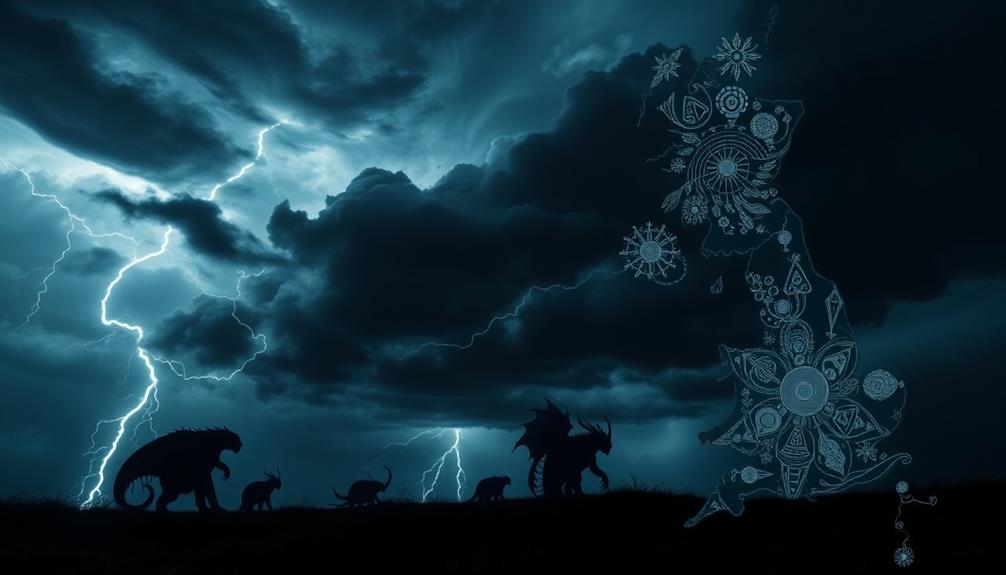
You see dragon stories everywhere because they symbolize powerful themes like transformation, danger, wisdom, and protection that resonate across cultures and time periods. Different societies interpret dragons in unique ways, but their stories tap into universal values and emotions. These mythic creatures reflect human struggles and hopes, making them endlessly adaptable in stories, films, and art. If you stay curious, you’ll discover even more reasons why dragons continue to fascinate us all.

Prime made for students and young adults
- Fast, free delivery for dorm and study essentials
- Prime Video and Amazon Music included
- Member-only deals
Key Takeaways
- Dragons symbolize universal themes like power, wisdom, and transformation, making them adaptable across cultures and stories.
- Cultural differences influence how dragons are depicted, reflecting values such as protection in Asian cultures and chaos in Western traditions.
- Their mythic symbolism resonates emotionally, representing challenges, growth, and the unknown, ensuring relevance across eras.
- Dragons serve as metaphors for societal ideals and fears, making their stories meaningful and widespread.
- Their versatility allows storytellers to incorporate dragons into various media, keeping their presence prominent worldwide.

Dragons are everywhere you look, from ancient legends and fairy tales to modern movies and video games. Their presence isn’t accidental; it’s rooted in deep-seated mythological symbolism and shaped by a variety of cultural influences. Throughout history, dragons have represented more than just mythical creatures—they embody complex ideas and values that resonate across different societies. You’ll find these creatures symbolizing power, wisdom, chaos, or protection, depending on the context. For example, in Chinese culture, dragons are seen as benevolent beings symbolizing strength, good fortune, and harmony. They’re revered as protectors that bring prosperity and are deeply woven into traditional celebrations like the Lunar New Year. Conversely, in Western traditions, dragons often symbolize chaos or evil—things to be conquered or tamed—highlighting a cultural narrative of heroism and victory over primal forces.
These contrasting portrayals reveal how cultural influences shape the way dragons are depicted and understood. In many cultures, dragons serve as powerful allegories, representing different aspects of human experience or societal values. You might notice that in Asian stories, dragons are revered and often associated with water and celestial forces, reflecting a worldview that emphasizes harmony with nature. Meanwhile, Western stories tend to frame dragons as formidable adversaries that heroes must battle, symbolizing the struggle between chaos and order or good versus evil. These cultural symbols influence modern media, leading to a variety of dragon portrayals that mirror the values and beliefs of their origins. Additionally, the mythic symbolism of dragons ensures their stories remain relevant and adaptable across different eras and cultural contexts. The symbolic significance of dragons also often includes their role as guardians of treasures or sacred sites, which adds layers of meaning to their mythic presence. The enduring appeal of dragons can also be linked to their role as universal archetypes that evoke deep emotional responses and resonate across diverse audiences. Moreover, their stories often carry elements of transformation, reflecting the universal human desire for growth and renewal.
The widespread appearance of dragon stories across different cultures also stems from their mythic symbolism—universal themes that appeal to the human psyche. Dragons evoke awe and fascination, embodying both danger and wonder. They serve as powerful metaphors for transformation, challenge, and the unknown. This mythic symbolism guarantees that stories about dragons remain relevant, adaptable, and compelling, no matter the era or medium. Whether in ancient carvings, folklore, or blockbuster films, dragons symbolize mysteries that transcend borders. Their storylines can be molded to fit cultural narratives, making them endlessly versatile figures in storytelling. You see them as symbols of strength, wisdom, or chaos, depending on the story, but their universal appeal continues to keep them at the heart of myth and pop culture alike.
As an affiliate, we earn on qualifying purchases.
Frequently Asked Questions
How Did Dragons Originate in Ancient Mythologies?
You might find that dragons originated in ancient mythologies as symbolically powerful creatures representing chaos, strength, and protection. The mythological creature origins often tie them to natural elements like water, fire, or earth, making them significant in various cultures. Their symbolism varies, from guardians to destructive forces. You see these stories everywhere because they embody universal themes of power and mystery, resonating through generations and inspiring countless tales worldwide.
Are Dragons Based on Real Creatures or Purely Mythical?
Dragons are purely mythical creatures, rooted in mythological origins, not real animals. You see, their stories embody rich cultural symbolism across societies, representing power, wisdom, or danger. These legendary beings likely stem from ancient encounters with large, unfamiliar animals or imaginative interpretations of natural phenomena. While no evidence proves their existence, their mythic presence persists because they symbolize complex human fears and aspirations, making them timeless symbols in storytelling.
Why Do Dragons Symbolize Power Across Different Cultures?
You see, dragon symbolism embodies power because cultures have long viewed dragons as mighty and commanding creatures. Their fierce strength and majestic presence make them symbols of authority, protection, and wisdom. In many cultures, especially Chinese and European, dragons hold significant cultural importance, representing dominance over chaos and the natural world. Their mythic status fuels their widespread cultural significance, making them universal symbols of power across diverse societies.
How Have Modern Stories Influenced Traditional Dragon Legends?
Modern storytelling influences traditional dragon legends through cultural adaptation, blending old myths with new themes and perspectives. You see this in movies, books, and games that reimagine dragons with unique traits, personalities, or roles, making them more relatable. This evolution helps keep dragon stories relevant, allowing different cultures to reinterpret legends in ways that resonate with contemporary audiences while preserving their historical significance.
What Are Some Common Traits of Dragons in Folklore Worldwide?
You’ll notice that dragons often symbolize power, wisdom, and chaos in folklore worldwide. They’re depicted as mighty, often fire-breathing creatures, with traits like scales, wings, and claws. These characteristics highlight their mythological comparisons to serpents and beasts from various cultures. Common traits include their role as guardians or destroyers, embodying both danger and protection, reflecting universal themes of strength and mystery across different stories and traditions.
As an affiliate, we earn on qualifying purchases.
Conclusion
So, next time you see a dragon in a story or film, remember it’s more than just fantasy—it’s a symbol that transcends time, culture, and even space, like a timeless meme. These stories remind us of our shared fears, hopes, and dreams, connecting us across centuries and civilizations. In a way, dragons are like the original blockchain—powerful, mysterious, and endlessly adaptable, proving that some stories truly do belong everywhere, even in a galaxy far, far away.
As an affiliate, we earn on qualifying purchases.
Halloween Picks
halloween
As an affiliate, we earn on qualifying purchases.