
Across cultures, turtles symbolize creation, stability, and cosmic order. You’ll find myths where Earth rests on a giant turtle’s back, or the world is carried by a sacred turtle in Hindu and Native American stories. Their shells reflect the universe’s structure, representing balance amid change. Turtles link water and land, emphasizing life’s endurance and interconnectedness. If you explore further, you’ll uncover even more fascinating stories about how these ancient symbols continue to shape our understanding of the cosmos.
Key Takeaways
- Turtles symbolize creation, stability, and cosmic order across various cultures’ myths, often linked to water and land symbolism.
- Native American legends depict Earth resting on a giant turtle’s back, emphasizing origins and universal stability.
- Hindu and Chinese mythologies feature the world turtle, representing cyclical renewal, wisdom, and protection.
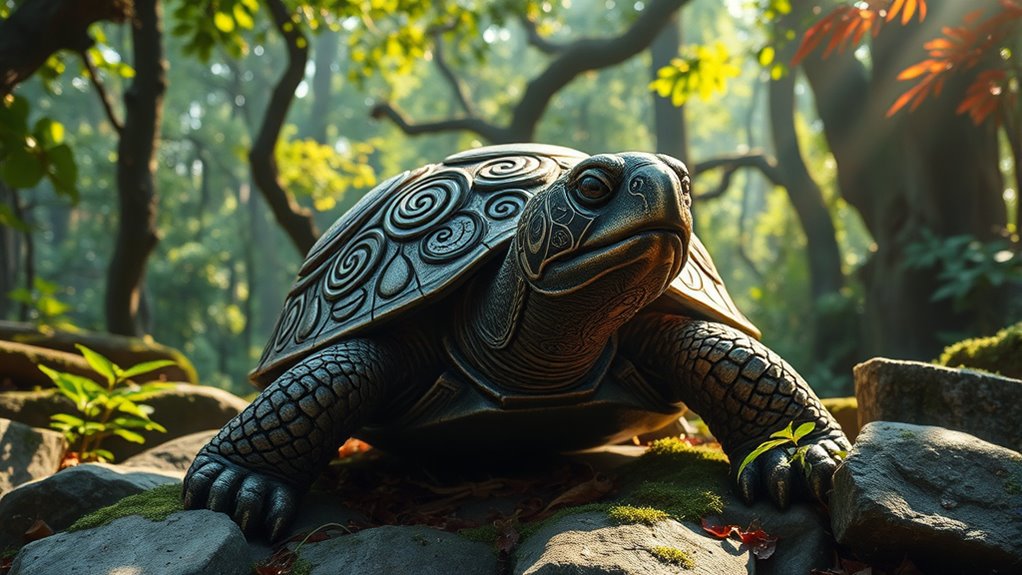
- Turtle shells are seen as representations of the universe’s structure, embodying stability amid change.
- Aquatic legends portray turtles as carriers of sacred knowledge and intermediaries between the heavens and earth.
Have you ever wondered why myths continue to captivate us across cultures? One reason is their power to embody cosmic symbolism, connecting human existence to the larger universe. Among these stories, aquatic legends often feature prominently, illustrating the essential role water plays in creation myths. Many cultures see turtles as symbols of creation, stability, and the universe itself. When you explore these myths, you begin to understand how ancient civilizations viewed the world and their place within it. Turtles, with their sturdy shells and slow, deliberate movements, embody a sense of cosmic order, reminding us that the universe’s foundation is both enduring and balanced. Their association with water and earth links them to the primordial forces that shaped the world, making them natural symbols in aquatic legends that speak of origins and life’s continuity. Additionally, the reservoir system of self-watering planters reflects the importance of water in sustaining life and maintaining balance in nature. In numerous myths, turtles serve as the cosmic architects or carriers of the world. For example, some Native American stories tell of the Earth resting on the back of a giant turtle, a vivid image that emphasizes the turtle’s role in creation and stability. This depiction reflects the deep connection between water, land, and the universe, highlighting how aquatic elements symbolize the primal waters of chaos from which order emerges. Similarly, in Hindu mythology, the concept of the world turtle appears as part of cosmic symbolism, representing the universe’s cyclical nature—creation, preservation, and destruction. These stories resonate because they tap into universal themes of renewal, balance, and the interconnectedness of all life. Turtles are also central figures in Chinese cosmology, where they symbolize longevity, wisdom, and protection. Their shells, often intricately decorated in art and myth, are seen as a reflection of the universe’s structure—an emblem of stability amid constant change. These legends often depict turtles as guardians of sacred knowledge, holding the universe on their backs or serving as intermediaries between the heavens and earth. Their aquatic nature further emphasizes the idea of water as a cradle of life and a conduit for spiritual transformation. Such stories reveal how ancient cultures used turtle symbolism to explain cosmic order, anchoring their understanding of existence in stories that bridge water and land, myth and reality.
Frequently Asked Questions
Are Turtles Considered Sacred in All Cultures Worldwide?
Turtles aren’t considered sacred in all cultures, but they hold significant cultural symbolism and mythological importance in many. You’ll find them revered in Chinese, Native American, and Hindu traditions, where they often symbolize stability, creation, and longevity. Their mythological significance varies, representing the world’s foundation or a divine connection. So, while not universal, turtles’ sacred status is prominent in numerous cultural stories and spiritual beliefs.
How Do Turtle Myths Influence Modern Environmental Conservation?
Did you know over 60% of turtle species are threatened with extinction? Turtle myths inspire eco activism symbolism and shape conservation narratives, making these creatures powerful symbols for protecting our planet. You can see this influence in campaigns that highlight their cultural significance, encouraging communities to value sustainability. By recognizing turtles’ mythological importance, you’re part of a global effort to preserve their habitats and ensure future generations can cherish these ancient symbols.
What Are the Oldest Recorded Turtle Mythologies in History?
You discover that some of the oldest recorded turtle mythologies come from ancient civilizations like China and Africa, where turtles symbolize longevity and stability. These myths often highlight their mythical origins as creators or protectors, representing ancient symbolism of the Earth’s foundation. By exploring these stories, you see how turtle mythology connects humanity with nature’s enduring power and reflects deep cultural values related to the Earth’s creation and preservation.
Do Turtle Symbols Appear in Any Contemporary Religious Practices?
You’ll find turtle symbolism in modern art and popular culture, often representing wisdom, longevity, and protection. In contemporary religious practices, turtles appear in spiritual rituals and symbolism, especially in Indigenous and Asian traditions. You might see turtle imagery in tattoos, jewelry, or spiritual art, reflecting these values. Turtles in popular culture, like in movies or comics, continue to embody these ancient meanings, connecting past mythologies to present-day beliefs.
How Do Turtle Myths Compare to Other Animal Creation Stories Globally?
You’ll find that turtle myths, like the world on its back, often highlight cosmic origins and aquatic symbolism, setting them apart from land-based animal stories. Unlike stories of birds or lions, turtles embody the Earth’s foundation, offering a watery perspective on creation. This contrasts with other cultures’ myths, where animals like snakes or whales symbolize renewal or vastness, showing how aquatic symbolism shapes these ancient tales of origins.
Conclusion
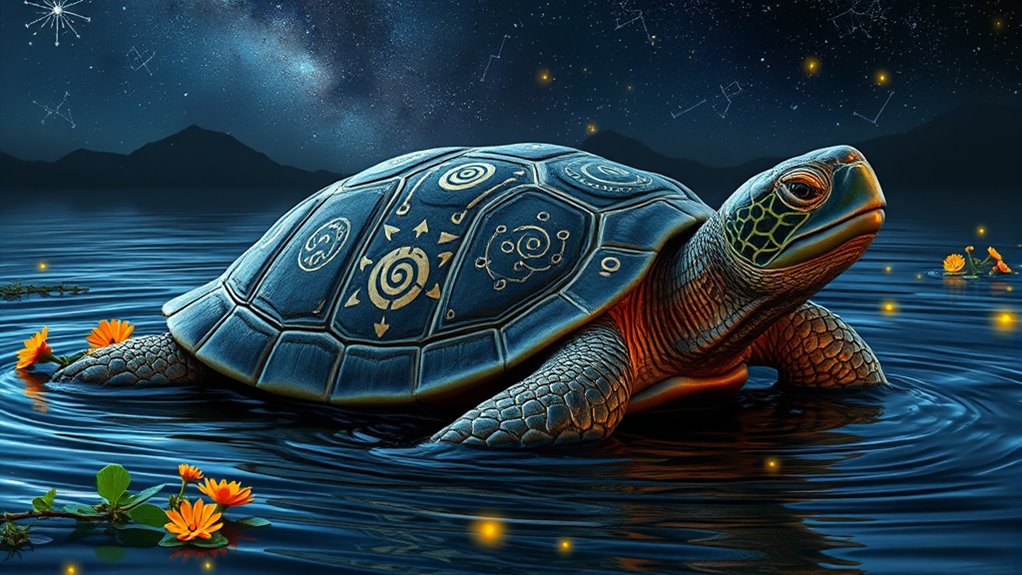
As you imagine the ancient world, picture the mighty turtle slowly gliding across a shimmering pond, its shell etched with the stories of creation. You become part of these timeless legends, feeling the steady heartbeat of the earth beneath you. Through these myths, you see how cultures cradle the world’s origins on their shells, reminding you that beneath your feet, a silent guardian carries the weight of eternity. The turtles whisper stories that never truly end.