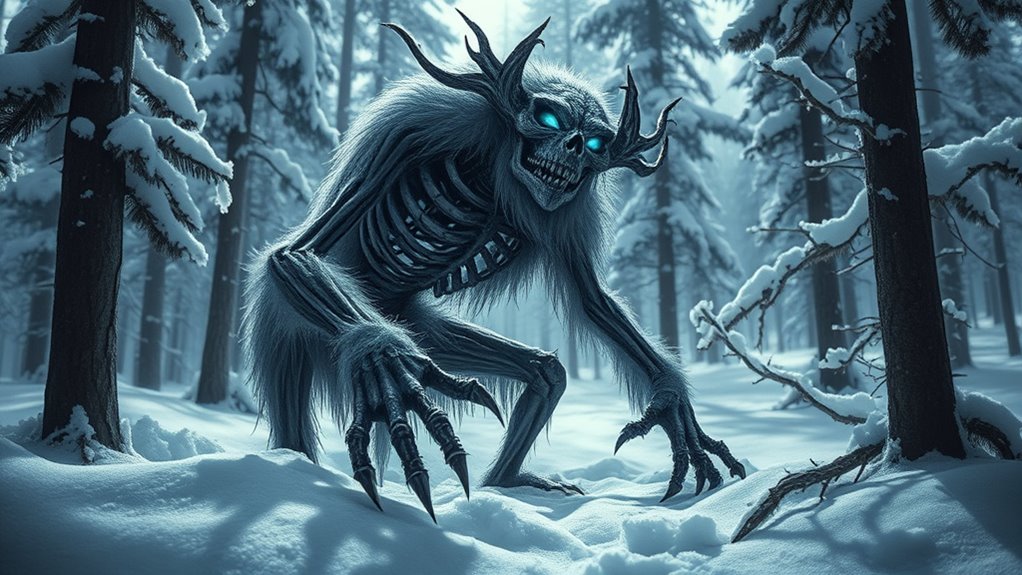

The Wendigo is a terrifying spirit from Algonquian folklore that embodies greed, excess, and moral decay. It is said to have insatiable hunger, representing the dangers of overindulgence and selfishness. This creature transforms into a monstrous being when moral boundaries are crossed, serving as a warning against losing morality and harmony with nature. To uncover more about this powerful cultural symbol and its deeper meanings, keep exploring its fascinating origins and lessons.
Key Takeaways
- The Wendigo originates from Algonquian folklore, symbolizing greed, excess, and moral decay.
- It embodies insatiable hunger and transforms into a monstrous being when moral boundaries are crossed.
- The Wendigo warns against overindulgence, selfishness, and social disintegration, acting as a moral caution.
- It represents natural and spiritual dangers, embodying winter’s harshness and wilderness’s unforgiving nature.
- As a cultural symbol, the Wendigo reflects societal fears and values, emphasizing community responsibility and moral integrity.

Have you ever heard of the Wendigo, the legendary cannibal spirit lurking in the northern forests? This chilling figure originates from Algonquian folklore, symbolizing more than just a creature—it embodies complex moral implications and cultural symbolism. In many Indigenous stories, the Wendigo represents greed, excess, and the destructive consequences of losing one’s humanity. Its presence serves as a cautionary tale, warning communities about the dangers of selfishness and moral decay. When you hear about the Wendigo, you’re not just encountering a monster; you’re confronting a reflection of societal fears and values. The creature’s insatiable hunger and transformation into a monstrous being challenge notions of morality, raising questions about what happens when humans abandon their moral compass. The myth encourages reflection on the importance of self-control, community responsibility, and respecting natural limits. Culturally, the Wendigo holds significant symbolism. It is often seen as a personification of winter’s harshness or the wilderness’s unforgiving nature, acting as a reminder of human vulnerability in the face of nature’s power. For many Indigenous groups, the story also functions as a moral framework, emphasizing the importance of harmony with the environment and each other. The Wendigo embodies the consequences of greed and selfishness—traits that can lead to social disintegration and personal downfall. It’s more than a supernatural entity; it’s a cultural warning that resonates across generations. When you explore into the legend, you realize it’s deeply embedded in the cultural fabric, serving as a moral compass and a symbol of societal values. The myth warns against overindulgence and emphasizes community bonds, reminding you that ignoring these principles can lead to chaos and moral ruin. The symbolism extends to the spiritual realm, where the Wendigo is seen as a representation of the destructive power of human vices if left unchecked. Its story underscores the importance of maintaining moral integrity, especially in times of hardship or scarcity, where the temptation to abandon ethical boundaries is greatest. Understanding this myth helps you appreciate how folklore functions as a moral and cultural mirror, reflecting collective fears and ideals. The Wendigo, thus, isn’t just a legend about a monster; it’s a vivid symbol of the moral and cultural lessons that serve to preserve societal order and human dignity. By exploring its story, you gain insight into the values that shape communities living in the harsh northern forests, where nature and morality are inextricably linked. Recognizing the existential themes embedded within the myth can deepen your understanding of how folklore influences moral behavior and societal cohesion.
Frequently Asked Questions
Are There Recent Sightings of the Wendigo?
There haven’t been any verified sightings of the wendigo recently, but urban legends and cryptid sightings continue to fuel speculation. You might hear stories from remote areas or see reports online, but there’s no concrete evidence to confirm its existence today. While some believe it’s a lingering myth, others remain curious, often sharing stories that keep the wendigo alive in local folklore and cryptid discussions.
How Can One Protect Themselves From a Wendigo Encounter?
You can protect yourself from a Wendigo encounter by knowing Wendigo myths and applying survival strategies. Stay in groups, avoid isolated areas, and carry weapons or tools for defense. Keep your mind focused, avoid panic, and don’t show fear, as myths suggest it might attract the creature. Trust your instincts, stay alert, and be prepared to retreat quickly if you sense danger, increasing your chances of survival.
Is the Wendigo Linked to Any Specific Folklore Traditions?
The wendigo is deeply linked to Indigenous beliefs, especially among Algonquian tribes. Its folklore origins stem from tales warning against greed, selfishness, and moral decay. You’ll find stories that portray the wendigo as a cautionary figure representing insatiable hunger and the dangers of losing oneself to destructive impulses. These traditions serve to reinforce cultural values and teach lessons about community, respect, and self-control.
What Are the Psychological Effects of Wendigo Legends?
You might experience psychological trauma when confronted with wendigo legends, as they evoke deep cultural anxiety about greed, isolation, and survival. These stories can trigger fear and paranoia, making you feel vulnerable or haunted by the idea of insatiable hunger and transformation. Such legends serve as warnings and reflect societal fears, leaving lasting emotional impacts that reinforce cultural values and anxieties about human nature and the wilderness.
Are There Any Known Cases of Wendigo Possession?
You might think wendigo possession is just folklore, but some believe psychological influence can cause individuals to exhibit wendigo traits. While no confirmed cases exist, the legend serves as a powerful cultural symbolism warning against greed and excess. Ironically, it’s these stories that influence real behaviors, blurring the line between myth and mental health. So, whether literal or metaphorical, the wendigo’s presence looms in minds and communities alike.
Conclusion
As you explore the legend of the Wendigo, remember it’s more than just a myth—it’s a symbol of hunger and greed in the northern forests. Did you know that over 50 reported sightings have been documented in the past century? Whether real or supernatural, the Wendigo’s chilling presence reminds you of nature’s mysterious and often terrifying depths. Stay curious, but always respect the wilds and their stories lurking in the shadows.