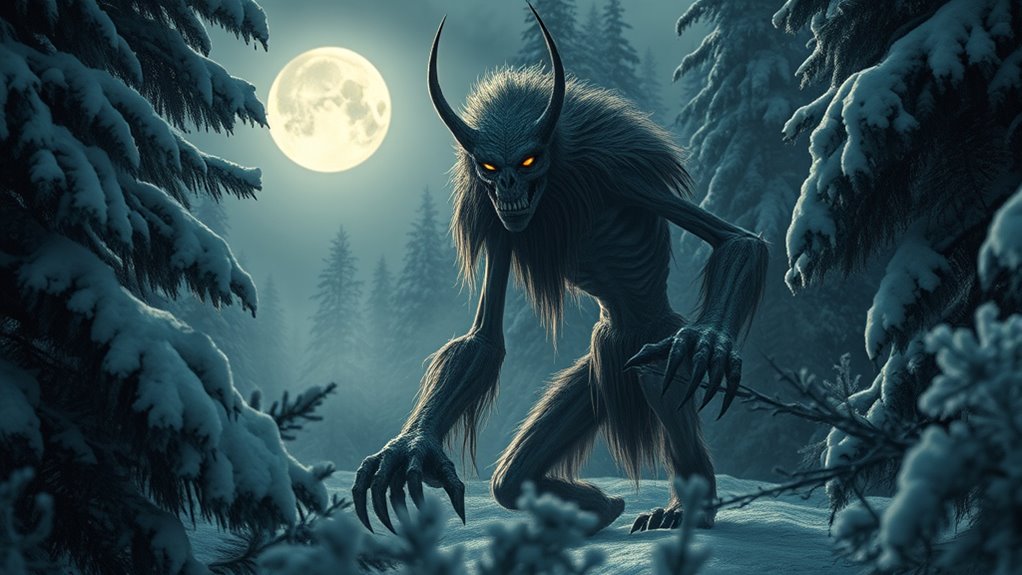
The Wendigo is a frightening creature from Native American legends, symbolizing greed, coldness, and moral corruption in northern forests. It’s often seen as gaunt, glowing-eyed, and starving—a metaphor for insatiable desire that can turn a person into one of these monsters when driven by desperation or greed. Rooted in indigenous beliefs, it serves as a warning about moral failure and the dangers of unchecked impulses. Explore further to uncover the deep cultural stories behind this chilling spirit.

Prime made for students and young adults
- Fast, free delivery for dorm and study essentials
- Prime Video and Amazon Music included
- Member-only deals
Key Takeaways
- The Wendigo is a mythological cannibal spirit rooted in Algonquian indigenous beliefs, symbolizing greed and moral decay.
- It is depicted as gaunt, with glowing eyes, embodying starvation and insatiability in wintery, barren forests.
- The spirit serves as a warning against human greed, moral compromise, and losing one’s humanity.
- Stories of the Wendigo emphasize community, self-control, and respect for nature as moral boundaries.
- In modern interpretations, it reflects fears of unchecked dark impulses and the consequences of moral failure.
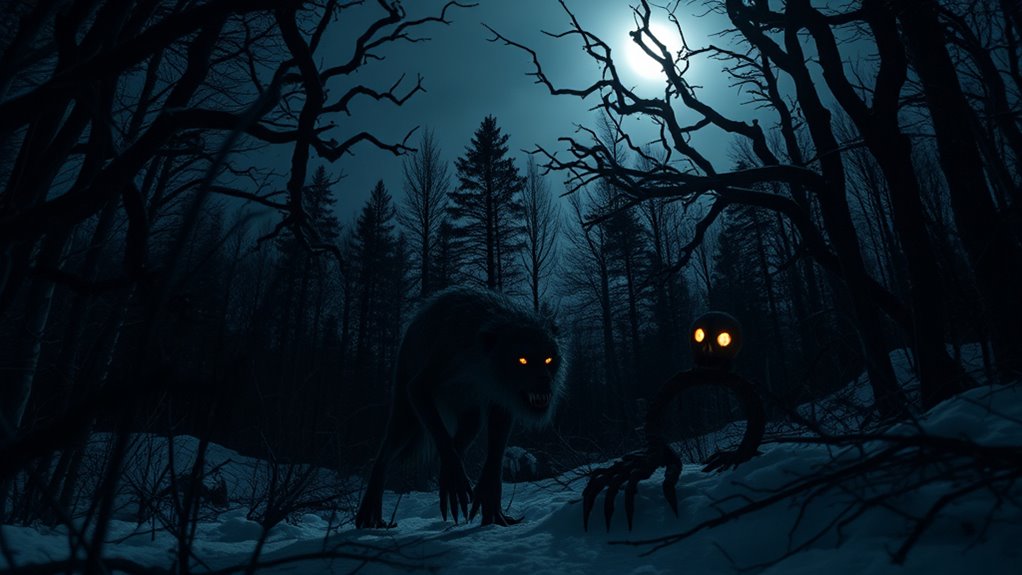
Have you ever wondered about the chilling legends lurking deep within the northern forests? One of the most haunting stories is that of the Wendigo, a creature rooted in mythology and shrouded in fear. Its mythical origins trace back to indigenous beliefs, where it embodies more than just a monster—it represents a warning, a reflection of human greed, and the dangers of losing oneself to insatiable hunger. In many native cultures, particularly among Algonquian-speaking tribes, the Wendigo is seen as a symbol of spiritual corruption and moral decay. Its image is woven into stories that serve as cautionary tales, emphasizing the importance of community, self-control, and respect for nature. You might picture it as a gaunt, emaciated figure with glowing eyes, a creature that embodies starvation and insatiability. But beyond its terrifying appearance, the Wendigo holds deep cultural symbolism. It’s often used as a metaphor for the destructive power of greed—those who become consumed by their desires risk transforming into this monstrous figure. The myth warns that in pursuit of material wealth or selfish needs, you could lose your humanity and become something far worse.
The legends tell that the Wendigo is born from the darkness within human hearts, especially during times of hardship when survival instincts override moral boundaries. When someone is pushed to the brink—starving, desperate, or morally compromised—they might be said to be at risk of turning into a Wendigo. This shape-shifting creature is often associated with winter and the barren, snow-covered forests, emphasizing its connection to cold, isolation, and death. Its mythical origins don’t just serve as stories; they carry psychological and spiritual meanings. They remind you that giving in to greed or selfishness can distort your very soul, transforming you into something monstrous. Cultural symbolism plays a crucial role here, as the Wendigo becomes a mirror for societal values, warning against the destructive consequences of excess and moral failure. Recognizing the symbolic significance of the Wendigo helps to understand its role beyond folklore as a cautionary emblem.
In the end, the Wendigo isn’t just a terrifying legend to scare children. It’s a reflection of human fears—about survival, morality, and the thin line that separates civilization from savagery. These stories continue to resonate because they speak to universal truths: that our darkest impulses, if unchecked, can turn us into monsters. So, when you hear about the Wendigo lurking in the northern forests, remember it’s more than just a myth. It’s a powerful symbol rooted in cultural history, a reminder of what can happen when greed and despair consume the human spirit.
As an affiliate, we earn on qualifying purchases.
Frequently Asked Questions
Are There Modern Sightings of the Wendigo?
Yes, there are modern sightings of the wendigo, though many are considered cryptid sightings fueled by folklore adaptations. You might hear about unusual tracks or eerie encounters in remote forests, but concrete proof remains elusive. These reports often stem from local legends and cultural stories, blending fear and curiosity. While some believe in the wendigo’s existence, most skeptics see it as part of folklore rather than a real creature.
How Does the Wendigo Influence Local Folklore Today?
You see that the Wendigo mythography still influences local folklore today, serving as a powerful cultural symbolism of greed, excess, and moral decay. It shapes stories, traditions, and warnings in many northern communities, reminding people of their values and history. By embodying primal fears, the Wendigo continues to be a cautionary figure, linking ancient legends to contemporary cultural identity and moral lessons.
Can the Wendigo Be Seen in Dreams or Visions?
You might experience dream encounters or spiritual visions of the wendigo, especially if you’re exploring folklore or facing fears. These visions often feel intense and haunting, symbolizing hunger, greed, or transformation. When you see the wendigo in dreams, it may serve as a warning or reflection of inner struggles. Pay attention to these spiritual visions, as they can reveal deep insights about yourself or cultural beliefs surrounding this mysterious creature.
Is There Any Scientific Basis for the Wendigo Legend?
You might see the wendigo as a symbol of inner darkness, but scientifically, there’s no proof it exists. Psychological explanations suggest it reflects fears and the human capacity for violence, while environmental factors like harsh winters or isolation can amplify these feelings. The legend acts as an allegory for the dangers of greed and despair, showing how our minds and surroundings shape such powerful stories without concrete evidence.
What Are the Signs of a Wendigo Curse or Possession?
If you suspect a wendigo curse or possession, watch for psychological symptoms like paranoia, hallucinations, or uncontrollable hunger. Physical transformations might include extreme thinness, gaunt features, or unnatural strength. You may also experience aggressive behavior or a compulsion to harm others. Trust your instincts, and seek help from mental health professionals or spiritual guides to address these signs before they worsen.
Native American folklore books about Wendigo
As an affiliate, we earn on qualifying purchases.
As an affiliate, we earn on qualifying purchases.
Conclusion
As you stand beneath the twisted branches of the ancient forest, the cold wind whispers tales of the wendigo lurking in shadowed silence. Its hollow eyes seem to peer through your soul, and the scent of decay lingers like a ghostly breath. You feel the weight of unseen hunger, a chilling reminder that in these northern woods, darkness and hunger are forever entwined. Beware, for the wendigo waits patiently, hungry for your fear.
Wendigo inspired decor or statues
As an affiliate, we earn on qualifying purchases.
As an affiliate, we earn on qualifying purchases.
As an affiliate, we earn on qualifying purchases.
Halloween Picks
halloween
As an affiliate, we earn on qualifying purchases.