The Cuélebre is a legendary dragon-like guardian rooted in northern Spain’s folklore. Tales describe it as a serpent with wings that protects sacred sites, natural resources, and treasures. Depending on the region, it can be seen as either a fierce protector or a cunning adversary. Its stories are intertwined with landscapes like caves and mountains, symbolizing the land’s natural and spiritual power. Discover more about this fascinating myth and its cultural significance as you explore further.
Key Takeaways
- The Cuélebre is a mythical guardian from northern Spain, rooted in pre-Christian folklore and regional legends.
- It is depicted as a serpentine or winged dragon, capable of breathing fire or poison, symbolizing both protection and danger.
- In regions like Asturias and Cantabria, it guards sacred sites and natural resources, embodying land and spiritual significance.
- The creature’s stories vary, reflecting local culture, and it often appears in festivals, art, and storytelling today.
- The Cuélebre represents the natural landscape’s mysterious power, highlighting the deep connection between folklore and the environment.
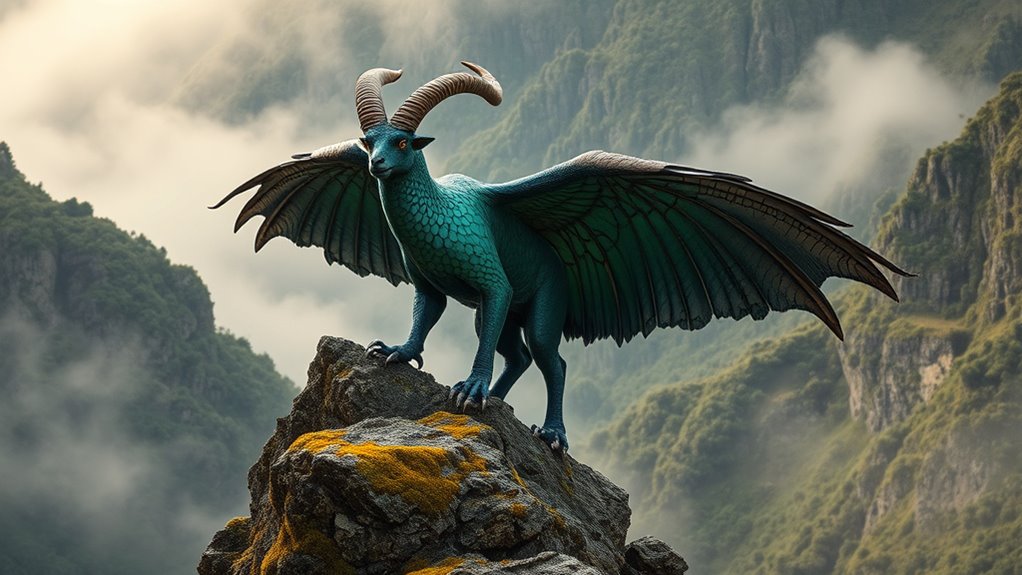
Have you ever heard of the Cuélebre, the legendary dragon-like creature from Spanish folklore? This mythical guardian has captured imaginations for centuries, rooted deeply in the legends of northern Spain. The origins of the Cuélebre are shrouded in myth, with stories passed down through generations that blend ancient beliefs with local cultural elements. Its mythical origins trace back to pre-Christian times, when tribes believed these creatures protected sacred sites and natural resources. Over time, the legend evolved, influenced by regional stories and variations, giving each area its own version of the Cuélebre. In some tales, it’s a fierce dragon guarding treasures and secrets, while in others, it’s a wise protector of villages and forests. These regional variations reflect the diverse cultural landscape of northern Spain, where each community’s folklore contributes to the creature’s mythos.
You might find that the Cuélebre is described differently depending on where you hear the story. In some regions, it’s a serpentine beast with wings, capable of breathing fire or poison, embodying both fear and reverence. In others, it appears more as a guardian spirit, a wise being that tests or helps local heroes. These regional variations aren’t just about appearance—they reveal the different ways communities interpret the creature’s role. For example, in Asturias and Cantabria, stories often paint the Cuélebre as a formidable protector that ward off evil spirits and safeguard hidden treasures. Conversely, in Castilla y León, tales sometimes depict it as a cunning adversary, challenging brave warriors to prove their worth. Such differences highlight how folklore adapts to local landscapes, history, and values, making the Cuélebre a versatile symbol of regional identity. Additionally, the myth often emphasizes the importance of natural habitat and its connection to the land’s spiritual significance.
If you’re exploring the legend, you’ll notice that the myth also reflects a deep connection to nature and the supernatural. The Cuélebre’s mythical origins are intertwined with the land itself—caves, mountains, and forests serve as its habitat in stories, reinforcing the idea that these creatures are part of the natural order. Whether seen as protectors or dangers, they embody the mysterious power of nature that ancient communities both revered and feared. The legend of the Cuélebre continues to thrive today, inspiring local festivals, art, and storytelling that keep its myth alive. Its regional variations remind you that folklore isn’t static; it evolves with the people who tell it, carrying the essence of their history, environment, and collective imagination.
Frequently Asked Questions
Are There Any Recent Sightings of the Cuélebre?
There haven’t been any recent sightings of the cuélebre. Modern sightings are rare, and eyewitness accounts remain unverified. Most reports come from local folklore enthusiasts or hikers sharing stories around campfires, but there’s no concrete evidence to support the existence of this legendary creature today. If you’re interested, keep an eye out, but remember that these tales are often more myth than reality.
What Are the Legends Surrounding the Cuélebre’s Origins?
You might find it fascinating that legends say the cuélebre’s origins date back over a thousand years, rooted in regional folklore. This dragon symbolizes protection and strength in mythical symbolism, often guarding sacred sites. Many stories suggest it was born from ancient fears of natural disasters or invaders, embodying the land’s resilience. These tales have been passed down through generations, shaping the mysterious aura that still surrounds the cuélebre today.
How Does the Cuélebre Compare to Other European Dragons?
You’ll find that the cuélebre is comparable to other European dragons through its role in legends symbolizing protection and chaos. Unlike Western dragons often seen as treasure hoarders, the cuélebre embodies dragon symbolism as a guardian of sacred sites. Its fierce appearance and mythic powers align with legendary dragons across Europe, but it uniquely reflects regional cultural beliefs, making it a distinctive figure in European dragon lore.
Is There Any Evidence Supporting the Existence of the Cuélebre?
There’s little cryptid skepticism supporting the Cuélebre’s existence, as it’s mostly folklore with questionable authenticity. You won’t find concrete evidence like physical remains or verified sightings. Instead, the Cuélebre remains a mesmerizing legend rooted in local stories, reflecting cultural beliefs rather than scientific fact. If you’re searching for proof, you’ll find that the folklore authenticity is what keeps this myth alive, not verified evidence.
How Has the Cuélebre Influenced Local Culture and Traditions?
You see, the Cuélebre deeply influences local culture through its mythical symbolism, representing protection and mystery. During folklore festivals, communities celebrate with stories, parades, and costumes inspired by the dragon, keeping its legend alive. This tradition fosters a sense of identity and continuity, allowing locals and visitors alike to connect with the rich heritage of Northern Spain and honor the enduring myth of the Cuélebre.
Conclusion
As you explore the legend of the Cuélebre, remember that these mythical dragons have captivated northern Spain for centuries. notably, over 60% of locals still believe in the existence of these guardians, keeping the legend alive. Whether real or myth, the Cuélebre embodies the region’s rich history and mystique. So, next time you visit, keep an eye out—you might just feel the presence of this legendary protector watching over the mountains.