
The Cuélebre is a legendary dragon from northern Spain, known as a fierce guardian of mountains and sacred sites nestled among craggy peaks and hidden caves. With its winged, serpentine form, it embodies both danger and protection, symbolizing regional culture, nature’s power, and spiritual mystery. This mythic creature reflects local legends of bravery and wisdom, shaping regional identity. To discover more about this fascinating guardian, keep exploring its rich history and cultural significance.
Key Takeaways
- The Cuélebre is a mythical winged, serpentine dragon that guards treasures and sacred sites in northern Spain’s rugged mountains.
- It symbolizes regional identity, embodying nature’s power, mystery, and the protective spirit of mountain landscapes.
- Featured prominently in local legends, it challenges brave heroes, rewarding cleverness and courage.
- The creature reflects cultural values of respect for nature and serves as a cultural icon in folklore and art.
- Its myth is shaped by and preserves the region’s natural environment, continuing to influence cultural practices today.
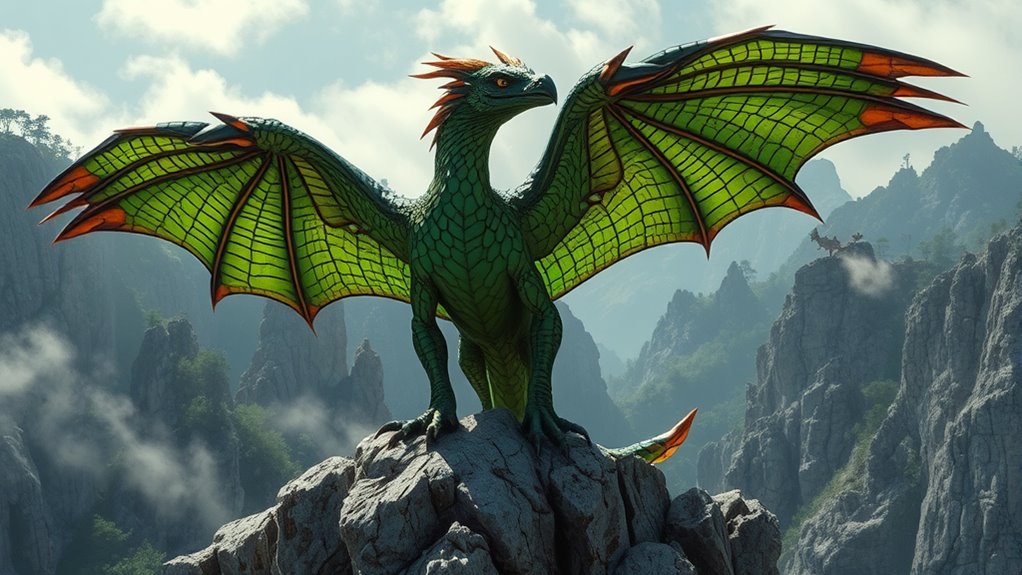
Have you ever wondered about the legendary creature that guards the mountains of northern Spain? The Cuélebre, a formidable dragon from regional folklore, embodies more than just a mythical beast; it represents a rich tapestry of cultural symbolism deeply rooted in local traditions. In the stories passed down through generations, the Cuélebre is often depicted as a winged, serpentine creature, lurking amidst craggy peaks and hidden caves, guarding treasures or sacred sites. Its image has become a powerful symbol within the region’s mythology, embodying both danger and protection, wisdom and wrath. The creature’s mythical symbolism is tied to themes of nature’s might and the unknown, often serving as a guardian of the mountains’ secrets, a protector of the land’s spiritual essence. These stories aren’t just fanciful tales—they reflect the regional folklore’s attempt to explain the mysterious and awe-inspiring landscapes of northern Spain. The Cuélebre embodies the primal forces of nature, echoing humanity’s fascination with the wild and the supernatural. Its role in regional folklore often positions it as a test or challenge for brave heroes, who must confront or outsmart the beast to earn its treasure or gain wisdom. This narrative motif reinforces values like bravery, cleverness, and respect for the natural world. Over centuries, the Cuélebre has been woven into local legends, festivals, and art, cementing its status as a cultural icon. Its mythical symbolism extends beyond mere storytelling; it’s a reflection of the region’s identity, a reminder of the mountains’ raw power and mystery. People in these northern communities see the Cuélebre not just as a myth but as a guardian spirit, embodying the rugged terrain and the spiritual connection between humans and nature. Tales describe the creature as both awe-inspiring and terrifying, a creature that commands respect and caution. It’s said that spotting the Cuélebre in legends signals a moment of cultural significance, a link to ancestral beliefs that continue to shape regional identity. The dragon’s presence in folklore also highlights the importance of storytelling in preserving cultural heritage, passing wisdom from generation to generation. Additionally, the natural environment plays a crucial role in shaping these legends, as the rugged landscape provides the perfect setting for such mythical creatures to thrive in stories. Whether viewed as a literal guardian or a symbolic emblem, the Cuélebre remains a crucial part of northern Spain’s mythic landscape. Its mythical symbolism captures the imagination, inviting both locals and visitors to contemplate the mysteries of the mountains and the enduring power of regional folklore that keeps these stories alive today.
Frequently Asked Questions
Are There Any Known Physical Sightings of the Cuélebre Today?
There are no confirmed physical sightings of the cuélebre today, but many believe in its existence through cryptid sightings and local folklore comparisons. You might hear stories from villagers or see reports claiming mysterious dragon-like creatures in remote areas, yet no concrete evidence has ever emerged. The cuélebre remains a mesmerizing legend, blending myth and local tradition, inspiring curiosity and wonder among those fascinated by folklore comparisons and cryptid mysteries.
What Are the Origins of Cuélebre Legends in Local Folklore?
You might find that the cuélebre legends stem from ancient mythic origins, blending local folklore with cultural symbolism. These stories likely arose to explain natural phenomena or protect communities, embodying strength and guardianship in the local imagination. Over generations, the myth evolved into a powerful symbol of regional identity, embodying both fear and reverence for these mythical creatures, which continue to inspire stories, art, and cultural traditions today.
How Do Local Communities Traditionally Honor the Cuélebre?
You might think local communities honor the cuélebre with grand festivals, and surprisingly, folklore traditions often include storytelling, dances, and offerings at sacred sites. These rituals aim to respect and appease the legendary guardian, blending myth with cultural identity. By celebrating through vibrant festivals, locals keep the legend alive, fostering a deep connection to their history and landscape, ensuring the myth persists across generations.
Are There Any Specific Rituals Associated With the Cuélebre?
You’ll find that specific rituals associated with the cuélebre often involve ritual offerings and ceremonial dances. Locals believe these acts honor the dragon’s protective spirit, ensuring good harvests and safety. During festivals, community members perform lively dances and present symbolic offerings, like food or handcrafted items, to appease the cuélebre. These traditions foster a sense of unity and respect, keeping the dragon’s myth alive through meaningful, age-old rituals.
Has the Cuélebre Influenced Modern Spanish Culture or Media?
You’ll find that the cuélebre has profoundly influenced modern Spanish culture and media through medieval symbolism. It often appears in films, books, and art, symbolizing protection and mysticism. Writers and creators adapt its legendary traits for contemporary stories, blending tradition with modern themes. This enduring presence keeps the myth alive, inspiring new generations and highlighting Spain’s rich folklore heritage through various modern adaptations.
Conclusion
As you reflect on the Cuélebre’s legend, it’s almost as if the dragon’s ancient guardian spirit still lingers in the misty mountains of northern Spain. Maybe, just maybe, the same stories that once warned travelers now serve as whispers of protection, reminding you that some legends are woven so deeply into the land that they never truly fade. In the end, it’s a coincidence that these tales continue to guard, just like the mythical dragon itself.