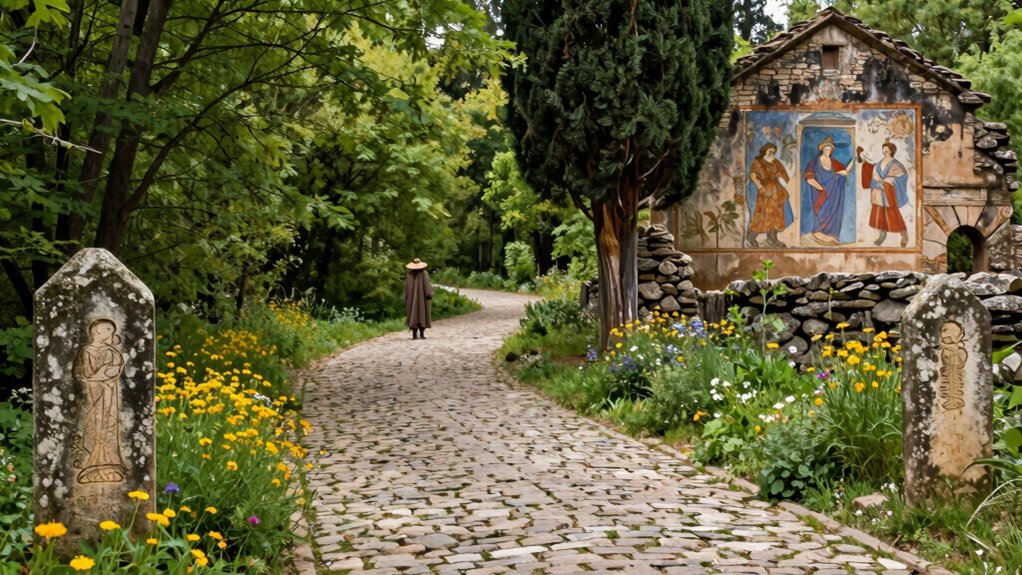

In Spain, pilgrimage routes and folklore paths intertwine through centuries of tradition, connecting you to history, myth, and community. As you walk along these trails, you’ll discover local legends linked to landmarks, saints, and historic towns, with festivals and reenactments bringing the past to life. These routes are filled with stories that preserve regional identity and culture. Continue exploring, and you’ll uncover how Spain’s rich cultural tapestry continues to thrive through these intertwined journeys.

Prime made for students and young adults
- Fast, free delivery for dorm and study essentials
- Prime Video and Amazon Music included
- Member-only deals
Key Takeaways
- Many pilgrimage routes pass through towns rich in local legends, blending spiritual journeys with folklore stories.
- Festivals along routes often celebrate both religious traditions and regional myths, intertwining cultural narratives.
- Landmarks and chapels along paths are associated with saints and legends, linking sacred sites to local storytelling.
- Medieval festivals and legends are preserved through community events, reinforcing the connection between routes and folklore.
- Travelers experience a continuous cultural landscape where history, myth, and tradition intersect along pilgrimage paths.
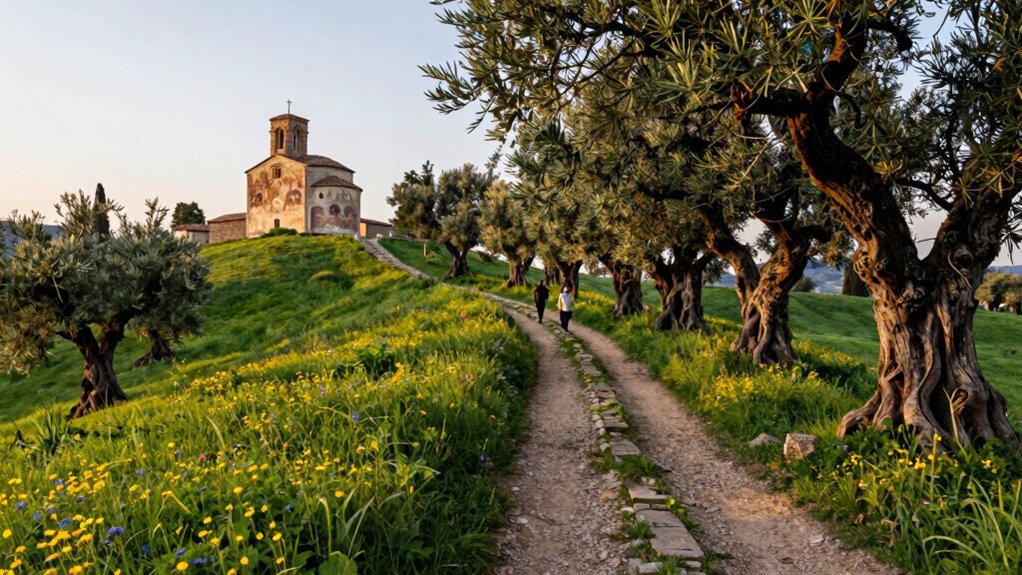
Spain’s rich tapestry of history and culture is vividly reflected in its pilgrimage routes and folklore paths, which have been traveled for centuries by pilgrims, adventurers, and curious travelers alike. As you walk these ancient trails, you’re not just following a route; you’re stepping into a living story woven with centuries of tradition, myth, and community. Many of these routes intersect with local traditions, where medieval festivals breathe life into the landscape and regional legends seep into every corner. You’ll notice that towns along the way celebrate their history with vibrant festivals, often rooted in centuries-old customs, making your journey a blend of spiritual reflection and cultural immersion.
Along these paths, medieval festivals serve as lively reminders of Spain’s past, where towns come alive with music, dance, and reenactments of historic events. These festivals aren’t just celebrations; they’re a way for communities to preserve their identity and keep their regional legends alive. When you participate in or witness these festivals, you get a firsthand sense of how history and legend continue to shape local life. These events often coincide with religious festivities tied to pilgrimage traditions, making the journey even more meaningful. You might find yourself amidst costumed performers reenacting medieval battles or traditional dances that have been passed down through generations, creating a tangible connection to the past.
Regional legends, often associated with specific landmarks or saints, add an enchanting layer to your travels. These stories, sometimes mystical or legendary, give depth to the places you visit. For instance, a small chapel along a pilgrimage route might be linked to a local saint whose miraculous deeds are still celebrated today. As you listen to these tales, you realize that the paths you walk are not just physical routes but also corridors of collective memory and storytelling. These legends often influence local customs, and you might see them reflected in the artwork, architecture, and everyday life of the communities you pass through. Recognizing the cultural significance of these legends enhances your understanding of how history is preserved through storytelling and tradition. Additionally, many of these legends have been passed down through generations, maintaining their relevance and cultural importance in modern times.
By exploring these intertwined paths, travelers gain a deeper appreciation for the way local traditions and stories shape regional identities and foster community pride. Ultimately, crossing paths on Spain’s pilgrimage routes and folklore paths means experiencing a living history. You become part of a continuum that links medieval festivals and regional legends to the present. It’s in these intersections that the true magic of Spain’s cultural landscape unfolds—where history, myth, and tradition converge, inviting you to explore beyond the surface and discover stories that have shaped the country for centuries.
As an affiliate, we earn on qualifying purchases.
Frequently Asked Questions
How Do Local Communities Preserve Folklore Along Pilgrimage Routes?
You can see how local communities preserve folklore along pilgrimage routes through vibrant celebrations and storytelling. They keep local traditions alive by organizing festivals, sharing legends, and passing down tales during community gatherings. These activities create a sense of identity, allowing both locals and pilgrims to connect deeply with the history and folklore. Through such efforts, folklore remains a living part of the cultural landscape along these historic routes.
Are There Specific Festivals Associated With Folklore Paths?
You’ll find that specific festivals are deeply tied to folklore paths, enriching cultural celebrations and festival traditions. These events often coincide with pilgrimage routes, celebrating local legends and customs. As the saying goes, “Where there’s a will, there’s a way,” highlighting how communities preserve their heritage through vibrant festivals like Semana Santa or local harvest festivals. These celebrations create a lively atmosphere, keeping folklore alive for generations.
What Are the Most Historically Significant Pilgrimage Routes in Spain?
You should explore Spain’s most significant pilgrimage routes, like the Camino de Santiago, which traces medieval pilgrimage traditions and follows historic trade routes connecting towns and cities. These paths, rich in history, attract travelers seeking spiritual and cultural experiences. As you walk these routes, you connect with centuries of tradition, passing through landscapes that have shaped Spain’s history and folklore, making your journey both meaningful and historically significant.
How Do Folklore Paths Influence Modern Tourism in Spain?
You might think folklore paths are just charming stories, but they actually boost modern tourism by fueling cultural storytelling and heritage conservation. Travelers flock to these routes, enthusiastic to immerse themselves in local legends and traditions, which keeps history alive. Ironically, what started as oral tales now drives economic growth and cultural pride, proving that folklore paths are essential in shaping Spain’s vibrant tourism scene.
Are There Any Legends or Myths Unique to Certain Pilgrimage Routes?
Yes, you’ll find unique legends and mythic stories along specific pilgrimage routes in Spain. For example, on the Camino de Santiago, local legends speak of miraculous healings and Saint James’ miraculous appearances, shaping the spiritual journey. In other regions, mythic stories about hidden treasures or legendary saints add a mystical layer to the pilgrimage experience. These local legends enrich your walk, connecting you deeply to Spain’s rich folklore and cultural heritage.
medieval festival costumes Spain
As an affiliate, we earn on qualifying purchases.
As an affiliate, we earn on qualifying purchases.
Conclusion
As you tread these intertwining paths in Spain, you become part of a living tapestry where ancient whispers and sacred footsteps converge. The pilgrimage routes and folklore trails weave a rich, spiraling dance across the landscape, inviting you to uncover stories etched in stone and song. Embrace this journey, where history and myth swirl like a vibrant mosaic beneath your feet, reminding you that every step is a thread pulling you deeper into Spain’s timeless soul.
Spanish folklore storytelling book
As an affiliate, we earn on qualifying purchases.
As an affiliate, we earn on qualifying purchases.
As an affiliate, we earn on qualifying purchases.
Evergreen bestsellers Picks
bestsellers
As an affiliate, we earn on qualifying purchases.