In Jewish folklore, dybbuks are malevolent spirits that latch onto a living person, causing strange behaviors, illnesses, or mental disturbances. They often result from unresolved sins or spiritual unrest, and exorcism rituals aim to free the afflicted through prayers, sacred texts, and symbolic objects. These customs have deep roots in tradition and history, blending spiritual beliefs with community practices. If you look further, you’ll uncover more about the fascinating world of dybbuks and their cultural significance.
Key Takeaways
- Dybbuks are malevolent spirits believed to possess living individuals due to unresolved sins or spiritual unrest in Jewish folklore.
- Exorcism rituals, led by rabbis, use prayers, sacred texts, and symbolic objects to expel dybbuks and restore spiritual harmony.
- Accounts of dybbuk possession include strange behaviors, speech in unknown languages, and mental disturbances, often documented in Eastern European Jewish communities.
- These folklore stories serve both spiritual and social functions, reinforcing community bonds and addressing unexplained afflictions.
- Modern practices preserve traditional exorcisms, blending religious symbolism with cultural storytelling and ongoing belief in spirits like the dybbuk.
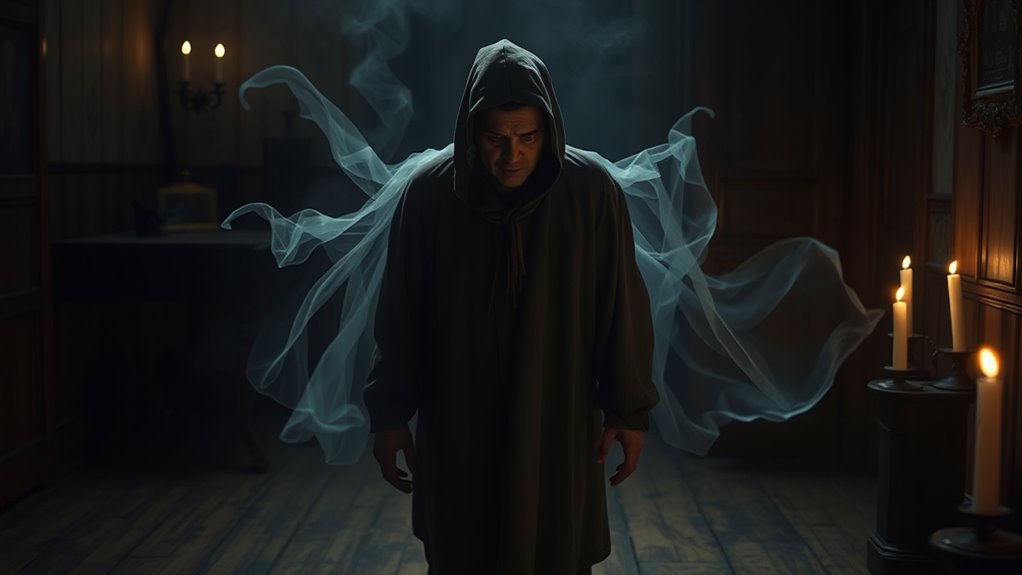
In Jewish folklore, dybbuks are malevolent spirits believed to possess living individuals, often as a result of unresolved sins or spiritual unrest. These spirits are thought to latch onto a person’s soul, causing strange behaviors, illnesses, or mental disturbances. Throughout history, many have believed that these possessions could be remedied through specific exorcism rituals, which aim to free the afflicted from the dybbuk’s grip. These rituals have deep roots in Jewish tradition and have been documented in various historical accounts, shaping how communities understood and responded to such phenomena. The belief in spirit possession** has historically played a significant role in the cultural and religious practices surrounding these exorcisms. Exorcism rituals in Jewish folklore are often elaborate and rooted in religious authority. Traditionally, a rabbi or a learned spiritual leader conducts the exorcism, using prayers, psalms, and sacred texts to command the dybbuk to leave the person’s body. The process might involve reciting specific prayers that invoke divine protection, as well as rituals meant to identify the spirit and persuade it to depart. Sometimes, the ritual includes the use of symbolic objects, such as holy water or salt, believed to have protective qualities. These exorcisms are not only spiritual acts but also communal events, where witnesses observe and confirm the spirit’s departure, offering reassurance to the community. Historical accounts of dybbuk exorcisms are scattered across Jewish communities, especially in Eastern Europe, where tales of possession were widely believed. Many stories recount individuals suddenly exhibiting abnormal behaviors, speaking in strange languages, or claiming to be possessed by spirits. In some cases, the exorcisms were dramatic, involving intense prayers and rituals that spanned hours or even days. These accounts often highlight the community’s collective effort to restore harmony and spiritual health. Over time, such stories have been passed down, sometimes blending folklore with religious practice, shaping the cultural understanding of possession and exorcism in Jewish tradition. While modern perspectives may view these accounts skeptically, in historical contexts, they served as essential responses to unexplained afflictions. The rituals offered hope and a sense of control over spiritual threats that seemed beyond human understanding. Today, these exorcism rituals remain part of some traditional Jewish practices, especially among communities that preserve ancient customs. Whether regarded as literal truths or symbolic acts, they underscore the enduring belief in spirits like the dybbuk and the desire to confront and exorcise these malevolent presences** through faith and ritual.

Energy Protection kit, for Protection-Rituals- Spell- Purifying- Cleansing, Kit Includes: Incense, Holy Water, Black Salt with beaytifully Hand Crafted Pouch, Arch Angel Michael Candel & Prayer Card.
A powerful and compelete energy protection kit is sure to get the job done.
As an affiliate, we earn on qualifying purchases.
As an affiliate, we earn on qualifying purchases.
Frequently Asked Questions
How Do Dybbuks Compare to Spirits in Other Cultures?
You’ll find that dybbuks differ from spirits in other cultures through their unique spiritual distinctions and cultural parallels. Unlike many spirits seen as benign or helpful, dybbuks are often malevolent entities that possess living beings, reflecting specific Jewish beliefs about spiritual impurity. While other cultures have spirits connected to ancestors or nature, dybbuks embody unresolved issues, emphasizing cultural fears of spiritual corruption and the importance of purity in Jewish tradition.
Are There Modern Cases of Dybbuk Possession?
You might wonder if there are modern sightings of dybbuk possession. While some claim recent cases, these are often explained through psychological explanations like mental health issues or suggestibility. Skeptics argue that what’s perceived as dybbuk possession can be attributed to psychological or cultural factors rather than supernatural causes. Overall, contemporary reports are rare and usually have alternative explanations, making genuine dybbuk possession unlikely in today’s context.
What Rituals Are Used to Exorcise Dybbuks?
When confronting a dybbuk, you’ll typically witness exorcism rituals rooted in Jewish tradition. These spiritual cleansing ceremonies often involve reciting specific prayers, such as the Kabbalistic psalms, and performing rituals like the breaking of a glass or pouring wine as symbolic acts. The rabbi or spiritual leader guides the process, aiming to banish the malevolent spirit and restore peace. The tension builds as the ritual reaches its climax, sealing the dybbuk’s departure.
How Has Jewish Law Historically Addressed Possession?
Jewish law has historically approached possession through specific legal rulings and possession statutes, emphasizing spiritual intervention and community support. You’re guided to seek rabbinic authority for determining if someone is truly possessed, and exorcisms are performed based on these legal frameworks. These statutes prioritize compassion while ensuring the safety of the community, often involving prayer, rituals, and sometimes consultations with specialists to address spiritual affliction effectively.
Are Dybbuks Linked to Specific Jewish Holidays or Traditions?
Imagine a community gathered during Sukkot, where stories of dybbuk folklore come alive around the sukkah. While dybbuks aren’t directly linked to specific Jewish holidays, their stories often surface during times of reflection and spiritual vulnerability. These tales serve as cautionary folklore, reminding us of the importance of purity and faith, especially during festivals like Passover and Yom Kippur, emphasizing the ongoing connection between tradition and spiritual awareness.

Crusellas Agua Bendita (Holy Water) 8 Fl. Oz.
Holy Water is widely used for cleansing before baptisms and for spiritual purification across various religions, including Christianity…
As an affiliate, we earn on qualifying purchases.
As an affiliate, we earn on qualifying purchases.
Conclusion
As you explore Jewish folklore, you realize dybbuks are like whispers of the past, haunting the present. Their stories remind you that spirits can be both a warning and a reflection of our deepest fears. Just as a shadow follows you in dim light, these tales cast a mysterious glow on human nature and faith. Embrace the unknown, for in their ghostly dance, you find a timeless connection to history and the unseen.
Minor Exorcisms and Deliverance Prayers: In Latin and English
Minor Exorcisms and Deliverance Prayers: In Latin and English
As an affiliate, we earn on qualifying purchases.
As an affiliate, we earn on qualifying purchases.

Original Botanica Go Away Evil Incense Cones Scented Meditation Spiritual Healing Cleansing Negative Energy Protection Positive Vibes House Blessing Smudge Incense Cone Bad Energy Removal, 20-Pack
As an affiliate, we earn on qualifying purchases.
As an affiliate, we earn on qualifying purchases.