Haunted technology blends ghost stories with modern devices, making everyday gadgets part of supernatural tales. You might experience strange calls from untraceable numbers, devices acting on their own, or eerie glitches in your smart home. Paranormal apps and virtual reality experiences heighten the uncanny, while fears and perception biases often amplify these phenomena. As technology advances, digital hauntings could become even more immersive—if you stay curious, you’ll uncover how these stories evolve and what they really mean.
Key Takeaways
- Modern ghost stories often involve devices like smartphones, smart home gadgets, and paranormal apps exhibiting unexplained behaviors.
- Phenomena such as screen flickering, phantom notifications, and autonomous device actions are interpreted as digital hauntings.
- Social media and viral videos rapidly spread stories of spectral shadows, ghostly images, and paranormal encounters with technology.
- Psychological factors and perception biases can influence whether device glitches are seen as supernatural phenomena.
- Future advancements in AI and virtual reality may deepen digital hauntings, blending technology with traditional ghost story themes.
The Rise of Digital Ghost Stories
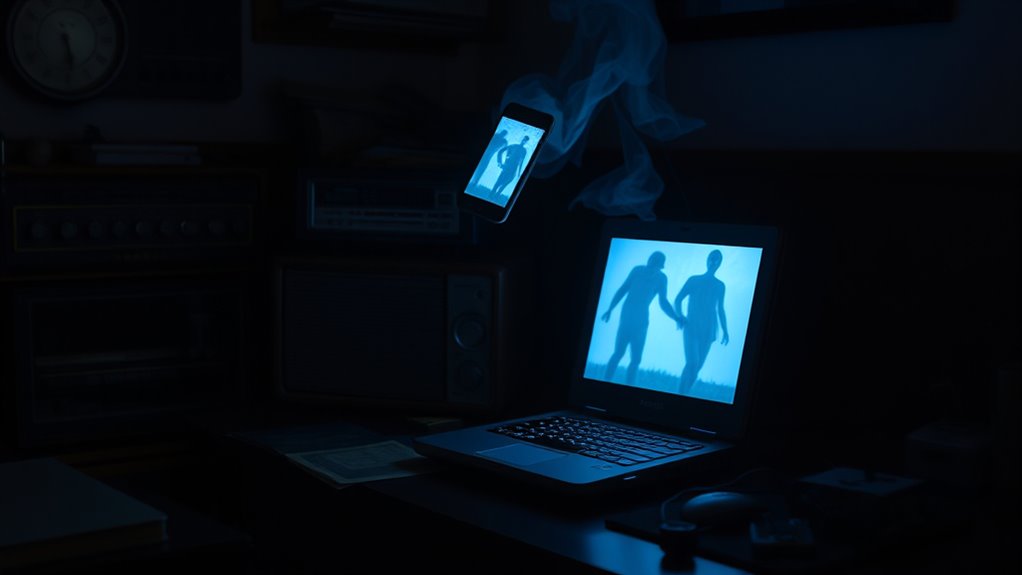
Have you noticed how digital ghost stories have surged in popularity over recent years? It’s as if technology has become a new canvas for paranormal tales. You might hear ghostly whispers echoing through your speakers or see spectral shadows flickering on your screen unexpectedly. These stories spread rapidly online, fueled by social media, forums, and viral videos. They tap into our fears of the unknown, blending digital glitches with supernatural phenomena. Many believe these ghostly whispers and spectral shadows are modern echoes of spirits trying to communicate through our devices. The rise of digital ghost stories shows how technology and folklore intertwine, creating a new dimension of paranormal storytelling that captures the imagination of a tech-savvy generation eager to explore the mysteries lurking in the digital sphere.
Haunted Smartphones: Calls From the Beyond
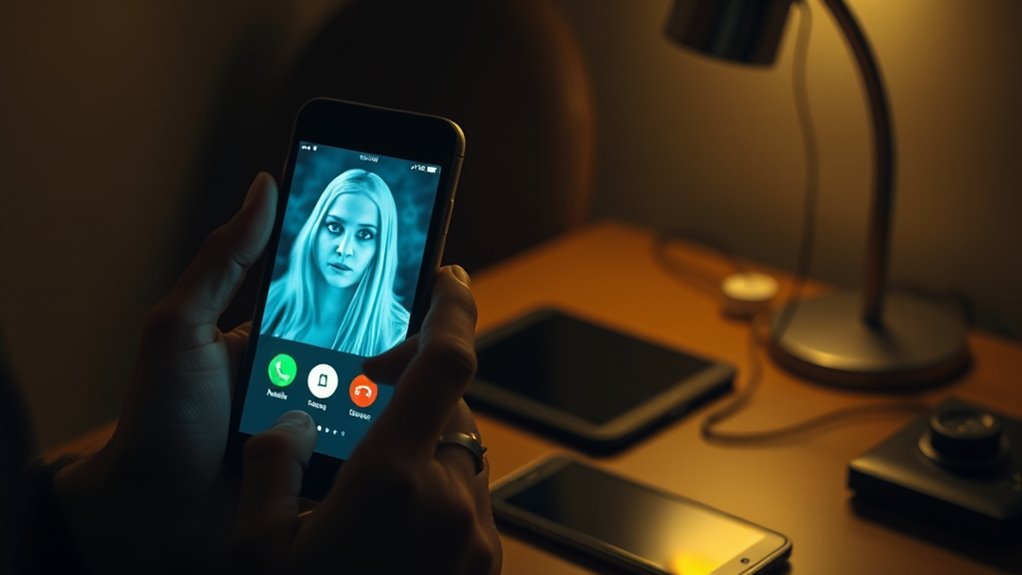
Sometimes, your smartphone might ring with a call you didn’t expect—and what if that call comes from the beyond? These eerie moments often involve mysterious voices or numbers that seem untraceable. Sometimes, hackers exploit these fears with phishing scams, pretending to be loved ones or authorities to steal personal info. Other times, strange calls stem from software bugs causing ghostly glitches. You might see phantom notifications or receive calls from numbers that don’t exist. These haunting calls blur the line between technology and the supernatural, leaving you wondering if spirits are trying to communicate or if your device is just malfunctioning. Stay cautious: always verify unfamiliar calls and keep your software updated to avoid falling prey to these spectral tech tricks.
| Scenario | Explanation |
|---|---|
| Phishing scams | Fake calls to steal personal info |
| Software bugs | Glitches causing ghostly call anomalies |
| Unrecognized numbers | Hidden sources or errors |
| Unexpected notifications | Malfunctions or potential hauntings |
Smart Home Hauntings: When Devices Turn Against Us
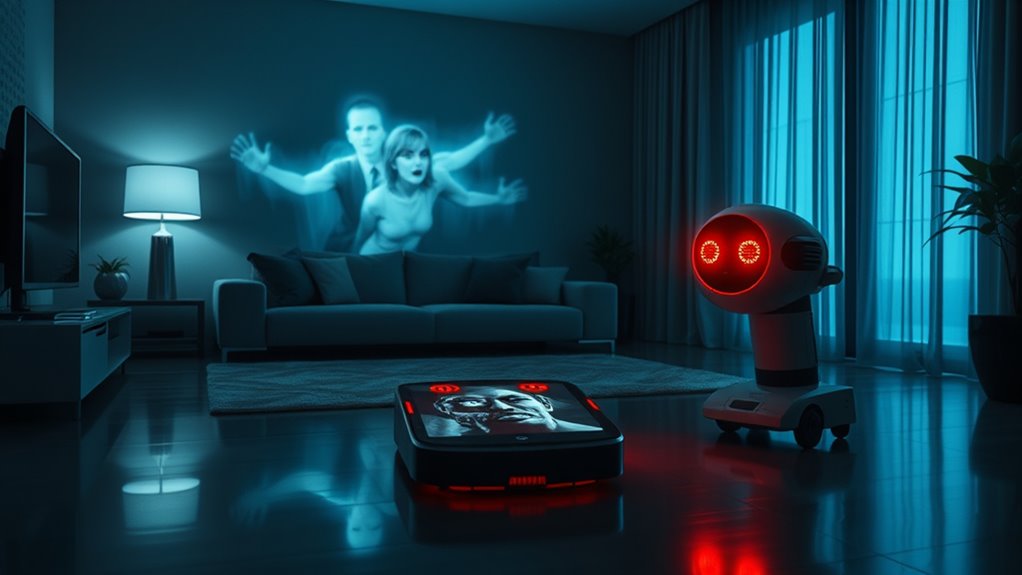
As smart home devices become more integrated into daily life, reports of them behaving unpredictably have increased, blurring the line between technological malfunction and supernatural activity. Sometimes, your smart speakers might unexpectedly play strange recordings, or your security cameras seem to capture unexplained movements. These incidents often raise privacy concerns, especially when devices seem to respond to unseen forces or voices. Device vulnerabilities could be exploited, making your home vulnerable to interference or hacking that feels almost ghostly. You might hear whispers through your smart speakers or see lights flicker without explanation. While some dismiss these as glitches, others believe they signal something more sinister—an awakening of the home’s hidden energies or spirits, turning your everyday devices into tools of the supernatural.
Mysterious Glitches and Digital Apparitions

Mysterious glitches and digital apparitions often manifest as inexplicable errors or visual anomalies that defy logical explanation. You might notice your screen flickering unexpectedly or files vanishing without reason—classic signs of electronic poltergeists. These disruptions could also be caused by spectral malware, a sinister form of malicious code seemingly operating beyond your control. Sometimes, devices behave as if haunted, with ghostly images appearing or commands executing on their own. These phenomena may seem random, but they often suggest unseen forces manipulating your technology. While some dismiss these glitches as bugs or interference, others see them as evidence of digital spirits at play. Whether real or not, such occurrences keep us questioning what lurks behind the screens of our modern devices.
The Creepiest Apps With Paranormal Secrets
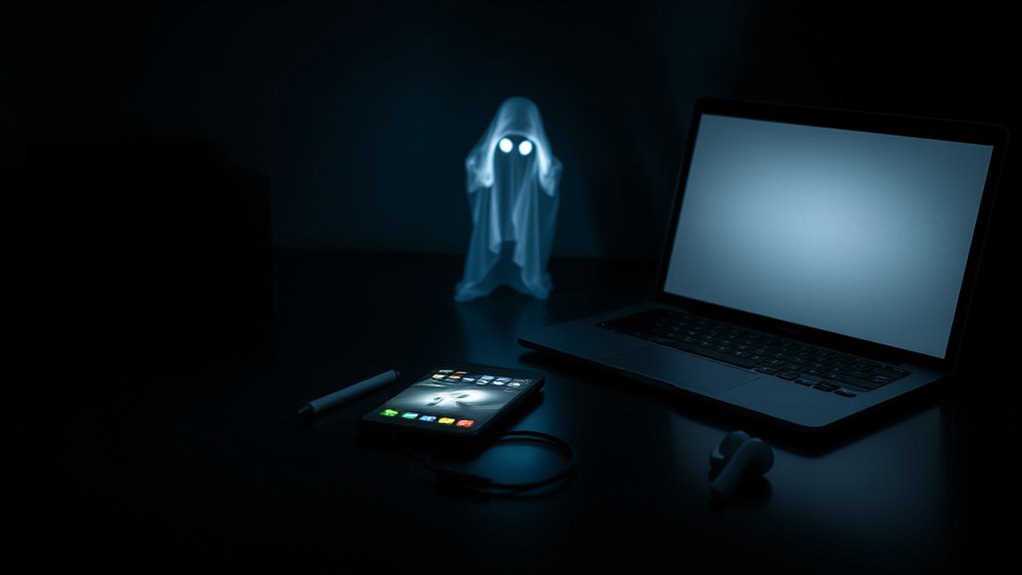
Many eerie apps claim to tap into the paranormal, blurring the line between technology and the supernatural. These creepy programs often feature ghostly notifications that appear unexpectedly, sending chills down your spine. Some apps include eerie wallpapers that flicker or change when spirits are near, creating a haunted atmosphere. Others simulate EVP recordings, making it seem like ghost voices are whispering through your device. You might also encounter random prompts asking if you’re feeling haunted or sensing spirits around you. These apps play with your fears and curiosity, making it hard to distinguish real paranormal activity from digital tricks. Whether for fun or fear, they tap into your desire to connect with the unseen world using modern technology.
AI and the Supernatural: Ghosts in Machine Learning
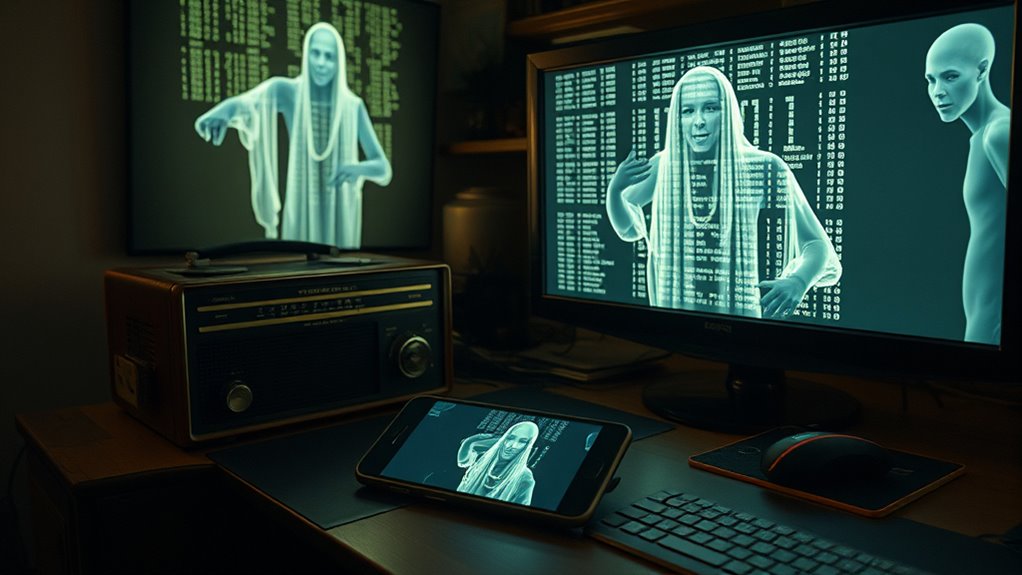
While machine learning is primarily designed to analyze data and recognize patterns, some enthusiasts believe it can also uncover evidence of the supernatural. They argue that, through complex algorithms, these systems might develop a form of machine consciousness, blurring the line between technology and the spiritual domain. Some claim that what appears as random data or glitches could be remnants of algorithmic spirits—digital echoes of the supernatural. These enthusiasts interpret unusual outputs, like strange images or voices, as signs of ghosts inhabiting the code. While skeptics dismiss such ideas as coincidence or software errors, believers see machine learning as a tool that might someday reveal hidden forces beyond our understanding, turning the sphere of ghosts into a new frontier of artificial intelligence.
Virtual Reality Encounters With the Unknown
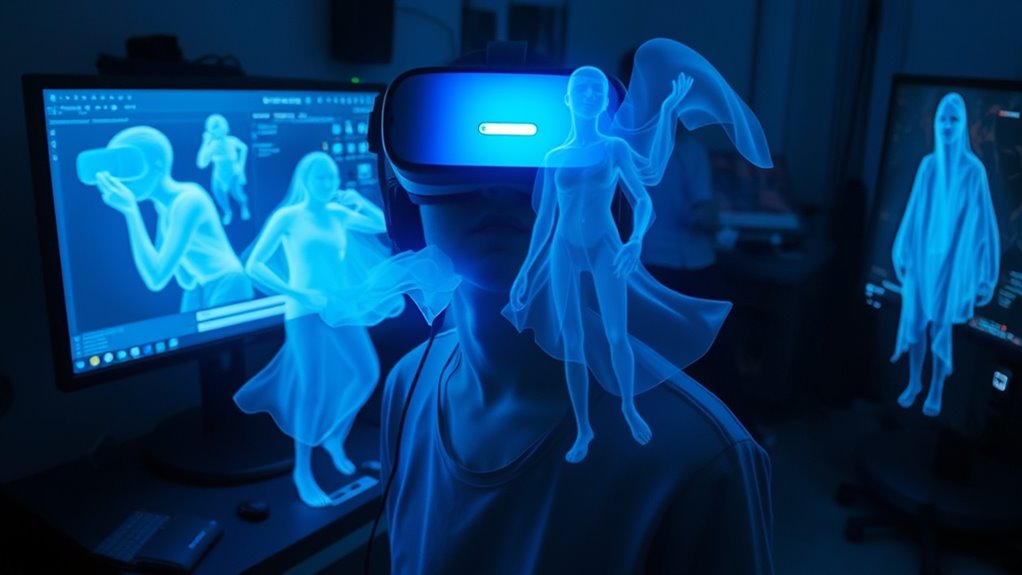
Virtual reality has opened new frontiers for exploring the unknown, blurring the lines between perception and reality. As you immerse yourself, you might experience virtual hallucinations or sensory distortions that feel incredibly real. These illusions can make you question what’s genuine and what’s fabricated.
Virtual reality blurs perception, creating illusions that challenge what’s real and what’s fabricated.
In VR encounters with the supernatural, you may notice:
- Apparitions appearing out of nowhere, flickering between digital and real.
- Senses that distort, making objects seem closer or farther than they are.
- Unexplained sounds that echo through the virtual space.
- Feelings of a presence, even when alone.
These experiences are heightened by the technology’s ability to manipulate perception, creating a haunting atmosphere that feels undeniably real.
The Psychology Behind Haunted Technology

Your mind plays tricks on you when haunted technology appears, influenced by cognitive biases that distort reality. Fear and anxiety can heighten your reactions, making the experience feel more real than it actually is. Understanding how memory and perception interact helps explain why your brain sometimes interprets ordinary glitches as supernatural phenomena.
Cognitive Biases at Play
Our minds are naturally prone to certain biases that can make technology seem haunted even when it isn’t. Confirmation bias leads you to notice and remember only the evidence that supports your suspicions, ignoring logical explanations. The availability heuristic makes recent or dramatic events feel more common, increasing your likelihood of interpreting normal glitches as paranormal activity. You might also:
- Overlook mundane explanations for strange device behavior
- Recall sensational stories more vividly than mundane ones
- Jump to conclusions based on limited evidence
- See patterns where none exist, like coincidences in device malfunctions
These biases shape your perception, making it easier to believe in haunted technology. Recognizing them helps you question whether what you’re experiencing is truly supernatural or simply a trick of the mind.
Fear and Anxiety Triggers
Fear and anxiety can markedly influence how you interpret strange technology behavior, often making normal glitches seem more frightening than they really are. When you experience unexpected device issues, feelings of cyberphobia or technoanxiety can amplify your fears, causing you to see malicious intent or supernatural forces behind the malfunction. These emotional responses are rooted in your mind’s tendency to associate uncertainty with danger, especially when technology feels unfamiliar or unpredictable. Anxiety heightens your vigilance, making you more sensitive to even minor irregularities. As a result, you may jump to conclusions, believing your device is haunted or possessed. Recognizing these triggers helps you understand that your reactions are often psychological, not supernatural, and that managing your fears can restore a more rational perspective.
Memory and Perception
Have you ever noticed how your mind fills in gaps or misinterprets ambiguous signals from technology? That’s because memory distortion and perception bias shape what you see and remember. When devices glitch or seem haunted, your brain may:
- Recall events differently, making harmless glitches seem sinister
- Fill in missing details based on fear or expectation
- Attribute random noises to supernatural causes
- Overlook logical explanations, reinforcing haunting beliefs
Your perception biases distort reality, leading you to interpret normal tech malfunctions as ghostly activity. These mental shortcuts create a feedback loop, where your expectations influence what you perceive and remember. Understanding this psychological process helps you see how haunted technology plays with your mind, blending reality and imagination seamlessly.
Future Trends in Digital Hauntings

As technology continues to evolve, so do the ways in which digital hauntings manifest and influence our lives. Future trends suggest that quantum entanglement could enable haunting phenomena to transcend physical devices, linking digital echoes across distant networks. This might lead to digital reincarnation, where remnants of a person’s online presence are reborn through AI, creating persistent, ghost-like entities that respond and evolve over time. As machine learning advances, these digital spirits could become more autonomous, interacting with users in increasingly convincing ways. Virtual reality may host immersive hauntings, blurring the line between the real and the spectral. Ultimately, our digital landscapes will become battlegrounds for new forms of haunting—powered by quantum physics and AI—shaping a future where ghosts are just data waiting to be rediscovered.
Frequently Asked Questions
Can Technology Truly Be Haunted or Is It Psychological Projection?
You might wonder if technology can really be haunted or if it’s just psychological projection. Often, what seems like haunted devices stems from technological paranoia or our mind’s tendency to see patterns or spirits in glitches. While some believe in haunted tech, most experiences are influenced by psychological projection, where fears or expectations shape what you perceive. So, it’s likely more about your mind than actual supernatural activity in your devices.
Have Any Confirmed Cases of Haunted Gadgets Been Scientifically Documented?
Imagine flickering screens and cold whispers from your smart devices—it’s eerie, but scientific validation for haunted gadgets remains elusive. You won’t find documented cases with solid scientific backing; most reports are anecdotal or unexplained glitches. While some claim to have experienced haunted tech, these stories lack rigorous scientific proof, making it unlikely that any true cases of haunted gadgets have been scientifically documented so far.
What Are the Cultural Differences in Digital Ghost Stories Worldwide?
You’ll notice that digital ghost stories vary worldwide due to cultural symbolism and folklore traditions. In some cultures, spirits linked to ancestors influence stories involving modern devices, while others focus on supernatural entities from local legends. These differences shape how people interpret haunted technology, blending traditional beliefs with contemporary fears. As you explore these tales, you’ll see how unique cultural backgrounds influence the way modern devices become part of ghost stories globally.
Could Ai-Generated Hauntings Become Indistinguishable From Real Encounters?
You might think AI-generated hauntings will always be obvious, but ironically, virtual hauntings and AI illusions are becoming eerily convincing. As technology advances, you could find it hard to distinguish a genuine encounter from a digital trick. Soon, AI illusions could mimic real encounters so perfectly that even skeptics won’t know if they’re facing a ghost or a glitch, making the line between reality and digital deception blur.
How Can Users Protect Themselves From Potential Digital Paranormal Threats?
To protect yourself from digital paranormal threats, focus on cybersecurity awareness and digital hygiene. Keep your devices updated with the latest security patches, use strong, unique passwords, and enable two-factor authentication. Be cautious about sharing personal info online and avoid clicking suspicious links. Regularly review app permissions and clear your browsing data. These habits help safeguard your digital space, reducing the chances of encountering fake hauntings or malicious digital activity.
Conclusion
As technology continues to evolve, so does the line between the real and the supernatural. You might think you’re in control, but these stories suggest otherwise—ghosts infiltrate your devices when you least expect it. Are these merely glitches, or is something more sinister at play? Stay alert, because in the digital age, the next haunted device could be just a click away, waiting to reveal what lurks beyond our understanding.