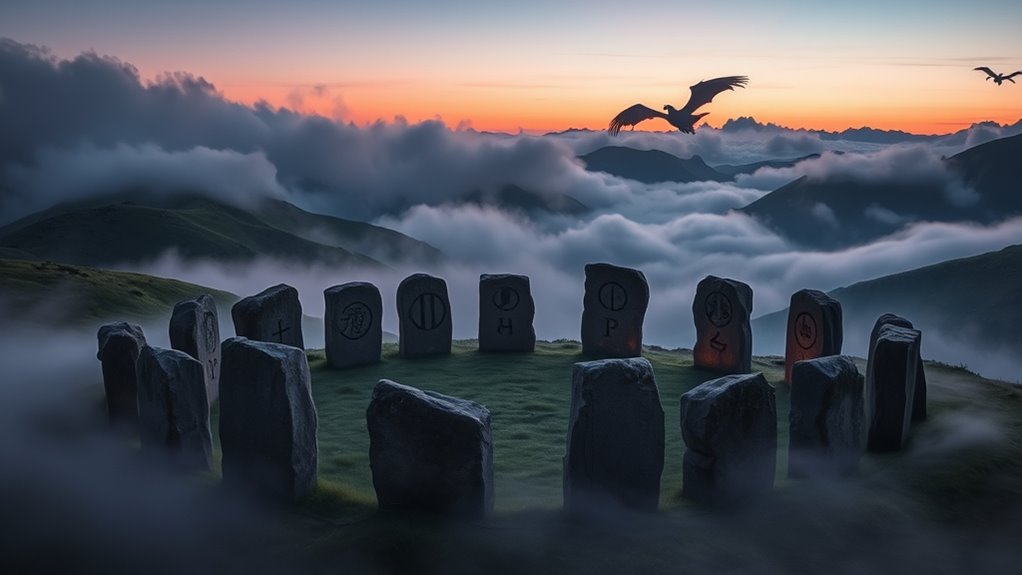

Sacred sites play a vital role in monster migration myths by serving as spiritual gateways, safe havens, and mythic boundaries. They connect geography and folklore, acting as pathways or landmarks that guide mythical creatures on their journeys. These locations often symbolize divine protection and cultural values, shaping legends and rituals. By exploring how sacred landscapes influence monster stories, you’ll discover how myths intertwine with geography and spirituality, revealing fascinating cultural insights.
Key Takeaways
- Sacred sites serve as mythic landmarks that mark and facilitate monster migration routes.
- They embody spiritual power, acting as safe havens or gateways during monster journeys.
- Rituals at sacred locations guide and reinforce monster migration patterns through spiritual practices.
- Myth stories link monsters’ origins and behaviors to specific sacred landscapes, reinforcing their significance.
- Sacred sites symbolize divine protection, influencing the movement and behavior of mythical creatures.
Sacred Geography and Its Cultural Significance

Sacred geography plays a vital role in shaping how different cultures perceive and honor their mythic creatures, especially during monster migrations. Sacred landscapes serve as sites where communities connect with their spiritual beliefs, turning natural features into symbols of divine power. These sacred sites often mark mythical boundaries, delineating the edges between the human world and the realm of monsters or gods. By respecting these boundaries, cultures maintain harmony and ensure safe migrations for their mythic creatures. You may find that certain mountains, rivers, or caves are considered sacred because they’re believed to be gateways or dwellings of powerful beings. These landscapes reinforce cultural identity and serve as tangible links to mythic stories, emphasizing the importance of sacred geography in preserving spiritual traditions.
Mythical Creatures as Guardians of Sacred Sites

Throughout many mythic traditions, creatures are believed to serve as protectors of sacred sites, embodying the spiritual power of these locations. These mythical guardians often appear in fantasy landscapes, symbolizing strength and spiritual symbolism. They ward off evil spirits and ensure the sanctity of the site remains intact. Guardians can be dragons, serpents, or giant beasts, each representing different cultural values and spiritual meanings. Their presence reinforces the divine importance of the sacred space. The table below highlights some common guardian creatures and their symbolic meanings:
| Creature | Cultural Context | Spiritual Symbolism |
|---|---|---|
| Dragon | East Asian | Power and protection |
| Serpent | Indigenous Americas | Transformation and rebirth |
| Griffon | European | Vigilance and guardianship |
| Kappa | Japanese | Nature and harmony |
Legends of Monster Passages Through Holy Lands
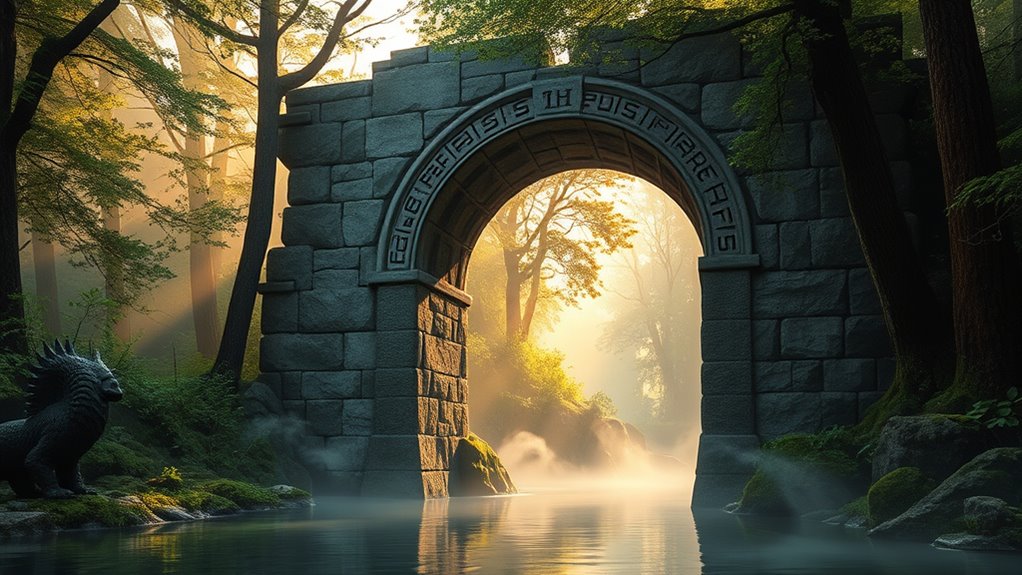
You might have heard stories of monsters traveling along sacred routes through holy lands, seen as essential pathways in myths. These passages often connect sacred sites, serving as safe havens or ritual sites that influence migration patterns. Such legends highlight how rituals and spiritual beliefs shape the journey of these creatures across sacred territories.
Sacred Routes and Pathways
Legends often depict massive monsters traversing designated routes through holy lands, emphasizing their role as divine messengers or guardians. These sacred routes serve as spiritual pathways, connecting the earthly domain with a mythical landscape imbued with sacred power. Such pathways are believed to mark the routes monsters follow, revealing the divine significance of specific terrains. Travelers and villagers see these routes as living symbols of spiritual alignment, guiding monsters through regions considered spiritually charged. These pathways often align with natural features like mountain passes, rivers, or ancient trails, reinforcing their sacred status. By following these routes, monsters are thought to maintain cosmic balance, reinforcing their role as messengers between worlds. This belief elevates the landscape itself into a crucial component of mythic storytelling and spiritual reverence.
Holy Sites as Safe Havens
In many mythic traditions, holy sites serve as sanctuaries where monsters find refuge during their journeys, emphasizing their role as protectors rather than threats. These sacred site symbolism often highlights locations as places of safety and spiritual power, making them ideal for monster migrations. During spiritual pilgrimage, monsters travel through these revered lands, knowing they’ll be shielded from harm.
- Sacred sites act as natural barriers, guiding monsters safely across dangerous territories
- Legends depict monsters seeking out holy grounds for protection during perilous migrations
- These sites symbolize harmony between humans and monsters, fostering mutual respect
- The spiritual significance of these locations reinforces their role as divine refuges in mythic narratives
Rituals Influencing Migration
Rituals performed at holy sites often guide and influence monster migrations, shaping the paths they take through sacred lands. These rituals rely heavily on sacred symbolism, which connects the monsters’ journey to divine or mythological themes. Through offerings, dances, and ceremonies, ancient communities embed mythological symbolism into the landscape, directing monsters along specific routes. These acts often honor sacred sites as portals or passageways, reinforcing the idea that monsters follow predetermined paths aligned with spiritual forces. Such rituals are believed to realign or energize ley lines and sacred energies, encouraging monsters to pass through these sites during migration seasons. Ultimately, these practices demonstrate how sacred symbolism and mythological symbolism work together to influence and preserve the mythic routes monsters are believed to follow.
Sacred Sites as Rituals of Monster Migration

Sacred sites serve as powerful focal points where communities enact rituals that mark and facilitate the migration of monsters. These locations embody ancient rituals infused with sacred symbolism, reinforcing cultural bonds and spiritual beliefs. Through ceremonies performed at these sites, people seek to honor, guide, or appease migrating monsters, ensuring safe passage. Such rituals often involve offerings, chants, or dances rooted in tradition and myth. The sacred landscape itself becomes a living symbol of the monster’s journey, connecting the physical and spiritual worlds. By understanding these rituals, you recognize how sacred sites serve as essential acts of cultural memory and spiritual negotiation during monster migrations.
Sacred sites unify communities through rituals that honor and guide migrating monsters, blending spiritual symbolism with cultural tradition.
- Rituals invoking ancient protective powers
- Sacred symbolism guiding monster pathways
- Ceremonial offerings to appease spirits
- Community bonding through shared traditions
The Cultural Reflection of Fears in Sacred Landscapes

Sacred landscapes often mirror a community’s deepest fears and anxieties about monsters, transforming physical spaces into symbolic arenas of collective dread. These sites embody urban legends and modern symbolism, reflecting societal concerns and taboos. You see how myths embed fears about outsiders, chaos, or moral decay, shaping sacred sites as warnings or protection zones. This cultural reflection reveals how fears evolve over time and are expressed through landscape symbolism.
| Fear Type | Sacred Landscape Representation |
|---|---|
| External Threats | Mountains or caves symbolizing unknown dangers |
| Moral Decay | Ruined temples representing societal collapse |
| Social Anxiety | Isolated sites embodying fears of alienation |
Sacred Sites and Their Role in Environmental Stewardship

You can see how rituals and traditions help protect sacred sites, encouraging communities to care for their environment. Respecting these cultural practices fosters a sense of shared responsibility for conservation efforts. When you honor these sites, you support both cultural preservation and ecological sustainability.
Rituals and Preservation
Throughout many cultures, rituals performed at sacred sites play a crucial role in protecting the environments associated with mythical monster migrations. These ceremonies often reinforce community bonds and uphold local legends, blending urban legends with modern myths. By participating in these rituals, you help preserve the natural surroundings and cultural heritage tied to these sites.
You might witness offerings, dances, or prayers that honor the monsters and their habitats. These practices create a sense of responsibility, encouraging conservation efforts. The myths reinforce the idea that harming the environment risks disturbing the monsters’ migration paths.
- Rituals reinforce environmental respect through storytelling
- Offerings symbolize harmony with mythical creatures
- Community participation promotes preservation
- Legends keep sacred sites culturally essential
Cultural Respect and Conservation
Because these sites hold deep cultural significance, respecting them becomes essential for environmental conservation. When you recognize their importance, you help prevent harmful impacts from secular tourism and commercial development. These sites often attract visitors passionate to connect with legends and myths, but unmanaged influx can lead to erosion, pollution, and loss of sacred authenticity. By supporting responsible tourism practices, you contribute to the preservation of the environment and cultural heritage. Respecting sacred sites means advocating for policies that limit commercial exploitation and prioritize local community voices. This balance ensures that future generations can continue to honor these places’ spiritual significance while maintaining their ecological integrity. Your mindful engagement helps protect both the cultural memory and natural landscape intertwined within these sacred spaces.
Case Studies: Sacred Sites and Monster Myths Worldwide
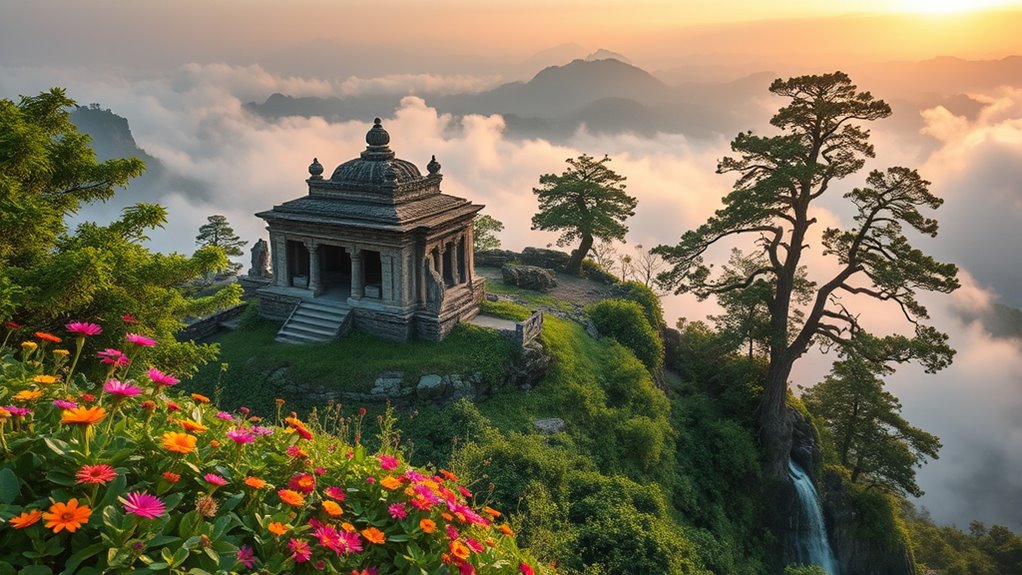
Across various cultures, sacred sites often serve as focal points for mythologies surrounding monstrous creatures, linking geography with spiritual and mythic significance. You’ll find that many legends originate from these locations, fueling local folklore festivals and urban legends. For example, Japan’s Mount Osore is linked to water monsters, while Ireland’s Lough Ness inspires tales of the legendary Nessie. These sites attract myth enthusiasts and shape local traditions. Sacred sites influence monster migration myths by providing a tangible connection to the stories, reinforcing their cultural importance. They also serve as pilgrimage destinations, where myths are celebrated and preserved through storytelling and rituals. Exploring these sites reveals how geography and spirituality intertwine, keeping monster legends alive through community gatherings and folklore festivals worldwide.
Sacred sites connect geography and mythology, fueling legends, festivals, and rituals worldwide.
- Ancient temples linked to serpent monsters
- Lakes where urban legends of sea monsters thrive
- Mountain sites hosting folklore festivals about mythical beasts
- Sacred groves tied to stories of winged monsters
The Influence of Sacred Geography on Local Folklore

Sacred sites act as anchors for local myths, giving monsters a tangible connection to the landscape. Your surrounding geography influences the stories, shaping how creatures are described and understood. Rituals performed at these sites reinforce beliefs, making the myths a essential part of community identity.
Sacred Sites as Myth Anchors
Sacred sites often serve as powerful anchors for local myths, shaping the stories communities tell about monstrous migrations. These sites embody sacred site symbolism that links physical locations to myth origin stories, reinforcing their importance. You might notice how certain landmarks become central to legends, acting as keystones for explaining monster behaviors or origins. These sites lend credibility and continuity to folklore, making myths more memorable and meaningful. By anchoring stories in specific locations, communities preserve cultural identity through shared beliefs. Sacred sites also influence how myths evolve, as new generations reinterpret their significance.
- Sacred sites represent myth origin stories that connect nature and the supernatural
- They serve as physical symbols of cultural values and fears
- Myths often revolve around events tied to these locations
- These sites help sustain community cohesion through shared folklore
Geography Shapes Monster Lore
Geography plays a crucial role in shaping monster lore by embedding stories into the physical landscape. Mythical landscapes, such as mountain ranges, lakes, or caves, often become the setting for legendary creatures, giving legends a tangible place to inhabit. Sacred symbolism within these environments reinforces their spiritual significance, making them powerful sites for local folklore. People associate specific terrains with monster sightings or encounters, believing these locations hold protective or dangerous qualities. These landscapes influence the characteristics and behaviors attributed to monsters, tying their stories directly to the land. As a result, the geography itself becomes a storyteller, preserving myths and reinforcing cultural values through the natural features that surround communities. Sacred geography therefore deeply embeds monsters into the fabric of local folklore.
Rituals Reinforce Mythical Beliefs
Rituals performed at these spiritually significant sites serve to strengthen and perpetuate local beliefs about monsters and their connection to the land. Sacred landscapes become living symbols, where mythic symbolism deepens the sense of mystery and reverence. When you participate in these rituals, you reinforce the idea that monsters are guardians or punishers tied to specific locations, making myths more tangible. These ceremonies often include offerings, dances, or chants that honor the land’s spiritual power. Such practices not only preserve folklore but also cement the land’s role in shaping beliefs. By engaging in these rituals, you help guarantee that the mythic symbolism connected to sacred sites remains vibrant and influential across generations.
- Reinforces land’s spiritual significance
- Connects myths to physical locations
- Preserves sacred landscapes through tradition
- Deepens cultural understanding of monsters
Rituals and Ceremonies Linked to Monster Sightings

Many cultures have developed specific rituals and ceremonies to honor or appease monsters believed to appear during migration seasons. You might participate in meditation practices that focus your mind on the sacred site, creating a connection with the spiritual domain. Sacred dance is also common, performed to communicate with the monsters or to ensure safe passage. These rituals often take place at specific times aligned with the monsters’ expected appearances, reinforcing the community’s belief in their power. By engaging in these ceremonies, you help maintain harmony between human and supernatural worlds, hoping to prevent harm or gain favor. Such rituals serve as both spiritual acts and cultural expressions, strengthening collective bonds and preserving ancient traditions linked to the sacred sites.
Modern Interpretations of Sacred Sites in Mythology
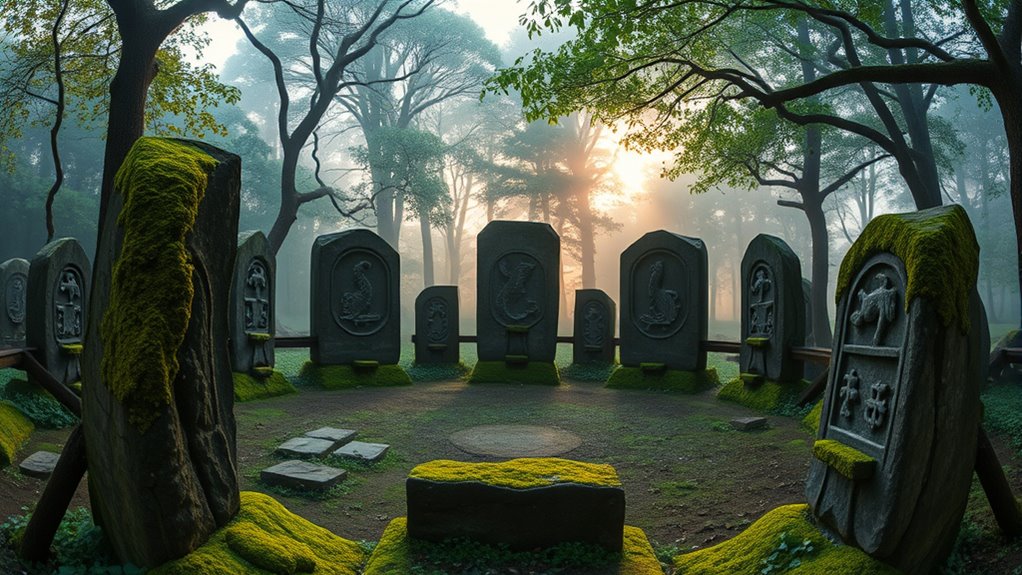
As societies evolve, their understanding of sacred sites linked to monster migration myths shifts from traditional rituals to new interpretations influenced by modern perspectives. Today, many see these sites through the lens of cryptid folklore, viewing them as cultural symbols rather than spiritual centers. You might find that some interpret sacred symbolism as representing humanity’s ongoing fascination with the unknown. Modern narratives often blend scientific curiosity with myth, transforming ancient sites into locations for cryptid sightings and urban legends. These reinterpretations challenge classic views, emphasizing storytelling’s role in shaping cultural identity and folklore.
- How cryptid folklore revives ancient sacred sites
- Sacred symbolism in contemporary myth narratives
- The impact of modern media on monster myths
- Reimagining sacred sites as symbols of mystery
Frequently Asked Questions
How Do Sacred Sites Influence the Migration Patterns of Mythical Monsters?
You see, sacred sites influence mythical monsters’ migration patterns through their ritual significance and landscape symbolism. These sites act as spiritual anchors, guiding monsters along specific paths during their seasonal or mythic journeys. You might notice that legends often link these locations to powerful energy points or sacred landmarks, shaping how monsters move and interact with the landscape. Their movements are deeply intertwined with the cultural and spiritual meanings attributed to these sacred sites.
Are There Specific Rituals That Protect Sacred Sites From Monster Invasions?
You might wonder if specific rituals protect sacred sites from monster invasions. Often, communities perform protective rituals, such as offerings or prayers, to invoke sacred guardians. These guardians are believed to defend the site, warding off monsters and ensuring safety. By actively engaging in these rituals, you help maintain the site’s sanctity and security, preserving the spiritual balance and preventing destructive invasions from mythical creatures.
What Role Do Sacred Sites Play in Contemporary Monster-Related Folklore?
Think of sacred sites as modern-day mythic battlegrounds, where they symbolize protection and spiritual power. You see, their symbolism continues to influence folklore, embodying mythological significance that connects communities to their past. In contemporary monster stories, these sites serve as crucial symbols of resistance, anchoring legends that remind you of the enduring importance of sacred spaces in safeguarding cultural identity and inspiring awe in the face of supernatural threats.
How Do Sacred Landscapes Evolve in Response to Changing Cultural Beliefs About Monsters?
You observe that sacred landscapes evolve through cultural adaptations, reflecting shifting beliefs about monsters. As societies reinterpret mythical symbolism, these sites transform, sometimes losing their fearsome reputation or gaining new spiritual significance. You might see communities reframe legends to align with contemporary values, blending old stories with modern perspectives. This ongoing evolution keeps sacred sites relevant, ensuring they continue to embody cultural meanings related to monsters and their symbolism in a dynamic way.
Can Sacred Sites Serve as Evidence for Historical Monster Encounters?
Imagine sacred sites as ancient storytellers whispering legends through time. You might wonder if these places hold clues to real encounters with monsters. While legendary symbolism stirs the imagination, archaeological evidence can sometimes reveal traces of past events. Though not definitive proof, these sites serve as silent witnesses, hinting at stories where myth and history intertwine. They invite you to explore the mysterious bridge between legend and reality.
Conclusion
You now see how sacred sites aren’t just ancient landmarks—they’re the epic battlegrounds where myth and reality collide, shaping legends of monsters that could shake the very earth. These sacred landscapes hold secrets so powerful, they might awaken monsters from mythic slumber, threatening to rewrite history itself. By understanding these sites, you discover the incredible, world-changing stories woven into our cultural fabric—stories so vast, they could reshape your very understanding of myth and reality.