
During the Tokugawa era, Japanese ghost stories reflected deep respect for the spiritual world, often centered around haunted sites that act as portals to unseen domains. These tales reveal societal fears like betrayal and loss, while rituals were performed to appease spirits and maintain harmony. The stories and ceremonies together emphasize the importance of respecting spiritual boundaries. Continue exploring, and you’ll discover how these supernatural beliefs continue to shape Japan’s cultural identity today.
Key Takeaways
- Tokugawa-era ghost stories reflect societal fears, spiritual boundaries, and cultural values through haunted locations and unresolved spirits.
- Haunted sites serve as spiritual portals, emphasizing respect and rituals to maintain balance between worlds.
- Rituals like purification and offerings at haunted sites aim to placate spirits and prevent harm.
- Stories reinforce the importance of respecting spiritual boundaries and highlight the sacred nature of haunted locations.
- These tales embody Japan’s deep-rooted belief in spiritual harmony, connecting everyday life with supernatural elements.
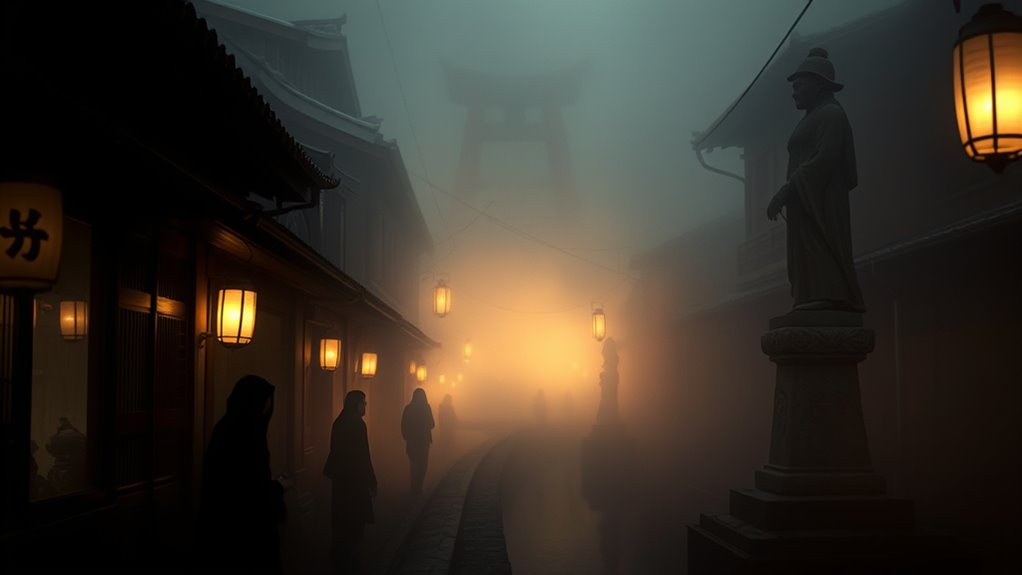
Have you ever wondered why ghost stories hold such a mysterious place in Japanese culture? It’s because they’re deeply woven into the fabric of traditions, spiritual rituals, and everyday life. During the Tokugawa period, a time marked by political stability and cultural flourishing, these tales became more than just stories—they became a way to connect with the unseen world. Ghost stories from this era often revolve around haunted locations, places where the boundary between the living and the dead feels especially thin. These sites aren’t just spooky spots; they’re considered portals to the spiritual domain, where restless spirits linger due to unresolved issues or tragic pasts. You might visit a shrine or an abandoned building, only to feel a strange presence or hear whispers carried on the wind—an experience rooted in centuries of belief and storytelling.
In Japan, spiritual rituals play a vital role in addressing these supernatural encounters. During the Tokugawa era, people performed specific rites to placate spirits or seek protection from malevolent forces. These rituals, often carried out at haunted locations, serve as a bridge between worlds, ensuring that wandering spirits find peace and don’t cause harm. You might see a priest conducting a purification ceremony, waving a sprig of sacred sakaki tree or sprinkling salt to ward off evil. These acts aren’t just superstitions; they’re rooted in a profound understanding of spiritual balance. They acknowledge that spirits are part of life’s cycle, and proper rituals help maintain harmony between the spiritual and physical worlds. Additionally, the connection between spiritual rituals and cultural beliefs underscores the importance of respecting spiritual boundaries.
Ghost stories from this period often reflect societal fears—loss, betrayal, and the consequences of human passions. Yet they also serve as warnings, emphasizing respect for spiritual boundaries and the importance of spiritual rituals. Haunted locations are viewed as sacred sites, where the spirits of those wronged or forgotten still linger, seeking acknowledgment and justice. When you hear about these haunted places in Japan, it’s not just about the fright; it’s about understanding the deeper spiritual significance. These stories remind you that, in Japanese culture, the supernatural isn’t separate from everyday life but intertwined with it. They invite you to see these locations and stories as living parts of a spiritual landscape, where rituals help keep the delicate balance and honor the spirits that dwell among us.
Frequently Asked Questions
How Did Tokugawa-Era Ghost Stories Influence Modern Japanese Horror?
You can see how Tokugawa-era ghost stories shaped modern Japanese horror through supernatural storytelling that emphasizes spirits and moral lessons. These tales preserve cultural beliefs and fears, influencing films, manga, and literature today. By blending tradition with modern themes, they keep cultural preservation alive, making contemporary horror deeply rooted in historical supernatural narratives. This connection helps you experience horror that’s both frightening and culturally meaningful.
Are There Real Historical Figures Behind the Ghost Tales?
You might think some ghost tales are based on real historical figures, but most prioritize cultural symbolism over strict historical accuracy. These stories often reflect societal fears and morals, with ghosts embodying guilt, revenge, or moral lessons. While some tales are inspired by actual people or events, many are fictional creations meant to convey deeper cultural truths. So, don’t assume every ghost has a real historical counterpart.
What Are the Common Themes Across These Supernatural Stories?
You’ll notice common themes of revenge and moral lessons across these supernatural stories. They often depict spirits seeking justice for wrongs, emphasizing the consequences of unethical actions. These tales serve as warnings, highlighting the importance of morality and righteousness. By confronting these vengeful spirits, you see how the stories reinforce societal values, reminding you that justice and virtue are essential, even beyond the grave.
How Were These Ghost Stories Traditionally Shared Among Communities?
You gather with your community during folklore gatherings, where storytelling methods play a key role. These ghost stories are shared orally, passed from person to person through vivid recounting and dramatic storytelling. Usually, you sit around fires or in communal spaces, emphasizing the suspense and supernatural themes. This tradition keeps the stories alive, fostering a sense of shared culture and reinforcing moral lessons through enthralling, memorable tales.
Do Any of These Tales Have Specific Moral or Cultural Lessons?
Many of these ghost stories carry moral lessons and reflect cultural values. You’ll find tales warning against dishonesty, disrespect, or breaking social harmony, emphasizing the importance of virtue and filial piety. These stories serve as moral guides, teaching you about the consequences of immoral actions. They also highlight cultural values like respect for spirits, loyalty, and community cohesion, reinforcing societal norms through supernatural storytelling.
Conclusion
As you explore these ghost stories, you might think they’re just old tales. But they reveal a deeper truth: our fears and memories linger beyond death, shaping our reality. These stories remind you that the supernatural isn’t just fiction—it’s a reflection of the human experience, echoing in every culture. Embrace the mystery, and you’ll see that understanding our fears can lead to greater insight and peace.