During the Tokugawa period, ghost stories played a crucial role in Japanese culture by shaping societal fears and moral lessons through tales of vengeful spirits, haunted temples, and spirit gateways. These stories often involve wraiths driven by betrayal or injustice, embodying societal morals and Buddhist concepts like karma. They serve as warnings to respect sacred spaces and moral conduct, highlighting the thin boundary between the living and the dead. To discover more about these fascinating supernatural tales, keep exploring.
Key Takeaways
- Tokugawa ghost stories reflect societal fears, moral lessons, and beliefs about spirits, haunted temples, and vengeful onryō.
- Haunted temples served as gateways for spirits, symbolizing sites of unrest linked to sacred ground disturbances.
- Onryō are depicted as women in white with long hair, representing revenge driven by betrayal or injustice.
- Stories incorporated Buddhist teachings, emphasizing karma and morality, reinforcing societal harmony and respect for sacred spaces.
- These supernatural tales continue to influence modern Japanese culture, blending folklore, morality, and spiritual beliefs from the Tokugawa era.
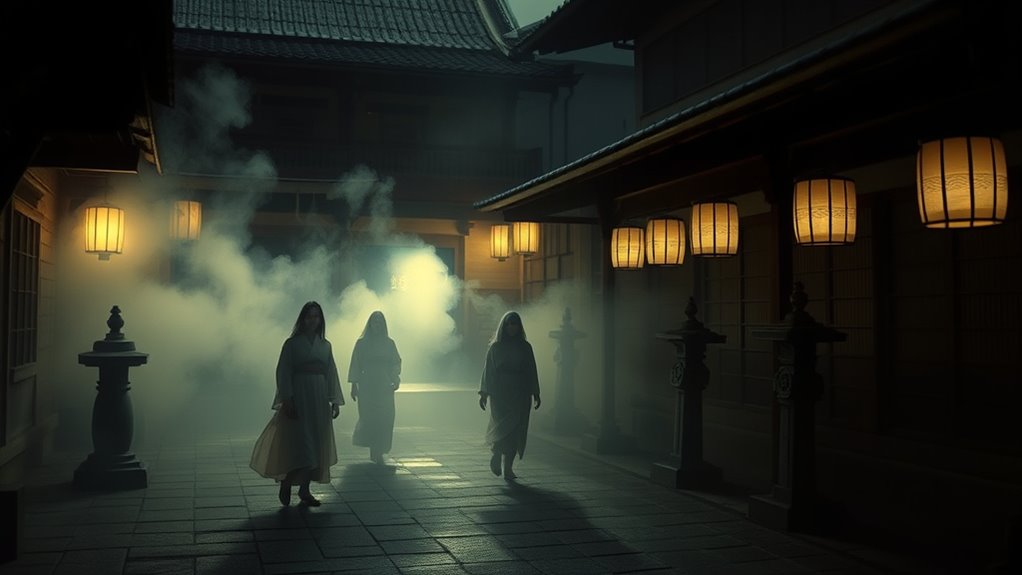
Have you ever wondered about the eerie tales that haunted Japan during the Tokugawa period? During this era, supernatural stories weren’t just local legends; they became a profound part of Japanese culture, shaping fears and beliefs. You might find yourself drawn to stories of haunted temples, where the spirits of the past linger, or encounters with vengeful spirits seeking justice or revenge. These tales served as warnings, moral lessons, or simply reflections of the tumultuous times, and they continue to captivate your imagination today.
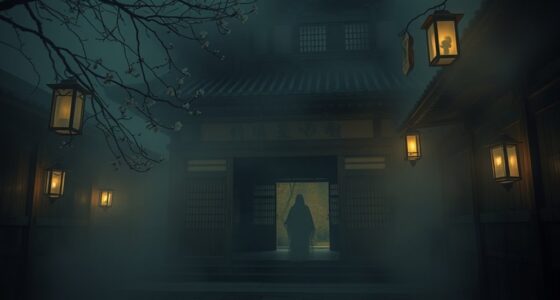
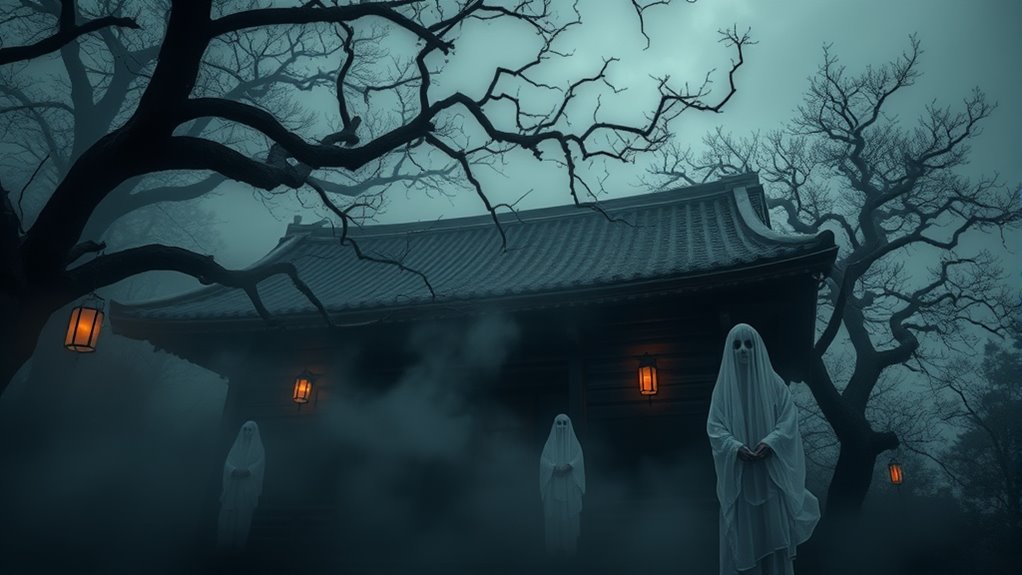
Imagine wandering through a remote temple at dusk, the air thick with silence. Locals whisper that these haunted temples serve as gateways for spirits that never found peace. Often, these stories tell of monks or pilgrims who disturbed sacred grounds, unknowingly releasing vengeful spirits. These spirits, fueled by anger or sorrow, haunt the temple grounds, appearing as shadowy figures or flickering lights. Their presence reminds you that some energies are too powerful to be forgotten, and their stories act as cautionary tales about respecting sacred sites. These haunted temples weren’t just places of worship—they were haunted by the restless spirits of those wronged or betrayed, seeking acknowledgment or revenge.
Haunted temples serve as gateways for restless spirits seeking revenge or peace.
Vengeful spirits, or onryō, play a prominent role in Tokugawa ghost stories. They’re portrayed as women dressed in white, with long, unkempt hair covering their faces, driven by feelings of betrayal, jealousy, or injustice. You might hear stories of a wife wronged by her husband, returning from the afterlife to exact revenge. These spirits are often depicted as relentless, their wrath unquenched even after death. Their stories reflect societal fears of betrayal, dishonor, and the consequences of moral failings. The tales serve as warnings to uphold social harmony, emphasizing that neglect or cruelty could invoke vengeful spirits that would haunt the living.
Throughout the Tokugawa period, ghost stories grew more elaborate, blending folklore, Buddhist teachings, and moral lessons. These supernatural tales weren’t just entertainment—they reinforced societal values and warned against immoral behavior. Whether it was a haunted temple or a vengeful spirit seeking justice, each story carried a message: the supernatural world was always watching, and disrespect could result in a haunting. Additionally, the stories often incorporated Buddhist teachings, emphasizing karma and moral conduct as ways to avoid spiritual retribution. These stories serve as a reminder that the supernatural world was deeply intertwined with everyday life and morality. Even today, the ghostly tales of the Tokugawa period continue to haunt the imagination, reminding you of a time when the boundary between the living and the dead was thin—and often terrifying.
Frequently Asked Questions
Were Any Tokugawa Ghost Stories Based on Real Events?
Some Tokugawa ghost stories are based on real events, blending historical accuracy with folklore origins. You might find that these tales often stem from actual incidents or local legends, which get exaggerated or supernatural elements added over time. While not all stories are strictly factual, their roots in real events give them a sense of authenticity, making them compelling and culturally significant in understanding Japan’s folklore and history.
How Did These Stories Influence Japanese Culture?
These stories shaped Japanese culture by fueling urban legends and inspiring literary symbolism that persists today. You’re likely to encounter ghostly tales in folklore, theater, and modern media, reflecting societal fears and moral lessons. They influence how people perceive the supernatural, blending tradition with contemporary storytelling. By embodying cultural values and anxieties, these stories keep alive the rich legacy of ghostly legends, ensuring they’re woven into Japan’s cultural fabric.
Are There Specific Locations Famous for Ghost Sightings?
You’ll find haunted landmarks like Aokigahara Forest and Okiku’s Well famous for ghost sightings. These sites are steeped in ghostly legends that attract visitors and thrill-seekers alike. The stories of restless spirits and eerie encounters give these locations a mysterious allure, making them iconic spots in Japanese supernatural lore. Whether you believe in spirits or not, these haunted landmarks continue to fascinate those interested in Japan’s ghostly history.
What Supernatural Themes Are Most Common in These Tales?
You’ll find that supernatural symbolism and cultural significance dominate these tales. Common themes include vengeful spirits, ghostly apparitions, and moral lessons, reflecting societal values. These stories often explore themes of loyalty, karma, and the afterlife, serving as moral warnings. The supernatural elements symbolize deeper cultural beliefs, making the tales more impactful and meaningful, resonating with audiences by emphasizing the importance of respect, duty, and spiritual harmony.
Did These Stories Serve Moral or Societal Lessons?
You’ll find that these stories often serve moral lessons and reflect societal values, warning about wrongdoing and emphasizing virtues like loyalty, honor, and filial piety. By illustrating consequences for immoral actions or disrespecting societal norms, they reinforce cultural ideals. These tales act as cautionary stories, encouraging proper behavior and upholding social harmony, consequently blending entertainment with moral education in a way that resonates deeply within the community.
Conclusion
As you explore these ghost stories from the Tokugawa era, you’ll see how fear and mystery intertwine with history. Imagine walking through a deserted Edo street and suddenly encountering a restless spirit, just like the tale of the samurai’s vengeful ghost. These stories remind you that even in a time of peace, the supernatural persisted, lurking in the shadows. They leave you pondering what secrets still hide beneath Japan’s rich, haunted past.