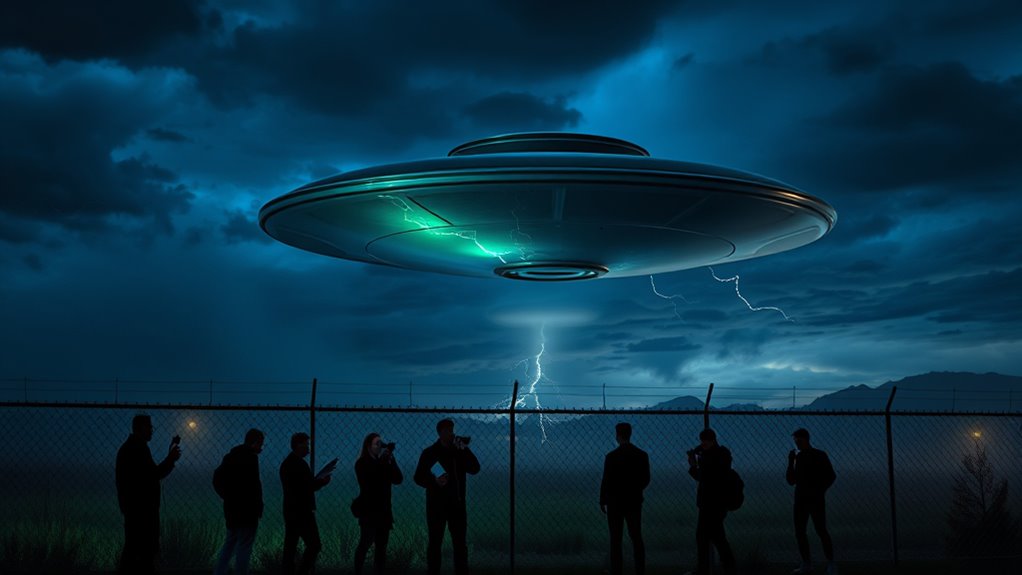

The ufology movement started with your fascination with mysterious sightings and government cover-ups, sparked by the 1947 Roswell incident. Over time, it shifted from sensational stories to demanding transparency and official acknowledgment of UFO phenomena. Recent government disclosures and leaked documents continue to fuel your curiosity, while skeptics call for solid evidence. If you want to understand how this movement has evolved from myths to potential scientific inquiry, there’s more to discover ahead.
Key Takeaways
- The ufology movement originated from 1940s sightings and gained momentum after the 1947 Roswell incident, evolving towards demands for transparency.
- Public perception is fueled by conspiracy theories claiming government cover-ups of extraterrestrial contact and secret projects.
- Scientific skepticism emphasizes verifying claims through rigorous evidence, often explaining sightings via natural or psychological factors.
- Recent government disclosures and leaked documents have shifted attitudes, prompting renewed interest and debates about UFOs’ true nature.
- The movement aims for transparency and credible evidence to determine if UFOs pose threats, involve advanced technology, or are extraterrestrial visitors.
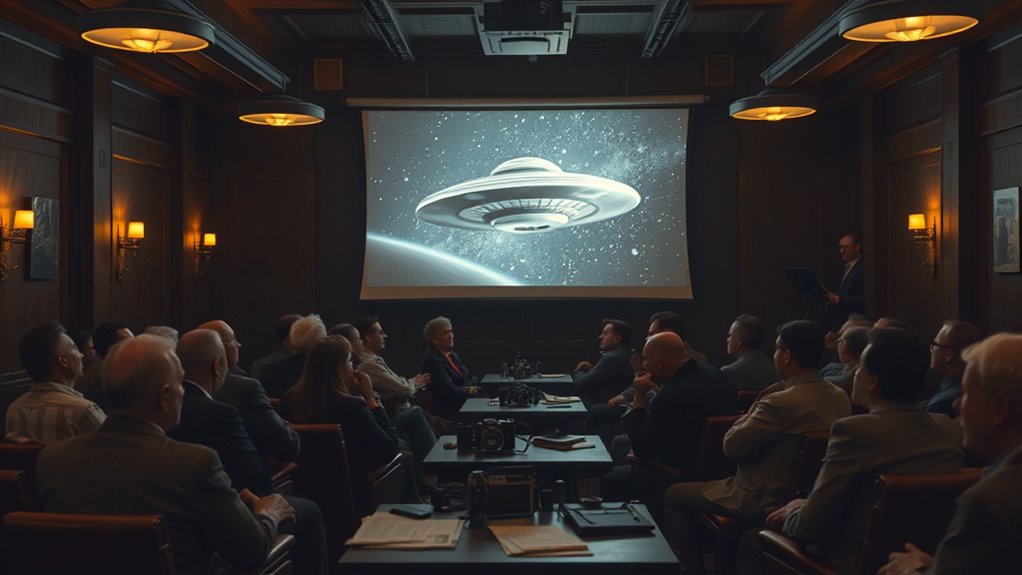
Have you ever wondered why people are so captivated by unidentified flying objects? The fascination with UFOs has persisted for decades, fueled by stories of mysterious sightings, government cover-ups, and the hope of discovering extraterrestrial life. At the core of this movement lies a tension between the desire for government transparency and the need for scientific skepticism. Many UFO enthusiasts believe that governments have concealed essential information about alien encounters, fueling conspiracy theories that suggest secret projects and hidden evidence. This suspicion drives a significant part of the ufology movement, as believers push for openness, demanding declassified documents and official acknowledgment of UFO phenomena. They argue that transparency is essential to understanding whether these objects are threats, technological marvels, or genuine extraterrestrial visitors. Yet, critics emphasize that government secrecy often stems from national security concerns, not necessarily a cover-up of alien life. Here, scientific skepticism plays a pivotal role. It urges caution, demanding rigorous evidence before accepting extraordinary claims. Skeptics point out that many UFO sightings can be explained through natural phenomena, misidentifications, or psychological factors. They warn against jumping to conclusions based on unverified reports or sensational media coverage. The tension between these perspectives fuels ongoing debates within the ufology community. Over the years, this movement has evolved from sensational stories and government hush-hush to more structured efforts to obtain transparency. Key moments like the Roswell incident in 1947 ignited the public’s imagination, sparking decades of speculation about alien crash sites and government cover-ups. In recent years, leaked military documents and official statements have added fuel to the fire, leading to renewed interest and calls for disclosure. The U.S. government, once dismissive, now appears more willing to acknowledge the existence of unidentified aerial phenomena, or UAPs, as they’re officially called. This shift has prompted both skeptics and believers to rethink their positions. For ufologists, the pursuit of disclosure is an ongoing mission—believing that full transparency could finally settle the debate, revealing whether we’re truly alone or in contact with otherworldly visitors. However, the path forward remains complex. Scientific skepticism reminds us to demand solid evidence, while the desire for government transparency pushes for openness and accountability. As more credible reports surface and governments release more information, the ufology movement continues to evolve, balancing curiosity with caution, and speculation with scientific inquiry. Additionally, understanding the maintenance costs and operational challenges of related technologies, like the hidden expenses associated with certain equipment used in surveillance and research, can influence how investigations are conducted and funded.
Frequently Asked Questions
What Are the Most Credible UFO Sightings Ever Recorded?
You should look into credible UFO sightings like the 2004 Nimitz incident, where pilots tracked unidentified aerial phenomena displaying alien technology capabilities. The Pentagon’s release of military videos showing unexplained aerial phenomena further confirms the reality of these sightings. These events involve highly trained observers and advanced technology, making them some of the most convincing records of UFO encounters with unexplained aerial phenomena.
How Has Government Secrecy Influenced UFO Research?
Government secrecy, through cover-ups and classified projects, has substantially hindered UFO research. You might find it difficult to access credible information because authorities often withhold details, fueling public suspicion. These clandestine efforts create an environment of mistrust, making it harder to distinguish fact from fiction. This secrecy delays transparency and scientific progress, leaving enthusiasts and researchers in the dark about genuine sightings and potential extraterrestrial encounters.
Are There Any Confirmed Extraterrestrial Contact Cases?
Have you ever wondered if we’ve truly made contact with extraterrestrials? There aren’t any confirmed cases of extraterrestrial communication or alien abduction reports that have been scientifically verified. While numerous sightings and stories exist, none meet the rigorous standards for confirmation. The search continues, but for now, the evidence remains anecdotal, leaving us questioning whether genuine contact is just beyond our reach or still undiscovered.
What Scientific Evidence Supports the Existence of UFOS?
You might find some scientific evidence supporting UFOs through unexplained aerial phenomena documented by military and civilian sources. These cases often showcase advanced propulsion systems that defy current human technology, hinting at extraterrestrial biology and engineering. While no definitive proof exists, radar tracking, infrared data, and sensor recordings suggest these crafts operate beyond conventional science, encouraging further investigation into their origins and the possibility of extraterrestrial contact.
How Can the Public Differentiate Between Hoaxes and Genuine Sightings?
Ever wonder how to tell a real sighting from a hoax? You should focus on photo analysis and eyewitness credibility. Question the consistency of the story and examine the evidence critically. Does the photo hold up under scrutiny? Are the witness accounts reliable and consistent? Trust your instincts, but also verify details through reputable sources. By doing so, you can better distinguish genuine sightings from deceptive hoaxes.
Conclusion
As you explore the ufology movement, remember that the search for truth is ongoing. While many believe government disclosures confirm extraterrestrial contact, others think it’s a carefully crafted illusion. By questioning official stories and examining declassified evidence, you might uncover hidden truths. Keep an open mind—you could be the one to finally unravel whether we’re truly alone or part of a vast cosmic mystery. The truth is out there, waiting for you to find it.