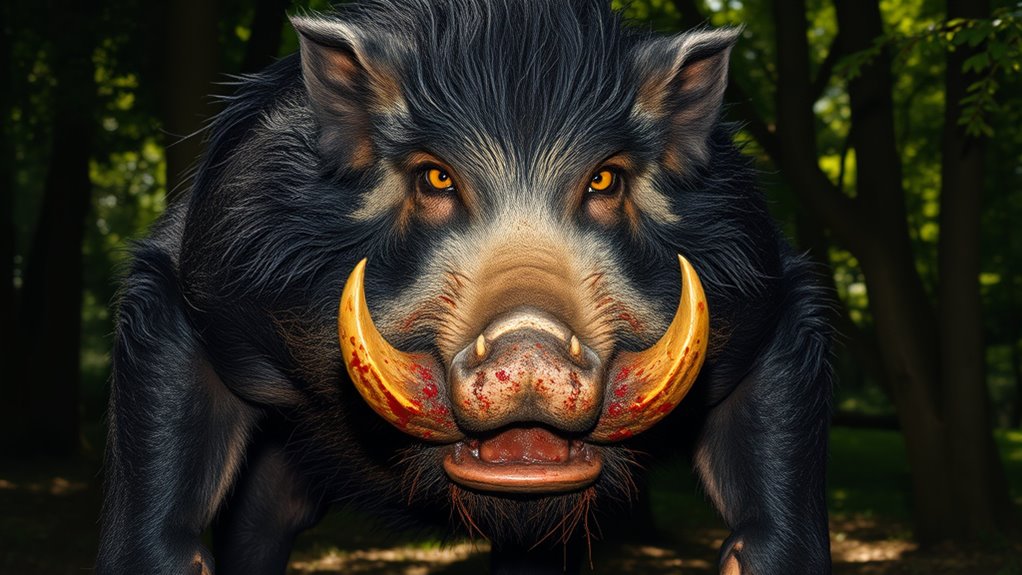

In Bearsden, feral hogs have grown into a dangerous problem, damaging native habitats and disrupting local ecosystems through aggressive rooting and vegetation destruction. Their rapid population growth makes control efforts challenging, especially with strict hunting regulations and habitat destruction concerns. If you want to understand how these hogs become monsters and what impacts they have, you’ll find valuable insights on the ecological and regulatory issues involved as you continue exploring this issue.
Key Takeaways
- Feral hog invasions in Bearsden cause severe habitat destruction through aggressive rooting and vegetation damage.
- Uncontrolled hog populations threaten native ecosystems, wildlife, and water quality.
- Effective control requires understanding local hunting regulations and adhering to legal methods.
- Habitat destruction by hogs leads to erosion, land degradation, and loss of native plant and animal species.
- Coordinated management strategies combining responsible hunting and habitat preservation are essential to mitigate their ecological impact.

Feral hogs have recently become a growing concern in Bearsden, disrupting local ecosystems and threatening agricultural livelihoods. These invasive animals are more than just a nuisance; they pose serious ecological and economic challenges. As you observe their destructive behavior, it’s clear that controlling their population requires understanding local hunting regulations. These regulations are designed to manage hunting seasons, licensing, and methods, helping to curb the hogs’ spread while guaranteeing safety and sustainability. Without proper adherence to these rules, efforts to control the feral hog population can become ineffective or even dangerous. You need to be aware of hunting season dates, permissible weapons, and any restrictions on hunting in certain areas to contribute effectively to the effort.
Controlling feral hogs requires understanding local hunting laws and regulations for safety and effectiveness.
The primary way feral hogs damage the environment is through habitat destruction. They root aggressively in the soil, tearing up fields, pastures, and native vegetation in search of food. This behavior depletes plant life that local wildlife depends on, leading to a ripple effect that harms entire ecosystems. As a landowner or hunter, you might notice the extensive damage they cause—uprooted plants, disturbed soil, and eroded land—areas that once thrived with native species become barren or overrun with invasive plants. Their relentless foraging also affects water quality, as disturbed soil washes into streams and rivers, impacting aquatic life. If you’re involved in land management or conservation efforts, understanding how feral hogs contribute to habitat destruction helps inform strategies to mitigate their impact. Additionally, adopting best management practices can significantly reduce their ecological footprint.
Efforts to control these hogs often involve hunting, but regulations can be complex. Many areas allow year-round hunting to discourage hog populations from exploding further, but you must follow specific rules. For example, some regions permit hunting without limits or require certain permits, while others restrict hunting in protected zones. Respect for these regulations is vital to avoid penalties and to ensure your actions align with conservation goals. You should also be mindful of the habitat destruction caused by excessive hunting in sensitive environments, which can sometimes exacerbate erosion or disturb native species. The balance lies in strategic hunting that reduces hog numbers without damaging the land further.
Ultimately, managing feral hogs in Bearsden demands a combination of responsible hunting and habitat preservation. By understanding hunting regulations and recognizing the extent of habitat destruction, you can play a part in restoring the health of local ecosystems. Effective control isn’t just about hunting more; it’s about hunting smart, respecting laws, and working to repair the damage these invasive animals cause. Only through coordinated efforts can you help prevent the hogs from turning into even greater monsters within Bearsden’s landscape.
Frequently Asked Questions
How Did Feral Hogs First Arrive in Bearsden?
You might not realize it, but feral hogs arrived in Bearsden through a mix of historical wild pig movements and invasive species management failures. Originally brought for hunting or escaped from farms, these wild pigs thrived, turning into a growing problem. Their presence highlights the importance of understanding wild pig history and implementing effective invasive species management strategies, preventing further ecological damage and keeping local ecosystems balanced.
Are Feral Hogs Dangerous to Humans Locally?
Feral hogs can be dangerous to humans, especially if you get too close to their hog habitat. They’re like wild cards, unpredictable and aggressive when threatened. You should always follow hunting regulations to stay safe and help control their population. Keep your distance, avoid provoking them, and stay informed about local guidelines. Remember, these animals aren’t just a nuisance—they can pose real risks if you underestimate their ferocity.
What Natural Predators Help Control Hog Populations?
Natural predators play a essential role in wildlife control by helping keep feral hog populations in check. You’ll find that animals like wolves, mountain lions, and bobcats actively hunt feral hogs, reducing their numbers naturally. These predator roles are critical for maintaining ecological balance, preventing hog populations from becoming uncontrollable, and minimizing their threat to humans and native ecosystems. Encouraging natural predator presence is often a key part of wildlife management strategies.
How Do Feral Hogs Impact Local Ecosystems?
You observe how feral hogs, like uninvited guests, disrupt the harmony of ecosystems. They cause habitat destruction, uprooting plants and disturbing soil, which impacts native wildlife and plant growth. This unchecked activity hampers wildlife conservation efforts by reducing biodiversity and altering food chains. Their presence can turn thriving habitats into barren landscapes, making it harder for native species to survive and thrive, ultimately destabilizing the balance of local ecosystems.
What Measures Are Being Taken to Manage Hog Outbreaks?
You can help manage hog outbreaks by following strict hunting regulations, which control their population humanely and effectively. Authorities also implement habitat management strategies, such as removing cover and food sources, to make areas less attractive for feral hogs. By supporting these measures and reporting sightings, you contribute to reducing their numbers and protecting local ecosystems from the damage caused by these invasive animals.
Conclusion
So, next time you hear about the feral hogs of Bearsden, remember they’re not just animals—they’re monstrous, wild tornadoes tearing through the town. Picture tusks like jagged knives, tusky faces glowing in the dark as they stampede like a nightmare come to life. These beasts aren’t just a threat; they’re an unstoppable, snarling force of chaos, ready to turn your peaceful neighborhood into a wild, untamed battleground in the blink of an eye.