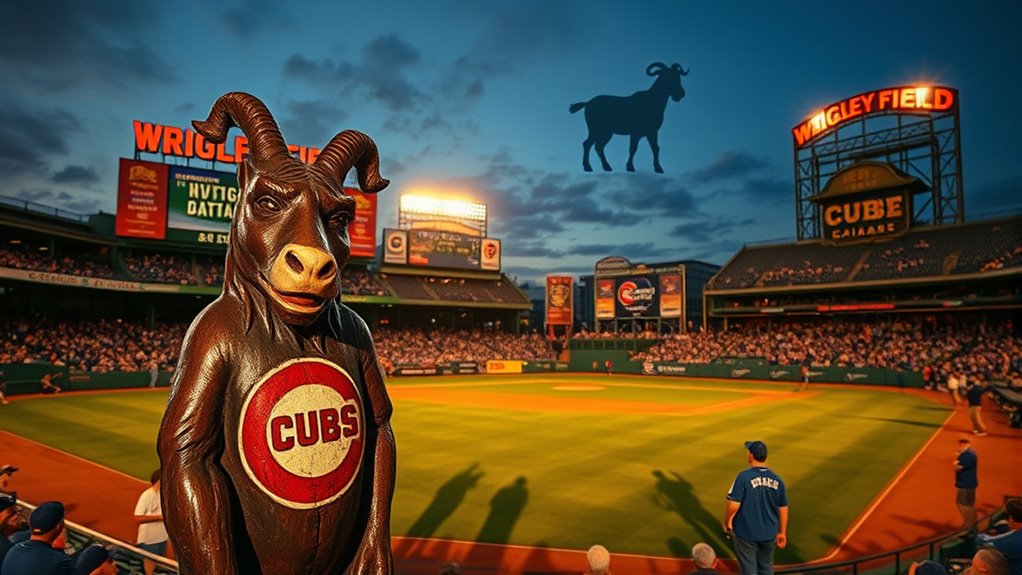

The Curse of the Billy Goat is a famous sports superstition rooted in a 1945 incident where Billy Sianis, a Greek immigrant and Cubs supporter, was asked to leave Wrigley Field because of his pet goat’s smell. Legend says he cursed the team, saying they wouldn’t win anymore. This myth became a symbol of Cubs’ heartbreak and resilience, shaping fan beliefs and rituals. If you want to uncover more about this intriguing legend, keep exploring its fascinating origins and impact.
Key Takeaways
- The curse originated in 1945 when Billy Sianis was asked to remove his goat from Wrigley Field, allegedly declaring the Cubs would never win again.
- It is rooted in animal superstition, turning the goat’s rejection into a symbol of the team’s long-standing misfortunes.
- The legend has shaped fan beliefs, rituals, and superstitions, reinforcing the idea of supernatural influence over the Cubs’ luck.
- The Curse of the Billy Goat symbolizes resilience and the emotional rollercoaster of supporting the team through decades of near-misses.
- Despite the 2016 World Series victory, the myth persists as a powerful element of Cubs folklore and sports culture.
The Curse of the Billy Goat is one of baseball’s most enduring legends, casting a shadow over the Chicago Cubs and their fans for more than a century. This story is deeply rooted in animal superstition, a common theme in sports mythology where animals are believed to influence outcomes beyond logic or reason. In this case, a simple act—refusing entry to a goat—became the catalyst for a long-lasting belief that the Cubs’ luck was cursed. You might see this as just a quirky piece of sports folklore, but for many, it’s a symbol of the team’s struggles and resilience. The legend begins in 1945 when Billy Sianis, a Greek immigrant and avid Cubs supporter, brought his pet goat to Wrigley Field. He was asked to leave because the smell was bothering other fans, and in response, Sianis supposedly declared, “Them Cubs, they ain’t gonna win no more.” From that moment, the story took on a life of its own, transforming into a powerful piece of sports mythology that explains decades of near-misses and heartbreaks for the Cubs. You can see how this animal superstition became a rallying point, fueling fans’ beliefs that the curse was real and that breaking it would require a supernatural act. Over the years, many have pointed to the goat incident as the cause behind the team’s unlucky streaks, tying in the idea that an animal—particularly a goat—could possess some mystical power over their fortunes. The legend persists, influencing fan rituals and superstitions, as fans often avoid mentioning the curse or the goat’s name, fearing it might reinforce the curse’s grip. Sports mythology like this isn’t unique; many teams and fans create stories that embody hope or despair, and the Billy Goat curse is a prime example. It encapsulates the emotional rollercoaster of supporting a team, where superstition and tradition intertwine with the reality of wins and losses. Despite the Cubs’ eventual World Series victory in 2016, the mythology still lingers, reminding everyone of the power of belief and the role that folklore plays in sports culture. Additionally, modern sports superstitions often draw on similar stories, illustrating how deeply ingrained these beliefs are in fan communities. Whether you buy into the curse or see it as a fun story, it’s a reminder of how animals, superstition, and mythology become woven into the fabric of sports history, creating lasting legends that go beyond the game itself. The Curse of the Billy Goat isn’t just about baseball; it’s about how stories, no matter how strange, can shape a community’s identity and keep the spirit of hope alive through generations.
Frequently Asked Questions
Has the Curse Ever Been Officially Lifted or Broken?
The curse has never been officially lifted or broken, despite many Superstitions debunked over the years. You might think the Cubs broke it with their 2016 World Series win, but fans still consider the Curse of the Billy Goat a part of team folklore. The Curse continuity remains, as many believe it’s more about tradition and superstition than actual supernatural influence.
Are There Similar Curses in Other Sports or Teams?
You’ll find many superstition parallels across sports, with legends like the Boston Red Sox and their “Curse of the Bambino” or the New York Jets’ “Curse of 1969.” These superstitions shape team narratives and fan culture. Like the Billy Goat curse, they become part of sports folklore, fueling belief in luck and superstition, even when teams break these curses or skeptics dismiss them as mere legends.
What Was the Exact Event That Triggered the Curse?
Imagine a dark cloud settling over a beloved team, sparked by a single moment. The superstition origins trace back to 1945 when Billy Goat Sailor, upset over his pet goat’s exclusion, was asked to leave Wrigley Field during a playoff game. This event details the superstition’s beginning, fueling a belief that his departure cursed the team, casting a shadow over their future victories.
How Do Fans Historically React to the Curse’s Claims?
You often see fans react with a mix of superstitious rituals and skepticism to the curse’s claims. Many engage in rituals like avoiding certain numbers or wearing lucky gear, hoping to break the curse. Others dismiss it as superstition, focusing instead on team skills. Overall, fan reactions are passionate—some embrace the superstition, while others see it as part of the team’s colorful history, fueling both hope and humor.
Has the Curse Affected the Team’s Long-Term Performance?
The curse has definitely impacted the team’s long-term performance by fueling superstitious rituals and doubts among players. You might notice players adhering to superstitions or avoiding certain behaviors before games, which can influence team morale. While some see this as psychological, it often leads to increased pressure and distraction, ultimately hindering consistent success. The curse’s presence keeps the team and fans perpetually cautious, affecting performance over many seasons.
Conclusion
So, the Curse of the Billy Goat lingers like a shadow over the Cubs’ history, a reminder that superstition can sometimes feel more powerful than logic. Whether real or just stories spun from hope and heartbreak, it’s a tale that keeps fans clutching their traditions and believing in the impossible. Like a ghost haunting the ballpark, the curse whispers that in baseball, faith and folklore are just as essential as the game itself.