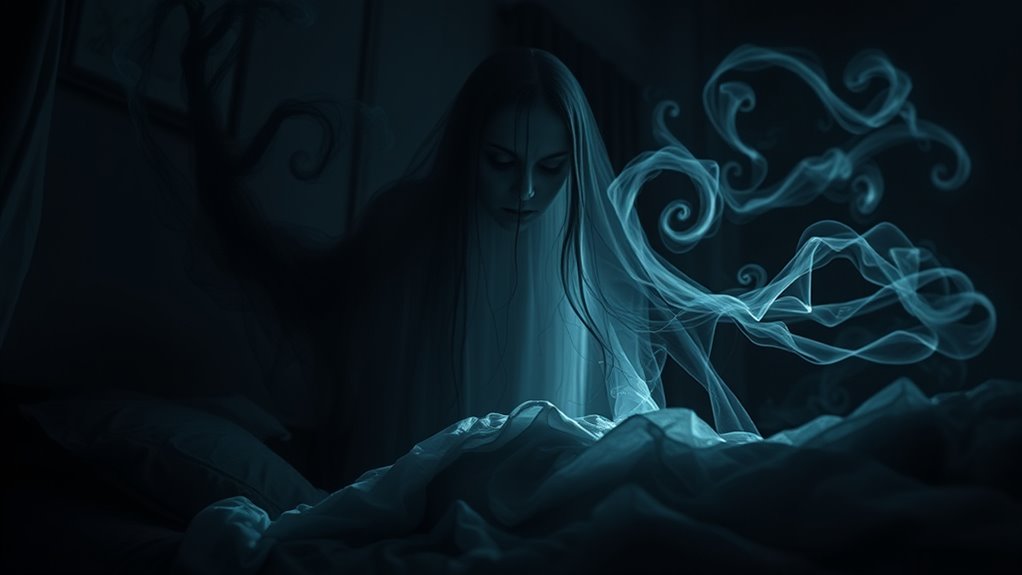

Across cultures, the “Old Hag” legend links sleep paralysis to witches and supernatural beings. Many believe that a witch or sinister spirit sits on your chest, causing paralysis and vivid hallucinations. These stories reflect centuries of fear and societal beliefs, even as science now explains sleep paralysis through neurological factors. If you want to explore how these legends shaped fears and what they reveal about human history, there’s more to discover.
Key Takeaways
- “The Old Hag” is a traditional term for the sleep paralysis phenomenon, often linked to witch legends across cultures.
- Historically, sleep paralysis was attributed to witches or spirits sitting on victims’ chests, causing paralysis and hallucinations.
- Legends of the “Old Hag” reflect societal fears of witches, demons, and supernatural influence during times of social unrest.
- Despite scientific advances, cultural beliefs persist, framing sleep paralysis as a witch-related or supernatural encounter.
- Modern explanations attribute the “Old Hag” experience to neurological factors, but folklore continues to symbolize fear and mystery.
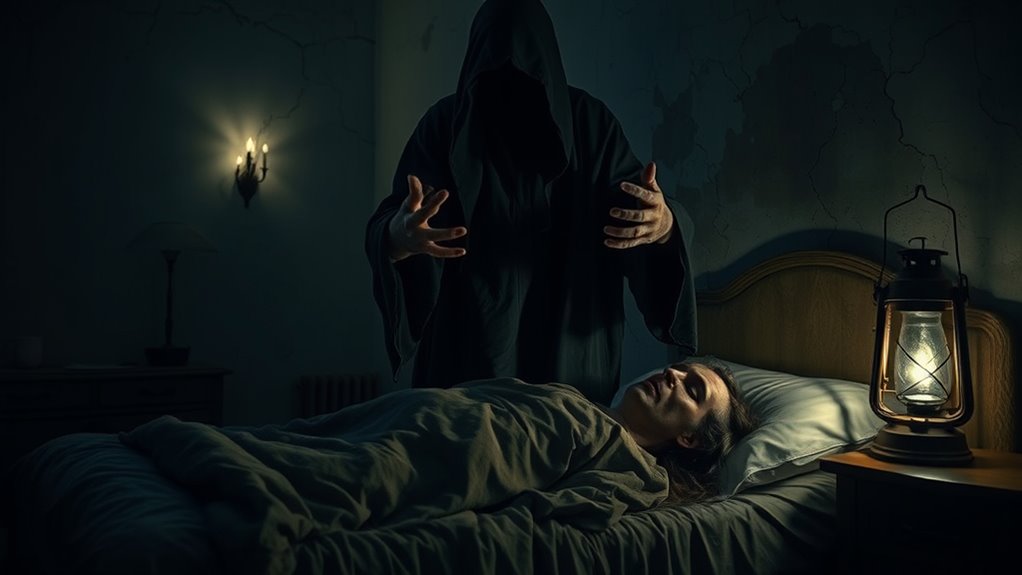
Many cultures have long associated sleep paralysis with supernatural entities, particularly witches and spirits. Throughout history, people have interpreted these eerie episodes through the lens of their superstitions surrounding sleep, often linking them to malevolent forces or supernatural beings. The superstitions surrounding sleep have deep roots, with many believing that during these episodes, a sinister presence, often a witch or a spirit, sits on their chest, preventing movement and causing terrifying visions. These beliefs persisted across centuries, shaping how societies understood and responded to sleep paralysis. In many historical accounts of witches, sleep paralysis was seen as evidence of witchcraft or demonic influence. During times when fear of witches was widespread, unexplained phenomena like paralysis or hallucinations were often attributed to their malicious work. People believed that witches could visit their victims during sleep, casting spells or causing harm through supernatural means. This led to a culture of suspicion, where unexplained sleep disturbances were seen as signs of witchcraft or demonic possession. These stories often reinforced the idea that witches had a dark power to manipulate the unseen world, and that their influence extended into people’s sleep, making them vulnerable to evil spirits or curses. Many of these accounts were fueled by religious and societal fears, with accusations of witchcraft serving as explanations for otherwise mysterious or frightening experiences. The superstitions surrounding sleep, especially during times of social upheaval or religious persecution, became intertwined with tales of witches and spirits lurking in the night. As a result, sleep paralysis was not merely seen as a physiological event but as a sinister encounter with supernatural evil. These legends persisted even as scientific understanding of sleep advanced, with many still believing that these experiences were caused by malevolent witches or spirits. Today, while we understand the neurological basis of sleep paralysis, the stories of witches sitting on people’s chests remain a powerful symbol of fear rooted in history. The link between superstitions surrounding sleep and historical accounts of witches highlights how human societies have long sought explanations for the unknown, often turning to supernatural figures. Modern research into sleep disorders has provided scientific explanations for these phenomena, but cultural narratives continue to shape perceptions and fears. Whether seen as a haunted night by witches or a natural phenomenon, sleep paralysis remains a fascinating intersection of folklore, fear, and science that reflects our enduring struggle to comprehend the mysteries of sleep.
Frequently Asked Questions
Are There Any Proven Medical Causes for Sleep Paralysis?
Yes, there are proven medical causes for sleep paralysis. Neurological factors, such as disruptions in the brain’s sleep regulation, often contribute. Sleep cycle irregularities, like staying up late or experiencing sleep deprivation, can trigger episodes. Stress, anxiety, and certain medications also play a role. These factors interfere with the shift between sleep stages, causing the paralysis. Maintaining a regular sleep schedule and managing stress can help reduce the likelihood of sleep paralysis episodes.
How Do Different Cultures Interpret the Old Hag Phenomenon?
Nearly 50% of people worldwide report experiencing sleep paralysis, often linked to the old hag phenomenon. Different cultures interpret this as a visit from spirits, demons, or witches, reflecting their unique mythological origins. For example, in Scandinavian folklore, it’s a troll or night monster, while in Japan, it’s a vengeful spirit. These cultural interpretations reveal how societies shape understanding of sleep paralysis through their mythologies and beliefs.
Can Sleep Paralysis Be a Sign of Underlying Mental Health Issues?
Yes, sleep paralysis can be a sign of underlying mental health issues or sleep disorders. If you experience frequent episodes, it might indicate anxiety, depression, or other conditions affecting your mental health. Pay attention to your sleep patterns and seek professional help if needed. Addressing these issues can reduce sleep paralysis episodes and improve your overall well-being. Don’t ignore persistent symptoms—they could be linked to deeper health concerns.
Are There Effective Treatments for Sleep Paralysis Related to the Hag Legend?
Yes, there are effective treatments for sleep paralysis related to the hag legend. You can improve sleep hygiene by establishing a regular sleep schedule and reducing stress before bed. Cognitive therapy helps address any anxiety or fears associated with your episodes. Combining these approaches can markedly reduce the frequency and intensity of sleep paralysis, making it easier for you to sleep peacefully and diminish the influence of legends like the hag.
How Has the Old Hag Myth Influenced Modern Horror Stories?
You see the Old Hag myth woven into modern horror stories, blending witchcraft folklore with chilling nightmare imagery. This legend fuels scenes of shadowy figures and sinister witches lurking in darkness, creating a haunting atmosphere. It influences films, books, and games by tapping into primal fears of unseen forces and trapped spirits. The myth’s eerie aura persists, transforming age-old tales into terrifying narratives that evoke dread and fascination in contemporary horror.
Conclusion
As you drift between dreams and waking, remember that these legends are shadows dancing on the edge of reality. Sleep paralysis, like an ancient witch’s spell, whispers of fears we can’t quite grasp. But just as dawn chases away darkness, understanding can dispel the shadows of myth. Embrace the mystery, knowing that beneath the legends lies a truth waiting to be uncovered—an awakening from the spell of fear into the light of knowledge.