
You’ll find that Champ’s legend is deeply rooted in Native stories passed down through generations. These tales portray a water-dwelling creature as a guardian, symbolizing the lake’s spiritual significance. They emphasize respect for the creature’s domain and the lake’s power, reinforcing a sacred connection to nature. If you keep exploring, you’ll uncover how these ancient stories blend with modern sightings, shaping the ongoing mystery of Lake Champlain’s legendary monster.
Key Takeaways
- Indigenous legends describe Champ as a water spirit or guardian deeply connected to Lake Champlain’s cultural and spiritual significance.
- The creature symbolizes respect for nature and the lake’s power, embodying sacred qualities in native tribal beliefs.
- Legends warn against disrespecting the lake, emphasizing the creature’s role as a protector and the importance of reverence.
- Modern sightings of Champ often blend traditional stories with contemporary reports, reinforcing its mythic roots.
- These cultural stories are transmitted across generations, preserving native perspectives and the lake’s spiritual heritage.
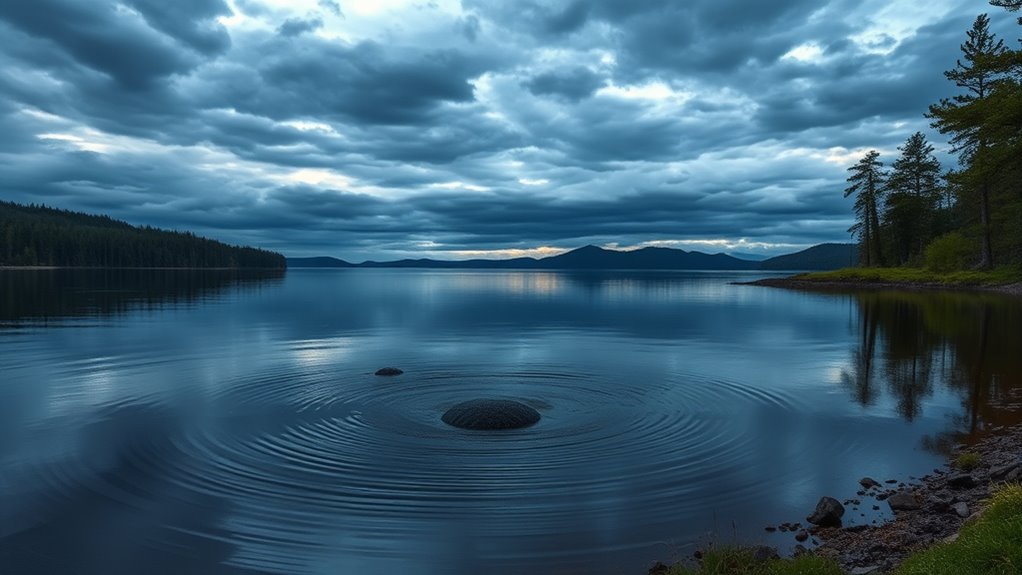
Lake Champlain’s legendary monster, often called “Champ,” has captured imaginations for centuries. You might have heard stories of a mysterious creature lurking beneath the lake’s surface, fueling countless tales of cryptid folklore. These stories aren’t just modern myths; they’re deeply rooted in indigenous legends that date back generations. As you explore the history of Champ, you’ll find that native tribes surrounding the lake have long shared stories that describe a powerful, water-dwelling being. These legends often portray the creature as a guardian or a spirit, integral to their cultural understanding of the lake and its mysteries.
Your interest in Champ connects you to a rich tapestry of indigenous folklore. These legends aren’t simply stories for entertainment—they’re meaningful narratives that reflect the tribes’ relationship with the natural world. Many native legends describe a large, serpentine creature that embodies the spirit of the lake and serves as a protector of its waters. These tales often warn of respecting the lake’s power and respecting the creature’s domain. Over centuries, these indigenous stories have been passed down through generations, maintaining their importance within native communities and offering a different perspective on the creature than modern sightings do.
When you look into the native legends, you realize that the creature isn’t just a mysterious animal but a sacred symbol. It represents the deep connection between the indigenous peoples and the lake, highlighting their reverence for its waters and creatures. The stories often depict the creature as a formidable, elusive being that commands respect, reinforcing the idea that the lake is a place of spiritual significance. These legends have persisted alongside modern cryptid folklore, blending traditional beliefs with contemporary sightings and reports. As a result, some believe that Champ’s origins could be rooted in these ancient stories, giving the creature a mythic dimension that spans generations.
Understanding the indigenous roots of the legend enriches your appreciation of the creature’s place in local culture. It reminds you that these stories are more than just tales—they’re a testament to the tribes’ relationship with the lake and their desire to preserve its mysteries. Whether you see Champ as a legendary guardian or a cryptid of modern folklore, recognizing the native legends behind the creature allows you to view it through a lens of respect and historical significance. It’s a connection to the past, woven into the ongoing narrative of Lake Champlain’s mysterious, storied waters. Additionally, cultural significance plays a crucial role in how these legends are passed down and maintained within native communities.
Frequently Asked Questions
What Are the Most Recent Sightings of Champ?
Recently, you’ve heard reports of Champ sightings, adding to the cryptid folklore surrounding Lake Champlain. These sightings often involve witnesses describing mysterious, large shapes moving through the water, sparking curiosity about the lake’s ecology. As new reports emerge, you might wonder if Champ is a real creature or simply part of local legend. Regardless, these stories keep the mystique alive and fuel ongoing fascination with Lake Champlain’s legendary monster.
Are There Any Scientific Studies Confirming Champ’s Existence?
Sure, there are no scientific studies confirming champ’s existence, despite ongoing cryptid skepticism. While folklore fuels local legends, science remains unconvinced, prioritizing verifiable evidence over stories. You might find it amusing that, in the face of numerous sightings, no concrete proof has emerged—highlighting the gap between folklore and science. So, until credible research appears, champ remains a mesmerizing legend rather than an established creature.
How Do Native American Legends Describe Lake Champlain’s Creature?
Native American legends describe Lake Champlain’s creature as a powerful, serpentine being with cultural significance, symbolizing water spirits or guardian figures in their mythology. You’ll find stories from tribes like the Iroquois and Algonquin, emphasizing its role in their native mythology. These stories highlight the creature’s importance in cultural traditions, often portraying it as a protector of the lake and its surrounding community, reflecting deep spiritual connections to the environment.
What Conservation Efforts Are in Place for Lake Champlain?
Imagine saving a legend—your efforts matter. You can support ecological restoration projects in Lake Champlain, helping improve water quality and habitat health. Public awareness campaigns also play a essential role, educating communities about conservation. By participating in these initiatives, you become a crucial part of protecting this iconic lake, ensuring its natural beauty and legendary creature’s home remain vibrant for generations to come. Your actions make a real difference today.
Are There Similar Lake Monsters in Other Regions?
Yes, you’ll find similar lake monsters in other regions, fueled by cryptid folklore and regional legends. For example, Scotland’s Nessie, the Loch Ness Monster, is famous worldwide, while Japan has sightings of the Kappa. These stories often reflect local culture and history, sparking curiosity and tourism. While evidence remains elusive, the legends persist, enthralling imaginations and inspiring conservation efforts to protect these mysterious natural habitats.
Conclusion
As you imagine yourself by Lake Champlain, picture the ancient legends coming alive, connecting you to the Native roots that shaped these stories. Just like the 19th-century sightings that sparked curiosity and fear, you can see how legends grow from real encounters, blending history and mystery. Whether it’s in your mind or out on the water, the legend of Champlain’s monster reminds you of the deep cultural ties and enduring mysteries waiting to be explored.