
Interactive science kits for kids range from kitchen-chemistry starter sets to elaborate anatomy models, and the right pick depends heavily on your child’s age, attention span, and whether you want guided learning or open-ended chaos. After comparing this lineup side by side, Doctor Jupiter Ultimate Science Experiments Kit for Ages 8+ stands out as the best overall choice, thanks to its unusually high experiment count, strong instruction design, and reliable replay value. Close behind are the National Geographic Earth Science Kit for breadth of activities and the Doctor Jupiter My First Science Kit for Ages 4+, which is the clear pick for preschoolers. The main tradeoff in this category is experiment volume versus depth — some kits pack in 100+ quick demos that burn out fast, while others offer fewer, richer projects that actually teach scientific reasoning. Price and mess level vary wildly too, and duplicate listings (this category is full of them) can trick you into buying the same kit twice. Keep reading for the full breakdown, including who each kit is for and who should skip it.

Prime made for students and young adults
- Fast, free delivery for dorm and study essentials
- Prime Video and Amazon Music included
- Member-only deals
Key Takeaways
- Experiment count was a poor predictor of quality: the 60-experiment Doctor Jupiter Ultimate kit delivered better-designed projects than several 100+ activity kits that padded totals with near-identical variations.
- The age split in this category is sharp — kits for ages 4-8 lean on color changes and fizzing reactions, while 8+ kits like the National Geographic Chemistry Set introduce real lab concepts like measurement and chemical identification.
- Anatomy-focused kits (Science Can Human Body Model, Be Amazing! Anatomy Figure) behave more like reference toys than experiment kits; they have long shelf lives but almost no replay value once assembled.
- Role-play kits like the 80-Experiment Scientist Costume set boost early engagement but depend on an adult doing the actual science — fine for ages 4-7, frustrating for older kids.
- This category has a real duplicate-listing problem: three of the twelve entries were repeat listings of Doctor Jupiter kits, so verifying the exact edition before buying saves money and disappointment.
| National Geographic Earth Science Kit with 100+ Activities for Kids 8-12 | 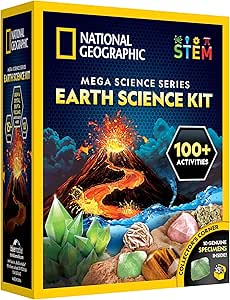 | Best Overall | Brand: Blue Marble (National Geographic) | Age Range: 8 years and up | Educational Objective: STEM / Earth Science | VIEW LATEST PRICE | See Our Full Breakdown |
| Science Can Human Body Model for Kids, Interactive Anatomy Learning Toy |  | Best for Younger Learners’ Anatomy | Recommended Age: 6+ years | Number of Organs: 15+ removable parts | Included Materials: 26-page illustrated book, 4 double-sided knowledge cards, torso model, organ parts, base, guides | VIEW LATEST PRICE | See Our Full Breakdown |
| Be Amazing! Toys Interactive Human Body Anatomy Figure, 60 Pieces, Ages 8+ |  | Best Hands-On Anatomy Model | Brand: Be Amazing! Toys | Age Range: 8+ years | Pieces: 60 | VIEW LATEST PRICE | See Our Full Breakdown |
| National Geographic Amazing Chemistry Set with 100+ Experiments for Ages 8-12 |  | Best for Chemistry Focus | Brand: Blue Marble (National Geographic) | Age Range: 8 years and up | Educational Objective: STEM / Chemistry | VIEW LATEST PRICE | See Our Full Breakdown |
| Melican 60+ Science Experiment Kit for Kids Ages 4-8+ |  | Best for Preschool Scientists | Recommended Age: 4-8+ years | Number of Experiments: 60+ | Included Components: Experiment materials, tools, manual, safety goggles | VIEW LATEST PRICE | See Our Full Breakdown |
| Doctor Jupiter My First Science Experiments Kit for Kids Ages 4+ |  | Best for Preschool Scientists | Number of Experiments: 50+ | Recommended Age: 4+ years | Safety Standards: ASTM F963-17 compliant | VIEW LATEST PRICE | See Our Full Breakdown |
| Science Kit for Kids – 80 Experiments with Scientist Role Play |  | Best Role-Play Experience | Number of Experiments: 80 | Age Range: 6+ years | Included Components: Goggles, gloves, test tubes, petri dishes, droppers, measuring spoons, balloons, pigments, chemical materials, straws, twisting rods, rainbow candy, color changing flower | VIEW LATEST PRICE | See Our Full Breakdown |
| UNGILINGA 150 Experiments Science Kits for Kids Chemistry Lab STEM Toys |  | Best Experiment Variety | Number of Experiments: 150 | Topics Covered: Chemistry, Physics, Earth Science | Materials Included: Lab tools and kid-friendly materials | VIEW LATEST PRICE | See Our Full Breakdown |
| National Geographic Science Magic Kit for Kids with 100+ Experiments and Tricks |  | Best for Showmanship | Brand: Blue Marble / National Geographic | Age Range: 8 years and up | Number of Experiments: 100+ in kit, plus bonus booklet with 85+ more | VIEW LATEST PRICE | See Our Full Breakdown |
| Doctor Jupiter My First Science Experiments Kit for Kids Ages 4+ (100+ Experiments) |  | Best Value Starter Set | Number of Experiments: 100+ | Age Range: 4+ years | Safety Standards: ASTM F963-17 compliant | VIEW LATEST PRICE | See Our Full Breakdown |
| Doctor Jupiter Ultimate Science Experiments Kit for Kids Ages 8+ |  | Best Compact Starter Set | Number of Experiments: 50+ | Recommended Age: 8 years and up | Safety Standards: ASTM F963-17 certified | VIEW LATEST PRICE | See Our Full Breakdown |
| Doctor Jupiter Ultimate Science Experiments Kit for Kids Ages 8+ |  | Best Value for Volume | Number of Experiments: 135+ | Bonus Experiments: 90+ | Recommended Age: 8 years and up | VIEW LATEST PRICE | See Our Full Breakdown |
| interactive science kits for kid | Number of Experiments | Age Range |
|---|---|---|
| National Geographic Earth Scie | — | 8 years and up |
| Science Can Human Body Model f | — | — |
| Be Amazing! Toys Interactive H | — | 8+ years |
| National Geographic Amazing Ch | — | 8 years and up |
| Melican 60+ Science Experiment | 60+ | — |
| Doctor Jupiter My First Scienc | 50+ | — |
| Science Kit for Kids | 80 | 6+ years |
| UNGILINGA 150 Experiments Scie | 150 | — |
| National Geographic Science Ma | 100+ in kit, plus bonus booklet with 85+ more | 8 years and up |
| Doctor Jupiter My First Scienc | 100+ | 4+ years |
| Doctor Jupiter Ultimate Scienc | 50+ | — |
| Doctor Jupiter Ultimate Scienc | 135+ | — |
More Details on Our Top Picks
National Geographic Earth Science Kit with 100+ Activities for Kids 8-12
This is the pick I’d put at the top of the list because it covers the widest ground for the money — more than 100 activities spanning volcanoes, crystal growing, and geologic digs, all from a brand with a proven track record in this roundup. Compared with the National Geographic Amazing Chemistry Set, which is equally ambitious but narrowly focused on reactions, this kit gives kids variety across earth science topics, which matters when attention spans wander after week two. The instruction guides are genuinely easy to follow, and that reliability is why it edges out cheaper bundles like the Melican kit. The tradeoff: at this experiment count, the pacing can feel like a lot for an 8-year-old working solo, and several activities genuinely need an adult nearby for setup and cleanup.
Pros:- Over 100 activities across earth science topics, giving it the longest shelf life in this lineup
- Detailed, genuinely easy-to-follow instruction guides
- Award-winning product from a reputable brand (Blue Marble/National Geographic)
- Mixes instant-gratification experiments like volcanoes with slower projects like crystal growing
Cons:- Some experiments require adult assistance, limiting independent play
- Can be overwhelming for younger children without supervision
- Activity depth varies — some of the 100+ feel like quick filler projects
Best for: Families with kids 8-12 who want a long-lasting kit with variety across multiple science topics rather than a single theme
Not ideal for: Parents of younger kids under 8 — many experiments assume reading comprehension and fine motor skills a 6-year-old won’t have yet
- Brand:Blue Marble (National Geographic)
- Age Range:8 years and up
- Educational Objective:STEM / Earth Science
- Set Name:Earth Science Kit
- Activities Included:100+ experiments and activities
- Manufacturer:JMW Sales, Inc.
- Warranty:Backed by high-quality standards and customer support
Our verdict“If you want one kit that keeps an 8-to-12-year-old busy for months across multiple science disciplines, this is the one to buy first.”
Science Can Human Body Model for Kids, Interactive Anatomy Learning Toy
Where most anatomy toys in this roundup are static models, this one actually talks back — it has explanation and quiz modes that turn solo play into an interactive lesson. That electronic format makes it the smartest choice for the 6-to-8 crowd, since it works for kids who can’t yet read a manual comfortably. Compared with the Be Amazing! Toys anatomy figure, which targets ages 8+ and relies on physical assembly for engagement, this model does the teaching itself with 15+ removable organs plus a 26-page illustrated book and knowledge cards. The catch: it runs on 3 AA batteries you’ll need to supply, and the quiz format can grow stale once a child has cycled through the content. It’s also less of a building experience than the Be Amazing option, which matters if your kid learns by assembling rather than listening.
Pros:- Interactive explanation and quiz modes enable genuinely independent learning
- 15+ removable organs support hands-on exploration
- Includes a 26-page illustrated book and 4 double-sided knowledge cards
- Lowest entry age of the two anatomy options in this roundup (6+)
Cons:- Requires 3 AA batteries that are not included
- Some organ parts are small and need careful handling
- Fixed content library means limited replay value once quizzes are mastered
Best for: Parents of curious 6-to-8-year-olds who want a screen-free toy that teaches anatomy without requiring strong reading skills
Not ideal for: Kids who prefer building and tinkering — the assembly aspect is minimal, and older children may outgrow the quiz format quickly
- Recommended Age:6+ years
- Number of Organs:15+ removable parts
- Included Materials:26-page illustrated book, 4 double-sided knowledge cards, torso model, organ parts, base, guides
- Learning Modes:Explanation mode and quiz mode
- Power Source:3 AA batteries (not included)
Our verdict“This makes the most sense for younger kids who want anatomy taught to them out loud, not for builders who’d rather construct it themselves.”
Be Amazing! Toys Interactive Human Body Anatomy Figure, 60 Pieces, Ages 8+
This 14-inch articulated figure takes the opposite approach from the Science Can Human Body Model: instead of electronics, it leans on a 60-piece build where kids assemble the skeleton, layer on muscles, and place removable organs. For a child who learns by doing, that construction process is the whole point — finished, the model is fully poseable, which the Science Can torso can’t match. The colorful instruction cards guide the layering, so the anatomy lessons happen as a byproduct of building. The tradeoffs are real, though: assembly takes time and patience, kids under 8 will likely get frustrated mid-build, and the layered pieces aren’t built for rough handling — this is a model to display and revisit, not a toy to toss in a bin. Compared with the experiment-based kits here, it offers depth in one subject rather than breadth across many.
Pros:- 60-piece build teaches anatomy through assembly, which sticks better than passive reading for many kids
- Fully articulated 14-inch skeleton allows posing and continued play after assembly
- Layered design shows spatial relationships between bones, muscles, and organs
- Colorful instruction cards keep the build structured
Cons:- Assembly can be time-consuming and frustrating for younger children
- Limited durability if handled roughly
- Single-subject focus means less variety than multi-experiment kits like the Earth Science Kit
Best for: Kids 8 and up who love building projects and want to understand anatomy by physically assembling it layer by layer
Not ideal for: Impatient or rough-handed kids — assembly is time-consuming and the layered pieces won’t survive careless play
- Brand:Be Amazing! Toys
- Age Range:8+ years
- Pieces:60
- Height:14 inches
- Included Components:Articulated skeleton, muscles, removable organs, instruction cards
- Model Number:813268016047
Our verdict“The right pick for a builder who wants one deep anatomy project rather than a hundred quick experiments.”
National Geographic Amazing Chemistry Set with 100+ Experiments for Ages 8-12
Think of this as the specialist sibling of the National Geographic Earth Science Kit — same brand reliability and 100+ experiment count, but everything is filtered through chemistry: color-changing solutions, glowing test tubes, and crystal growing. That focus is a strength if your kid has already shown a specific interest in reactions, because it includes real lab tools like test tubes and beakers, which makes the experience feel closer to actual science than the household-item experiments in cheaper kits. The bonus experiments using items from your pantry stretch the value further. The flip side of that lab feel is the burden it puts on parents: more experiments here need direct adult supervision than in the Earth Science Kit, and you’ll want a dedicated workspace rather than the kitchen table on a whim. Younger siblings under 8 are effectively locked out.
Pros:- Deep chemistry focus with 100+ experiments including crystal growing and color-changing reactions
- Includes real scientific tools like test tubes and beakers, not just plastic novelties
- Bonus experiments using common household items extend the kit beyond its contents
- Award-winning set from the same trusted brand as the top overall pick
Cons:- Most experiments require adult supervision and setup
- Strictly for ages 8+ — not suitable for younger children
- Demands counter space and proper safety precautions during use
Best for: Kids 8-12 already fascinated by chemical reactions whose parents are willing to supervise hands-on lab sessions
Not ideal for: Households wanting unsupervised independent play — safety precautions and adult involvement are built into most experiments
- Brand:Blue Marble (National Geographic)
- Age Range:8 years and up
- Educational Objective:STEM / Chemistry
- Set Name:Amazing Chemistry Set
- Experiments Included:100+ plus bonus household-item experiments
- Highlights:Crystal growing, chemical reactions, glowing test tubes, hands-on STEM projects
- Model Number:NGMEGACHEMAR
Our verdict“Buy this over the Earth Science Kit when your child’s interest is specifically chemistry and you can commit to supervising lab time.”
Melican 60+ Science Experiment Kit for Kids Ages 4-8+
This kit earns its spot almost entirely on age accessibility — it starts at age 4, while the National Geographic sets and the Be Amazing model all begin at 8. For a preschooler or early elementary kid who wants to do what the big kids are doing, the volcano eruptions, dinosaur egg digs, and lava lamp projects here are pitched at the right developmental level, and the included safety goggles signal that the design actually thought about young children. Compared with the Doctor Jupiter My First Science kit for ages 4+, the experiment count is the draw at 60+, though the depth per experiment is thinner. The honest tradeoff: several activities still require an adult to run them, and the novelty wears off — experiments can feel repetitive once the wow-factor demos are exhausted. This is a gateway kit, not a long-term companion.
Pros:- Lowest realistic entry point in this lineup for ages 4 and up
- Includes all materials, tools, a manual, and safety goggles in the box
- High-visual experiments like volcanoes and lava lamps suit short preschool attention spans
- Encourages early critical thinking and STEM curiosity
Cons:- Requires adult supervision for most experiments despite the young target age
- Experiments can feel repetitive after the initial run-through
- Thinner educational depth per activity than the 8+ kits in this roundup
Best for: Parents of 4-to-7-year-olds who want an age-appropriate introduction to science before graduating to bigger kits
Not ideal for: Kids 8 and up — they’ll find the experiments too simple and will get more from the National Geographic sets
- Recommended Age:4-8+ years
- Number of Experiments:60+
- Included Components:Experiment materials, tools, manual, safety goggles
- Activity Types:Volcanic eruptions, dinosaur egg digging, lava lamps, and more
- Educational Focus:STEM, curiosity, critical thinking
Our verdict“A solid first science kit for the under-8 crowd, with the understanding that it’s a stepping stone to bigger sets rather than a lasting one.”
Doctor Jupiter My First Science Experiments Kit for Kids Ages 4+
This 50-experiment starter kit earns its place as the gentlest entry point in the lineup, aimed squarely at the 4-and-up crowd that most chemistry sets overlook. Where the UNGILINGA 150 Experiments kit assumes a level of fine motor control and reading ability younger kids simply don’t have, this Doctor Jupiter set keeps instructions fully illustrated and activities short enough to hold a preschooler’s attention. Safety is the real differentiator here: ASTM F963-17 compliance and household-safe materials mean a spilled tray is an annoyance, not an emergency. The tradeoff is depth. Compared with the National Geographic Science Magic Kit, the experiments are simpler and fewer, so a curious 7-year-old will outgrow it within a few months.
Pros:- Age-appropriate experiments designed specifically for preschoolers
- ASTM F963-17 safety certified materials
- Fully illustrated instructions non-readers can follow with a parent
- Screen-free entertainment that builds early critical thinking
Cons:- Requires adult supervision for nearly every experiment at this age
- Some activities need extra household items not in the box
- Content ceiling is low — kids outgrow it fast
Best for: Parents of 4-to-6-year-olds who want a safe, low-friction introduction to STEM before graduating to bigger chemistry sets
Not ideal for: Kids 7 and older or already science-obsessed children who will find the experiments too basic and finish the kit quickly
- Number of Experiments:50+
- Recommended Age:4+ years
- Safety Standards:ASTM F963-17 compliant
- Focus:STEM fundamentals, critical thinking, problem solving
- Instruction Style:Illustrated, easy-to-follow manual
- Screen-Free:Yes
- Best Setting:Home with adult supervision
Our verdict“Buy this for a young child’s first science kit; skip it if your kid is already past picture-book instructions.”
Science Kit for Kids – 80 Experiments with Scientist Role Play
What separates this 80-experiment kit from the pack is the costume-grade role play: it ships with goggles, gloves, test tubes, and petri dishes, so kids don’t just do science — they feel like scientists. Compared with the Doctor Jupiter 50-experiment set, the experiment count jumps considerably and the activities skew more theatrical (rainbow rain, erupting volcanoes), which makes it a hit for demonstration-minded kids. Against the National Geographic Science Magic Kit, this option trades polished branding for a more complete physical lab setup. The flip side: the included chemical bottles demand careful adult handling, and the 6+ age floor is firm — younger siblings can’t safely join in, unlike the Doctor Jupiter preschool option.
Pros:- Includes full role-play gear: goggles, gloves, test tubes, petri dishes
- 80 visually dramatic experiments like volcanoes and rainbow rain
- Clear safety and guidance materials provided
- Broad component list reduces extra shopping trips
Cons:- Chemical materials in bottles require careful storage and handling
- Firmly limited to kids over 6
- Adult supervision needed for most activities
Best for: Kids 6 and up who love dressing up and performing experiments as an event, and parents who want real lab tools included
Not ideal for: Households with children under 6, since the chemicals and small components make it unsafe for younger siblings to share
- Number of Experiments:80
- Age Range:6+ years
- Included Components:Goggles, gloves, test tubes, petri dishes, droppers, measuring spoons, balloons, pigments, chemical materials, straws, twisting rods, rainbow candy, color changing flower
- Focus:Hands-on chemistry with scientist role play
- Highlight Experiments:Rainbow rain, erupting volcanoes, color-changing flower
- Safety:Guidance materials and protective gear included
- Supervision:Adult supervision recommended
Our verdict“This is the pick when the performance of science matters as much as the learning — just keep it away from preschoolers.”
UNGILINGA 150 Experiments Science Kits for Kids Chemistry Lab STEM Toys
If sheer volume is the priority, this 150-experiment kit is the quantity leader of the roundup — nearly double the count of the 80-experiment role-play kit and triple the Doctor Jupiter starter. More usefully, the experiments span chemistry, physics, and earth science, so it avoids the repetition trap that the National Geographic Magic Kit sometimes falls into with similar tricks re-skinned. The well-illustrated manual keeps it accessible, and the included lab tools give it a genuine classroom feel that works for both home and school use. The honest tradeoff: it’s a mile wide and an inch deep. Ambitious tweens will hit a conceptual ceiling, and like most sets here, some experiments still send you hunting for household items.
Pros:- Largest experiment count in this batch at 150 activities
- Spans three disciplines: chemistry, physics, and earth science
- Real lab tools included for an authentic experience
- Easy-to-follow illustrated manual works for independent learning
Cons:- Experiments prioritize breadth over depth
- Some activities require household items not included
- Adult supervision still required for safety
Best for: Families and teachers who want maximum experiment count and topic variety to keep kids busy over a whole school break
Not ideal for: Older or advanced learners who will find the individual experiments shallow despite the large count
- Number of Experiments:150
- Topics Covered:Chemistry, Physics, Earth Science
- Materials Included:Lab tools and kid-friendly materials
- Instruction Manual:Well-illustrated, easy to follow
- Recommended Uses:Home learning, classroom, holiday activity, school break
- Supervision:Adult supervision required
- Extra Items Needed:Some common household items
Our verdict“The best value per experiment for sustained entertainment, provided your kid values variety over rigor.”
National Geographic Science Magic Kit for Kids with 100+ Experiments and Tricks
This kit wins on presentation and pedigree: an award-winning National Geographic product that frames science as magic, which is a genuinely effective hook for kids who resist “educational” toys. With 100+ experiments and tricks plus a bonus booklet of 85 more, the total activity count rivals the UNGILINGA set, though the framing favors wow-moment tricks over systematic lab work. Compared with the role-play science kit, it trades physical lab gear for polished instructions and brand trust, making it the better gift for a birthday party or family show-and-tell. Be aware of the 8+ age floor — this is the strictest age gate in the batch — and some families report the tricks start feeling repetitive once the novelty wears off.
Pros:- 100+ experiments and magic tricks with a bonus 85+ experiment booklet
- Award-winning product with strong customer ratings
- Magic framing motivates kids indifferent to traditional science kits
- Everything needed is included in the box
Cons:- Tricks can feel repetitive over time
- Age floor of 8 excludes younger siblings
- Some experiments still require adult supervision
Best for: Kids 8 and up who love performing and showing off results, and gift-givers who want a trusted brand name
Not ideal for: Children under 8, or kids who want structured lab-style learning rather than magic-trick framing
- Brand:Blue Marble / National Geographic
- Age Range:8 years and up
- Number of Experiments:100+ in kit, plus bonus booklet with 85+ more
- Model Number:NGMEGAMAGIC
- Focus:Science magic tricks and STEM projects
- Awards:Award-winning product
- UPC:816448027680
Our verdict“The strongest choice for a kid who wants to amaze an audience — less ideal for methodical lab learners.”
Doctor Jupiter My First Science Experiments Kit for Kids Ages 4+ (100+ Experiments)
Think of this as the bigger sibling to the 50-experiment Doctor Jupiter kit: same preschool-friendly design philosophy, same ASTM F963-17 safety certification, but double the experiment count at a similar price bracket. That makes it the best value for young families — you get 100+ activities with illustrated instructions a non-reader can follow alongside a parent, stretching the kit across months rather than weeks. Compared with the UNGILINGA 150-experiment set, it trades raw quantity and lab tools for age-appropriate simplicity and safety, which is the right call for a 4-to-6-year-old. The ceiling is the same tradeoff as its smaller sibling: concepts stay deliberately basic, so an 8-year-old will find nothing here the National Geographic Magic Kit doesn’t do better.
Pros:- 100+ experiments at a strong price-to-activity ratio
- ASTM F963-17 certified, high-quality safe materials
- Illustrated instructions work for pre-readers with parental help
- Long-lasting screen-free play that extends across months
Cons:- Concepts stay at a basic preschool level
- Adult supervision required for some experiments
- No real lab tools compared with higher-end chemistry sets
Best for: Budget-conscious parents of 4-to-7-year-olds who want the most experiments per dollar in a genuinely age-safe package
Not ideal for: Kids 8 and older who need more advanced concepts and real lab equipment to stay engaged
- Number of Experiments:100+
- Age Range:4+ years
- Safety Standards:ASTM F963-17 compliant
- Materials:High-quality, child-safe materials
- Instruction Style:Well-illustrated, easy-to-follow manual
- Skills Focus:Critical thinking, observation, problem solving
- Gift Suitability:Birthdays and holidays
- Screen-Free:Yes
Our verdict“The smart buy for young kids if you want maximum experiments without outgrowing safety — upgrade later, not now.”
Doctor Jupiter Ultimate Science Experiments Kit for Kids Ages 8+
Not every family needs a mega-kit collecting dust after week two. This 50-experiment version makes sense for buyers who want a focused, lower-commitment introduction to hands-on science without the storage footprint of its bigger sibling, the 135+ experiment Doctor Jupiter Ultimate kit. Compared with that larger set, you trade variety for simplicity — fewer bottles, fewer chemicals, and a shorter manual that an 8-year-old can realistically work through before losing interest. It also undercuts the National Geographic Amazing Chemistry Set on experiment count, but the instructions here are friendlier for kids working alongside a parent for the first time. The ASTM F963-17 safety certification is a reassuring touch for households that vet materials carefully. The tradeoff is honest: once the 50 experiments are done, the kit is finished, and some of the flashier projects will need an adult’s hands anyway.
Pros:- 50+ experiments hit a sweet spot of variety without overwhelming a first-time scientist
- Clear, easy-to-follow manuals that kids and parents can navigate together
- ASTM F963-17 safety-tested materials for added peace of mind
- Compact enough to store easily between experiment sessions
Cons:- Some experiments require adult supervision, limiting truly independent play
- Limited detail on experiment variety before purchase, making repeat appeal hard to gauge
- Less long-term value per dollar than higher-count kits in this roundup
Best for: Families testing whether their 8+ year old actually enjoys chemistry before committing to a larger, pricier kit
Not ideal for: Gifting to a science-obsessed kid who will burn through 50 experiments in a weekend — the 135+ experiment version is the better stretch
- Number of Experiments:50+
- Recommended Age:8 years and up
- Safety Standards:ASTM F963-17 certified
- Learning Focus:STEM concepts, problem-solving skills
- Instruction Style:Easy-to-follow manual for kids and adults
- Signature Experiments:Color-changing volcanoes, rainbow crystals
Our verdict“This is the right pick if you want a tidy, well-documented starter kit to gauge a child’s interest before scaling up to the 135-experiment giants.”
Doctor Jupiter Ultimate Science Experiments Kit for Kids Ages 8+
If the goal is maximum experiments per dollar, this 135+ activity kit is hard to beat, and the 90+ bonus experiments push the total past 200 — more runway than the National Geographic Earth Science Kit’s 100+ activities and rivaled only by the UNGILINGA 150-experiment chemistry lab. What separates it from those competitors is the reuse angle: leak-proof bottles and household-item substitutions mean many experiments can be repeated or extended, which matters for parents tired of one-and-done kits. The glowing water, underwater volcano, and magic potion projects are the kind of showy demonstrations that keep kids coming back on rainy weekends. The realistic downside: with this many chemicals involved, adult supervision isn’t optional for younger kids, and the sheer volume of components makes organization a challenge once the box is opened.
Pros:- 135+ experiments plus 90+ bonus activities for exceptional long-term value
- Reusable materials and leak-proof bottles allow experiments to be repeated
- Household-item substitutions reduce the sting of running out of supplies
- Showy projects like glowing water and underwater volcanoes sustain interest over months
Cons:- Chemical-based experiments require careful adult handling and supervision
- Volume of components makes the kit messy to organize once opened
- Bonus experiments rely heavily on sourcing your own household items
Best for: Parents who want a long-lasting weekend activity kit with repeatable experiments and strong parent-child bonding potential
Not ideal for: Households seeking fully independent play for an 8-year-old — some experiments involve chemicals that demand careful adult handling
- Number of Experiments:135+
- Bonus Experiments:90+
- Recommended Age:8 years and up
- Materials:Leak-proof bottles, reusable components, household items
- Learning Focus:STEM education, creativity, problem-solving
- Signature Experiments:Glowing water, underwater volcanoes, magic potions, color changes
- Instruction Style:Easy-to-follow instructions for kids and parents
Our verdict“Buy this if you want the longest experiment runway in the roundup and are willing to supervise closely — skip it if independent play is the priority.”

How We Picked
I judged every kit in this roundup against five buyer-facing criteria: experiment quality and clarity (do the instructions actually teach why something happens, or just how), age-appropriate independence (can an 8-year-old run it alone, or does it demand constant adult supervision), replay value (is it a weekend toy or a year of rainy afternoons), materials and mess (included supplies versus pantry items you’ll scramble for, and cleanup burden), and value per experiment. Safety documentation and refill availability also counted, since kits that consume their chemicals in one afternoon score poorly no matter how fun that afternoon was.
The ranking favors kits that balance breadth with instruction quality over raw activity counts, which is why the National Geographic Earth Science and Doctor Jupiter Ultimate sets sit near the top while some higher-numbered kits rank lower. Preschool-oriented kits were evaluated on a separate curve — durability, simplicity, and tolerance for clumsy hands — because judging a 4-year-old’s kit by 10-year-old standards is unfair. Anatomy models were ranked as learning references rather than experiment sets, which explains their mid-table placement despite excellent build quality.
Factors to Consider When Choosing Interactive Science Kits For Kids
Beyond individual kit reviews, a few category-wide patterns will change what you should spend and what you should expect from the box.Experiment Count Is Marketing — Depth Is What You’re Buying
Almost every kit in this category advertises a big number on the box, and almost none of them mean what you’d hope. A “100+ experiments” claim often includes 20 real projects plus 80 variations — swap the food coloring, repeat the reaction, count it again. When comparing prices, divide the cost by the number of genuinely distinct experiments, not the advertised total. A $30 kit with 25 meaningful projects routinely beats a $35 kit with 100 padded ones. Read the activity list before buying if it’s available; if the table of contents lists 15 experiments with names like “Rainbow Volcano 1 through 5,” you’ve found the padding. The kits that hold kids’ attention longest are the ones where each experiment teaches a different concept, even if there are fewer of them.
Match the Kit to the Kid’s Actual Age, Not the Box Range
Age ranges on science kits are notoriously generous, and buying “up” usually backfires. A kit labeled 6+ that requires reading multi-step instructions and measuring liquids will frustrate a 5-year-old and bore you with the supervision load. Conversely, giving an 11-year-old a fizz-and-color kit designed for preschoolers guarantees it’s abandoned within a week. The sweet spot is a kit aimed at the lower end of your child’s patience but the upper end of their reading and fine-motor ability. If you’re buying for a household with mixed ages, kits with a wide range of experiment difficulty — easy demos plus harder projects — give the best odds of both kids engaging. And for kids under 7, plan on being a co-scientist rather than a supervisor; that’s the design assumption, not a flaw.
Hidden Supply Lists and Consumables
The most common disappointment with science kits is opening the box and discovering half the “ingredients” aren’t included. Many budget kits assume you’ll supply vinegar, baking soda, cooking oil, food coloring, and assorted containers — fine if you have a stocked kitchen, annoying if you don’t. Check the included-supplies list before purchasing, especially for chemistry sets. The second issue is consumable burn rate: chemical-based experiments can typically only be run once or twice before supplies run out, and refill packs aren’t always sold. Kits built around earth science, physics, or anatomy models tend to be fully reusable, which changes the long-term value equation completely. If replay matters more than novelty, favor reusable kits even at a higher upfront price.
Mess, Supervision, and Your Tolerance for Both
Science kits make messes by design — volcanoes overflow, slime escapes, cabbage juice stains — but kits vary enormously in how contained that mess is. Chemistry sets with small measured quantities and tray-based experiments are manageable at a kitchen table; anything involving colored liquids plus a preschooler should probably happen outside or on a tray you don’t love. Read reviews specifically for cleanup complaints, because manufacturers never advertise this. Also consider supervision honestly: magic-trick science kits often need an adult to practice the trick first, and anatomy models require an engaged adult to explain what everything is. If your goal is 30 minutes of independent occupation, physics and earth-science kits are typically the most self-directed; chemistry almost never is.
Watch for Duplicate Listings and Edition Confusion
This roundup itself contained multiple duplicate listings under slightly different product titles — a widespread problem in this category, where the same Doctor Jupiter or National Geographic kit appears under several seller names with slightly different accessory counts. Before buying, compare the manufacturer, piece count, and experiment list rather than trusting the title. Duplicates matter for another reason: counterfeit and gray-market versions of popular science kits circulate widely, and they often ship with cheaply printed instructions, missing safety sheets, or substituted chemicals. Buy from the manufacturer’s official storefront or a major retailer, and be suspicious of a well-known kit priced dramatically below its usual range. Also verify you’re getting the current edition — National Geographic in particular revises its kits frequently, and older editions lack the improved instruction manuals.
When It’s Worth Paying More
Premium pricing in this category is justified in exactly three situations: when a kit includes real lab equipment (glassware, proper measuring tools, a durable stand) that survives dozens of sessions, when it comes with a genuinely educational manual that explains the science rather than just the steps, or when it’s built from durable materials meant to last years, like the better anatomy models. Beyond that, spending more mostly buys nicer packaging. A $20-35 kit from a reputable brand like Doctor Jupiter or National Geographic hits the value ceiling for most families — kids aged 8-12 will outgrow any single kit within a year regardless of price. The better upgrade path is buying a second kit in a different discipline (chemistry after earth science, anatomy after physics) rather than a fancier version of the same thing. Reserve premium spending for kids who’ve demonstrated sustained interest, not first-timers.
Frequently Asked Questions
Which is better for a 5-year-old: a preschool science kit or an 8+ kit they can grow into?
Almost always the preschool kit. The kits designed for ages 4-8, like the Doctor Jupiter My First Science kit or the Melican 60+ set, use bigger pieces, simpler one-step reactions, and picture-based instructions matched to short attention spans. An 8+ kit given to a 5-year-old means you’ll be running every experiment while they watch, which defeats the purpose of “interactive.” The grow-into argument sounds appealing, but the chemistry supplies in older kits are often consumed or expire, so there may be nothing left to grow into by age 8. If budget allows, buy the simple kit now and put the 8+ kit on a birthday list — the price difference is small compared to the engagement difference.
Are the 100+ experiment kits actually worth it, or are the smaller sets better?
It depends on how the experiments are counted, which is exactly why the big numbers are unreliable. The National Geographic Earth Science Kit earns its 100+ claim reasonably well because its activities span geology, weather, and physics with genuinely different setups. Other kits pad the count with variations of the same reaction, giving you maybe 20 distinct experiences. Smaller sets like the 60-piece Be Amazing anatomy figure or focused physics kits often teach more per session because each activity gets fuller explanation. My rule of thumb: if the manual explains why each experiment works, quantity and quality can coexist; if it just lists steps, the smaller set is usually the smarter buy.
Do I need to buy extra materials for these science kits?
For chemistry-oriented kits, yes, plan on it. Nearly every kit in this roundup that involves reactions assumes you have vinegar, baking soda, dish soap, cooking oil, and sometimes food coloring at home — the box includes the specialized chemicals, test tubes, and instructions, not the kitchen staples. Earth science and anatomy kits are different: models, dig bricks, and weather tools are self-contained and reusable. Before buying, check the “what’s in the box” list and inventory your pantry the same day, because running out of vinegar mid-experiment is the single most common complaint in reviews of these products. Budget an extra $5-10 of grocery-store supplies for any chemistry kit’s full run.
Are science kits safe for kids to use unsupervised?
Kits for ages 4-8 are designed with adult participation built in and should never be fully unsupervised — there are small parts, powders, and a real chance of ingestion. Kits for ages 8+ from reputable brands like National Geographic and Doctor Jupiter use food-grade or household-strength chemicals that are safe when instructions are followed, so an 8-12 year old can typically work independently for individual experiments, but an adult should do the initial setup, read the safety sheet, and stay within earshot. The genuine risks are less about the chemicals and more about heat (anything requiring warm water), glass breakage, and eye contact with powders. Safety glasses are worth buying separately if your kit doesn’t include them, and they cost under $10. If a kit arrives without a proper safety sheet or with unlabeled packets, that’s a counterfeit red flag — don’t use it.
What’s the difference between the anatomy model kits and experiment kits — which teaches more?
They teach different things and suit different kids. The Science Can Human Body Model and Be Amazing anatomy figure are reference toys: kids assemble the body, remove and replace organs, and learn names and locations, often over many months of repeat play. That’s genuine learning, but it’s passive and vocabulary-heavy rather than experimental. Chemistry and earth science kits teach process — hypothesis, action, observation — which is closer to what actual science is. For a curious kid who asks “why,” the anatomy models are brilliant; for a kid who wants to make things happen, experiment kits win. Ideally they’re complementary rather than competing purchases, and both cost about the same, so there’s no price reason to choose one over the other.
Conclusion
After comparing all twelve kits, here’s how the recommendations break down by buyer type. For best overall, the Doctor Jupiter Ultimate Science Experiments Kit for Ages 8+ hits the best balance of experiment quality, instruction clarity, and price, making it the default choice for most families with kids in the 8-12 range. The National Geographic Earth Science Kit is the strongest runner-up and best for variety, especially for kids who like mixing geology with weather experiments and want fully reusable materials. For best value, the Melican 60+ Experiment Kit delivers preschool-appropriate science at a budget price, though its instructions need an adult translator. For beginners and preschoolers, the Doctor Jupiter My First Science Kit for Ages 4+ is the clear pick — simple, safe, forgiving of clumsy hands. For specific anatomy interest, choose the Science Can Human Body Model over the Be Amazing figure for its smarter interactive features, or the Be Amazing set if you want a lower-cost option. And a final practical note: three of the twelve listings in this category were duplicates of other Doctor Jupiter products, so whatever you choose, confirm the exact edition and seller before checkout.
Columbus Day / Indigenous Peoples' Day Picks
long weekend sales
As an affiliate, we earn on qualifying purchases.