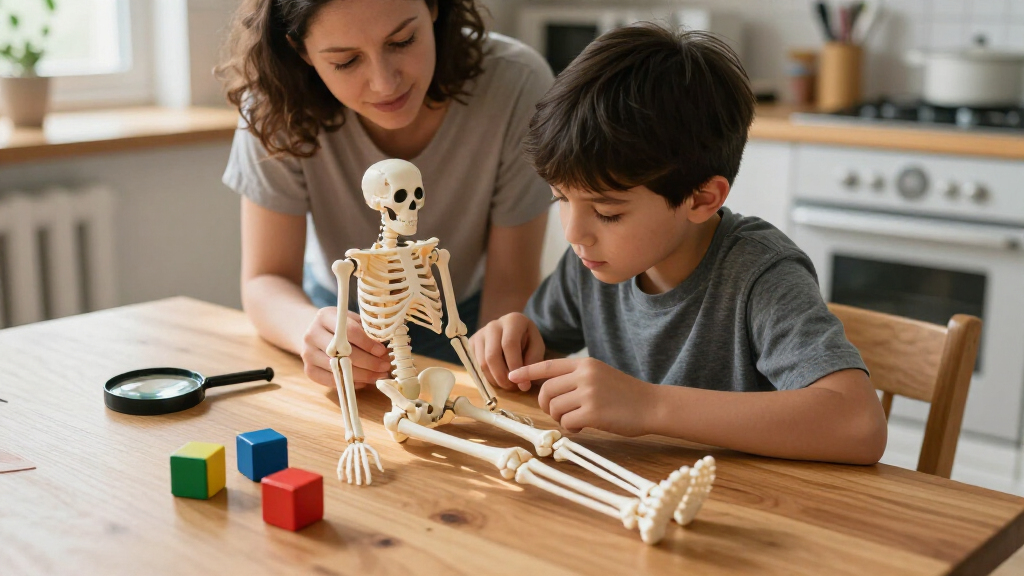

When it comes to anatomy model skeletons for kids, the biggest choice you face is between hands-on puzzle-style kits that teach body systems through assembly and traditional display skeletons that teach bone structure through observation. For most families, the Science Can Human Body Model stands out as the best overall pick because its interactive, layered design keeps younger kids engaged without requiring the fine motor patience of a desktop anatomy skeleton. If you have an older child with a serious interest in biology, the NEW HORIZON 67-inch Full-Size Skeleton offers unmatched realism with 200+ bone structures, while the National Geographic Human Body Science Kit is a strong mid-range option that balances guided learning with fun glow-in-the-dark bones. The main tradeoffs in this category come down to age appropriateness, durability of small removable parts, and whether your child learns better by building or by examining. Read on for the full breakdown of all 13 models.

Prime made for students and young adults
- Fast, free delivery for dorm and study essentials
- Prime Video and Amazon Music included
- Member-only deals
Key Takeaways
- Layered body models like Science Can and MyBODY teach organ systems better than bone-only skeletons, making them the smarter buy for kids under 10.
- Three nearly identical 17–18 inch mini skeletons made the list, but only the NLShan earned a top spot because its display stand and sturdier joints justify choosing it over its lookalike competitors.
- The 67-inch NEW HORIZON full-size model is a classroom-grade tool, not a toy — it suits teens and aspiring medical students but overwhelms younger children and dominates a bedroom.
- Glow-in-the-dark features (GobiDex, National Geographic) proved to be more than a gimmick for younger kids, boosting engagement even though the glow fades fast without a light charge.
- Removable parts are the category’s biggest durability risk: models with 15+ detachable pieces like the Be Amazing! 60-piece figure trade richness for a higher chance of lost components.


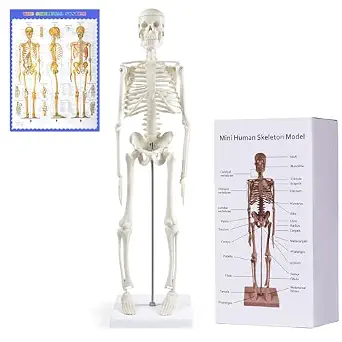


| anatomy model skeletons for kid | Material | Height |
|---|---|---|
| GobiDex Human Body Skeleton Mo | Safe plastic | 12.6 inches |
| Science Can Human Body Model f | — | 11 inches |
| MyBODY Large Human Body Anatom | Rubber magnets + EVA | — |
| National Geographic Human Body | — | — |
| Human Skeleton Model for Anato | Plastic | 17.7 inches |
| NLShan Human Skeleton Model fo | Non-toxic PVC | — |
| 17.72 Inch Mini Human Skeleton | Eco-friendly hard PVC | 17.72 inches |
| Learning Resources Anatomy Mod | Durable plastic | — |
| 33.4-Inch Human Skeleton Model | Reinforced durable materials | 33.4 inches |
| NEW HORIZON Human Skeleton Mod | PVC | 67 inches (full-size) |
| Human Body Model with 15 Remov | Non-toxic PVC | — |
| Be Amazing! Toys Interactive H | — | 14 inches |
| Mini Skeleton Model | Plastic | — |
More Details on Our Top Picks
GobiDex Human Body Skeleton Model Kit – Glow in The Dark Science Kit for Kids
GobiDex earns the top spot because it balances the widest appeal with the fewest compromises. At 12.6 inches tall with 40 pieces covering bones, muscles, and organs, it splits the difference between the smaller 9-inch National Geographic kit and the display-focused 17.7-inch skeleton models. The glow-in-the-dark bones give it the same after-dark fun as the Nat Geo set, but the larger piece count means more genuine anatomy per play session. Compared with the Science Can talking model, it trades electronic coaching for repeatable assembly, which holds up better over months of use. The pieces snap apart cleanly, so kids can rebuild without wear becoming an issue. The tradeoff is durability: enthusiastic younger builders can stress the connections, and the small parts rule out siblings under eight.
Pros:- Covers bones, muscles, and organs in one 40-piece kit, more systems than most competitors
- Glow-in-the-dark bones add a fun hook without extra cost or batteries
- Easy to assemble and disassemble, so it works as a repeat activity rather than a one-time build
- Illustrated science manual supports independent STEM learning
Cons:- Pieces can crack or loosen with rough handling
- Small parts make it unsafe and impractical for children under 8
Best for: Families and classrooms wanting a repeatable, full-coverage anatomy kit for kids 8 and up who like building as much as learning
Not ideal for: Households with toddlers or rough-handling kids — the small, somewhat fragile pieces won’t survive it
- Height:12.6 inches
- Pieces:40
- Recommended Age:8 years and up
- Material:Safe plastic
- Features:Glow in the dark, self-standing
- Included:Model pieces, illustrated science manual
Our verdict“The most complete and repeatable anatomy kit in this lineup, ideal for kids 8+ who want bones, organs, and muscles in a single buildable set.”
Science Can Human Body Model for Kids – Interactive Anatomy Learning Toy
Where the GobiDex kit assumes a parent or teacher will help, the Science Can talking model teaches itself. Its Explanation and Quiz modes narrate anatomy facts aloud, which is why this pick makes the most sense for kids who learn solo or lose interest in paper manuals. The 15+ removable organs and bones are more realistic-looking than GobiDex’s pieces, and the included 26-page book plus knowledge cards extend the lesson beyond the toy itself. The younger age floor of 6 also gives it reach the National Geographic kit lacks. Two real drawbacks: it needs 3 AA batteries that aren’t in the box, and the quiz content can outpace a 6-year-old, so the lower age rating is optimistic for some kids.
Pros:- Talking Explanation and Quiz modes let kids learn independently
- 15+ realistic removable parts encourage tactile exploration
- 26-page illustrated book and 4 knowledge cards add depth beyond the model
- Works for a younger starting age than most kits in this roundup
Cons:- Requires 3 AA batteries that are not included
- Quiz content may frustrate children at the younger end of the age range
Best for: Parents of self-directed learners ages 6-12 who want a toy that teaches without an adult in the room
Not ideal for: Buyers avoiding battery-powered toys — the interactivity dies the moment the AAs run out
- Brand:Science Can
- Model Number:160022
- Recommended Age:6-12 years
- Height:11 inches
- Removable Parts:15+
- Included:Model, organ parts, base, 26-page book, 4 double-sided cards
- Power:3 AA batteries (not included)
Our verdict“The strongest choice for kids who learn on their own, thanks to audio-guided teaching no other kit here offers.”
MyBODY Large Human Body Anatomy Model for Kids & Teens – Magnetic Educational Kit with Skeleton Base and 7 Layers
This option stands out for layered systems-based learning, which is a different teaching approach than the piece-by-piece assembly of GobiDex or the organ removal in the Nat Geo kit. Its seven magnetic layers let students build up the body system by system, and the QR codes and info sheets push it toward genuine study material — a reason it suits teens while most kits here stop at age 10. The rubber-magnet and EVA construction is more durable than snapped plastic, and the flat 14 x 9 format hangs or displays easily in a classroom. The flip side: it’s a learning tool, not a toy. Kids expecting glow-in-the-dark fun or squishy organs will find it dry, and younger children may struggle with the layer assembly without help.
Pros:- Seven magnetic layers teach body systems progressively, a deeper structure than single-shell kits
- QR codes and info sheets extend learning well beyond the physical model
- Durable rubber-magnet and EVA materials outlast snapped plastic kits
- Large flat format works well for classroom display and group demonstrations
Cons:- Layered assembly can frustrate younger children without adult help
- Dry, educational feel — no glow effects, sounds, or squishy parts to hook reluctant learners
Best for: Teachers and parents of kids 10+ who want a durable, systems-focused model for structured anatomy lessons
Not ideal for: Younger kids or buyers seeking a playful toy — this is a study aid, and rough play isn’t what it’s built for
- Item Dimensions:14 x 9 x 2 inches
- Material:Rubber magnets + EVA
- Age Range:5+
- Number of Layers:7
- Included:Magnetic skeleton base, instructions, sticker sheet, info sheets
- Learning Extras:QR codes for extended content
Our verdict“The best pick for serious anatomy study with older kids and teens, especially in classroom settings where durability and depth matter most.”
National Geographic Human Body Science Kit for Kids – 32-Piece Anatomy Set with Glow-in-the-Dark Bones
The Nat Geo kit wins on play experience per dollar: it’s the only set here with squishy, tactile organs kids extract using real forceps, turning anatomy into something closer to a mini science lab. Compared with the GobiDex model, it sacrifices piece count (32 vs. 40) and height (9 vs. 12.6 inches), but the forceps-and-chart format teaches a careful, specimen-handling mindset the snap-together kits don’t. The Learning Guide from National Geographic is also a step above generic manuals in writing quality. The downsides are real, though — the tiny bones and organs are easy to lose in a busy playroom, and the muscular system covers arms only, so kids wanting full-body muscles should lean toward GobiDex instead.
Pros:- Squishy realistic organs and forceps create a genuine lab-style experience
- Glow-in-the-dark bones and ID chart keep engagement high
- Detailed, well-written Learning Guide from National Geographic
- Quality components with strong customer support from the manufacturer
Cons:- Many small pieces that are easy to misplace
- Only arm muscles included — no full muscular system
Best for: Kids 8+ who love hands-on science activities and parents who want a guided, lab-style experience rather than another building toy
Not ideal for: Households prone to losing small pieces — once a glow bone goes missing, the set is incomplete
- Brand:National Geographic (Blue Marble)
- Model Number:NGHUMBODY2
- Age Range:8 years and up
- Pieces:32
- Body Shell Height:9 inches
- Contents:9 squishy organs, 18 glow bones, arm muscles, forceps, display stand, ID chart, Learning Guide
Our verdict“The most lab-like anatomy kit for the money, best for careful kids who enjoy the precision of tools and guides over pure building.”
Human Skeleton Model for Anatomy: 17” with Movable Arms and Legs
Unlike the four body-model kits above, this is a true skeleton model — no organs, no games, just bones on a stand. At 17.7 inches with movable joints and a removable skull cap, it’s built for study and display, sitting between the 7.8-inch mini skeleton and the 33.4-inch classroom model elsewhere in this roundup. Compared with the Nat Geo kit, it offers far more anatomical accuracy in the skull, spine, and ribs, but far less play value — kids don’t dissect or rebuild it. The movable arms and legs make it genuinely useful for demonstrating joint movement to a curious child or science class. Its limits: the detail is basic, the skull doesn’t detach, and it won’t satisfy anyone wanting organ-level anatomy like the Science Can model provides.
Pros:- Movable arms and legs demonstrate real joint movement for study
- Removable skull cap reveals basic cranial interior detail
- Compact and portable, fits a desk or small shelf easily
- Simple assembly with a stable display base
Cons:- Only basic anatomical detail — not for advanced or medical-level study
- Skull cannot be fully removed and there are no organs or muscles
Best for: Families and students who want an accurate, shelf-worthy skeleton for study and demonstration rather than a toy
Not ideal for: Younger kids who want interactive play — there’s nothing to remove, open, or quiz against here
- Height:17.7 inches
- Base Dimensions:4.75 x 4.75 inches
- Weight:1.1 pounds
- Material:Plastic
- Articulation:Movable arms and legs, jaw movement
- Features:Removable skull cap, display base
Our verdict“The right pick when the goal is an accurate, displayable skeleton for learning bone names and joint movement rather than hands-on play.”
NLShan Human Skeleton Model for Anatomy: Scientific Model with Movable Arms, Legs & Display Stand – 17.7″ Mini Human Skeleton
The NLShan 17.7-inch skeleton delivers the classic articulated anatomy experience at a scale and price point that makes sense for a kid’s desk or shelf. Compared with the similarly sized WLLFS Mini Human Skeleton, this model’s standout trick is the removable skull with an opening jaw, which turns a static display piece into something a child can actually investigate hands-on. The movable arms and legs invite posing and play, though the joints can loosen with repeated handling — a real tradeoff if your child repositions it daily. The included stand gets the job done but feels basic, so it’s better suited to shelf display than heavy classroom rotation.
Where the Learning Resources Anatomy Models Bundle spreads learning across four body systems, this pick goes deep on the skeleton alone, making it the stronger choice for kids fixated on bones specifically.
Pros:- Removable skull with opening and closing jaw adds hands-on discovery
- Movable arms and legs allow realistic posing
- Non-toxic, environmentally friendly PVC is safe for kids
- Detailed bone structure uncommon at this price scale
Cons:- Small 17.7-inch size limits fine anatomical detail
- Stand is basic and not built for daily classroom abuse
- Articulation joints may loosen over time with frequent play
Best for: Parents of bone-obsessed kids who want an affordable, poseable desktop model with a genuinely interactive skull
Not ideal for: Frequent classroom handling — the joints and stand are lightweight and will wear with heavy group use
- Model Size:17.7 inches
- Material:Non-toxic PVC
- Features:Movable arms and legs, articulated joints, removable skull, display stand
- Base Dimensions:4.75 x 4.75 inches
- Item Weight:1.08 pounds
- Manufacturer:NLShan
Our verdict“A great first real skeleton for a curious child who wants a poseable, examinable bone model without a classroom-grade price.”
17.72 Inch Mini Human Skeleton Anatomy Model with Movable Arms and Legs
At first glance this WLLFS model looks nearly identical to the NLShan 17.7-inch skeleton, but the difference shows up the moment you move a limb. The damped joints hold poses without drifting or shaking, which matters if your child wants to pose the skeleton for drawing reference or Halloween scenes rather than just poking at it. The hard PVC also resists cracks, fading, and yellowing better than softer budget plastics, so it survives being knocked off a desk. Unlike the NLShan, though, there’s no removable skull — you trade that interactive feature for sturdier, more reliable articulation.
It requires assembly and disassembly, which some families will see as a learning plus and others as a chore. Compared with the Mini Skeleton Model at 7.8 inches, this one’s larger scale makes the spine, ribs, and joint textures far easier for kids to actually see.
Pros:- Damped joints hold poses stably without shaking
- Durable eco-friendly PVC resists falls, cracks, and yellowing
- Realistic proportions and detailed skull, spine, and rib textures
- Versatile for study, art reference, display, and seasonal decor
Cons:- No removable parts for deeper hands-on exploration
- Requires assembly and disassembly
- Small size limits visible detail for older students
Best for: Kids who draw, craft, or love imaginative play and need a skeleton that holds whatever pose they set
Not ideal for: Advanced anatomy study — the sub-18-inch scale and lack of removable parts limit close inspection
- Height:17.72 inches
- Product Dimensions:4.72 x 4.72 x 17.72 inches
- Weight:1.08 pounds
- Material:Eco-friendly hard PVC
- Features:Movable arms and legs with damped joints
- Model Number:gj001
- Manufacturer:WLLFS
Our verdict“The pick for families who value durability and pose-holding articulation over removable anatomical parts.”
Learning Resources Anatomy Models Bundle Set
Most picks in this roundup do one thing well: the NLShan skeleton shows bones, and the NEW HORIZON 67-inch model goes deeper on bones than anything else here. The Learning Resources Bundle takes the opposite approach, giving kids four take-apart models — heart, brain, body, and skeleton — so they learn how systems fit together, not just what a skeleton looks like. Each model assembles and disassembles, and the repeated build-and-open cycle is where the learning actually happens for elementary-age kids. The included display stands and durable plastic mean pieces survive being carried between home and school.
The tradeoff is depth: none of the four models matches the anatomical detail of a dedicated skeleton, and assembly can frustrate younger children without adult help. For ages 8 and up, though, this is the broadest educational value in the lineup.
Pros:- Four models cover heart, brain, body, and skeleton in one set
- Take-apart assembly makes learning active rather than passive
- Durable construction with secure fit and display stands
- Anatomically accurate enough to support real study
Cons:- No single model matches the detail of a dedicated skeleton
- Assembly required for every model, which can frustrate younger kids
- Limited to four models with no expansion
Best for: Parents and teachers who want a whole-body curriculum in one box rather than a single deep-dive skeleton
Not ideal for: Very young children — the assembly steps and part counts demand patience and fine motor skills
- Number of Models:4
- Models Included:Heart, Brain, Body, Skeleton
- Material:Durable plastic
- Suitable Age:8 and up
- Features:Assembles and disassembles for interactive learning
- Includes:Display stands
Our verdict“The best choice for well-rounded anatomy learning where breadth across body systems beats bone-level depth.”
33.4-Inch Human Skeleton Model with Removable Limbs
This 33.4-inch model occupies the sweet spot between the desktop 17-inch skeletons and the full-size NEW HORIZON 67-inch model. Nearly double the height of the NLShan or WLLFS minis, it shows anatomical detail that small models simply can’t render, while still fitting on a bookshelf or classroom table. Its removable arms, legs, and skull give kids genuine hands-on disassembly practice — a step up from the WLLFS, which offers no removable parts at all. At 4.41 pounds with a stable base, it stays put during demonstrations in a way the lightweight minis don’t.
The honest tradeoff: it’s still a half-scale model, so it isn’t a substitute for a life-size skeleton in serious study, and younger children may need help reattaching limbs correctly. For a middle-schooler outgrowing toy anatomy sets, though, it’s a natural next step.
Pros:- Removable arms, legs, and skull enable hands-on disassembly
- Nearly double the size of mini models for better visible detail
- Durable construction stands up to repeated classroom use
- Stable base keeps the model secure during demonstrations
Cons:- Half-scale size limits fine anatomical detail for advanced study
- Removable limbs can be tricky for younger kids to reattach correctly
- Bulkier and heavier than desktop models for storage and transport
Best for: Middle-school students and homeschool families who need more detail than a mini skeleton but can’t accommodate a full-size model
Not ideal for: Advanced or professional study — at half scale, fine structures still aren’t large enough for detailed work
- Height:33.4 inches
- Material:Reinforced durable materials
- Removable Parts:Arms, legs, skull
- Weight:4.41 pounds
- Base:Stable display base
- Use:Educational settings, demonstrations, display
Our verdict“The right upgrade when a child has outgrown mini skeletons but a 67-inch model won’t fit the room or the budget.”
NEW HORIZON Human Skeleton Model – 67″ Full-Size Anatomical Anatomy Model with 200+ Bone Structures and 15-Part Skull
The NEW HORIZON 67-inch model is in a different category from everything else in this roundup. Cast from a real male skeleton, it packs in over 200 bone structures, a 15-part disarticulated skull, and both articulated and disarticulated hands and feet — detail level that the 33.4-inch model or the 17-inch minis can’t approach. The laminated bone identification poster and manual turn it from a display piece into a genuine study tool for anatomy and physiology coursework or art reference. This is the model to buy for a teenager headed toward medicine or a serious homeschool lab.
The catches are real: the manufacturer rates it for adults, it demands dedicated floor space, and it’s priced like the professional tool it is. Compared with the Learning Resources Bundle, it does one subject at ten times the depth — a trade you should make only if bones are the priority.
Pros:- Life-size 67-inch model cast from a real skeleton for accurate proportions
- Over 200 bone structures including intervertebral discs, hyoid bone, and coccyx
- 15-part disarticulated skull with complete teeth and bone pairs
- Includes laminated identification poster and instructional manual
Cons:- Not suitable for children under 18 per the manufacturer
- Large footprint requires dedicated display or storage space
- Premium price far above kid-focused models in this roundup
Best for: High-school and college students, artists, and homeschool labs that need true life-size anatomical accuracy
Not ideal for: Young children and casual play — it’s a professional study tool requiring floor space, careful handling, and an adult-level budget
- Height:67 inches (full-size)
- Material:PVC
- Bone Structures:200+
- Skull:15-part disarticulated with complete teeth
- Extras:Laminated bone identification poster and manual
- Hands and Feet:Articulated and disarticulated versions
- Age Range:Adult (18+)
- Brand:NEW HORIZON
Our verdict“A professional-grade anatomy investment for serious students — overkill for play, unmatched for study.”
Human Body Model with 15 Removable Parts, 11-inch Anatomical Educational Display
Most products in this roundup lean toy-first, but this torso model flips that priority: it’s a genuine anatomical study aid dressed in a kid-friendly size. With 15 removable parts including the heart, brain, liver, and intestines, it teaches internal organ relationships in a way skeletal-only models like the 7.8-inch Mini Skeleton Model simply can’t — there’s nothing to remove or explore inside that figure. The wooden base and non-toxic PVC build give it a display-quality feel that suits a desk or homeschool shelf.
The tradeoff is age. Rated for 14 and up, the small organ pieces demand patience and fine motor control, and younger siblings won’t get much from it beyond supervised observation. Compared with the Be Amazing! 60-piece figure, this is less about play and more about memorizing what sits where — a better fit for biology-curious teens than elementary learners.
Pros:- 15 removable parts covering organs most kids’ models ignore entirely
- Accurate, detailed sculpting that supports real biology study, not just play
- Sturdy wooden base makes it a legitimate desk or shelf display
- Non-toxic PVC construction holds up to repeated disassembly
Cons:- Small organ pieces create a genuine choking risk around younger children
- Rated 14+ with fiddly assembly that excludes the core kids’ market
Best for: Teens, homeschool families, and pre-med students who want accurate organ-level anatomy in a compact display piece
Not ideal for: Families with children under 10 — the small removable organs are a choking hazard and assembly can frustrate younger kids
- Material:Non-toxic PVC
- Size:11 inches
- Number of Parts:15 removable pieces
- Included Components:Trunk, brain, heart, esophagus and aorta, lungs, skull cap, stomach, diaphragm, liver, pancreas and spleen, intestines, educational brochure
- Base:Wooden display base
- Age Range:14 years and up
- Manufacturer:EVOTECH SCIENTIFIC
Our verdict“Buy this for a teenager who has outgrown cartoon anatomy toys and wants the real layout of the human torso on their desk.”
Be Amazing! Toys Interactive Human Body Anatomy Figure, 60 Pieces, Ages 8+
Where the EVOTECH torso asks kids to sit still and study, this set invites them to build, pose, and rebuild. The 14-inch figure is fully articulated, and the 60 pieces layer bones, muscles, and organs so children physically discover what sits on top of what — a layering concept the MyBODY magnetic kit also explores, but here it’s paired with a figure kids can actually stand, bend, and pose on its adjustable stand. The illustrated instruction cards do quiet teaching work too, turning free play into guided anatomy lessons without a parent hovering.
The costs are real, though. Sixty pieces means sixty things to lose under the couch, and there’s no manufacturer warranty if pieces break or go missing — a sharper risk than simpler sets like the National Geographic 32-piece kit. Younger or less patient builders may find the muscle-layer assembly fiddly.
Pros:- Fully posable articulated body makes anatomy feel like play, not homework
- 60 pieces layer bones, muscles, and organs for a true inside-out understanding
- Colorful illustrated cards teach body functions independently of adult help
- Adjustable stand doubles as a display and a posing tool
Cons:- 60 small pieces are easy to lose and hard to keep organized
- No manufacturer warranty if parts break or go missing
Best for: Kids ages 8-12 who learn by doing — building, posing, and taking things apart rather than reading labels
Not ideal for: Households that hate loose pieces or want a warranty — 60 small parts and no coverage is a losing combination for careless storage
- Brand:Be Amazing! Toys (Science to the Max)
- Height:14 inches
- Piece Count:60 pieces
- Age Range:8+ years
- Included Components:Bones, muscles, organs, adjustable stand, illustrated instruction cards
- Articulation:Fully articulated and posable
- Warranty:No warranty
Our verdict“This is the pick for the 8-12 age bracket that finds display models boring and needs anatomy they can hold, bend, and rebuild.”
Mini Skeleton Model, 7.8-inch Human Anatomy Skeleton Figure with Movable Arms and Legs
Sometimes a kid just wants a little skeleton of their own — and at 7.8 inches, this one fits that job exactly. The movable arms and legs and detachable skull give it enough interactivity to demonstrate basic joint function, while the compact footprint and stable base make it a natural desk companion or Halloween-adjacent decoration. Compared with the 17-inch NLShan skeleton model, it sacrifices detail and presence, but it also costs less, takes up almost no space, and survives being carried around in a backpack — something bulkier display models can’t claim.
The limitations are obvious once a child gets curious. There are no removable organs, no labels, and no educational materials in the box, so it teaches skeletal shape, not body systems. Next to layered kits like the Be Amazing! 60-piece figure, it’s a poster rather than a lesson. Treat it as a starter or novelty model, not a curriculum.
Pros:- Movable joints and a detachable skull add genuine hands-on interaction
- Tiny footprint fits desks, shelves, and even a pencil case
- Durable lightweight plastic handles being carried and fidgeted with
- Stable base keeps it standing through frequent handling
Cons:- Limited size restricts any detailed anatomical study
- Plastic sculpting looks and feels toy-like rather than realistic
Best for: Young kids and gift-buyers who want an affordable, portable skeleton that doubles as a desk decoration
Not ideal for: Anyone seeking detailed anatomy study — the small scale, lack of labels, and absence of removable organs limit it to basic learning
- Size:7.8 inches tall
- Material:Plastic
- Item Dimensions:3.54 x 3.54 x 7.5 inches
- Item Weight:0.08 kg
- Age Range:0 – 10 years
- Movable Parts:Arms, legs, detachable skull
- Base:Included stable base
Our verdict“A fun, low-commitment first skeleton for young children — just don’t expect it to teach much beyond bones and joints.”

How We Picked
I evaluated each model against four criteria: age-appropriate learning value (does it actually teach anatomy at the right depth for its target age), build quality and durability (how well joints, snaps, and removable parts survive repeated assembly by kids), engagement factor (whether the design invites repeated play or gets abandoned after one build), and practicality (storage footprint, assembly difficulty, and how easily lost pieces derail the experience). No single model wins on all four, so the ranking reflects which tradeoffs make the most sense for typical buyers.
The ordering logic is straightforward: interactive kits with layered organ systems rank highest for the core kids audience because they deliver the most repeatable learning per dollar. Mid-size display skeletons follow, ranked by joint quality and stand stability, since these features separate the many near-identical 17-inch models on the market. Full-size and specialist models rank lower for most families — not because they are worse products, but because their classroom-scale ambitions only pay off for older students or serious hobbyists.
Factors to Consider When Choosing Anatomy Model Skeletons For Kids
Before picking a specific model, it helps to understand what actually separates a great anatomy skeleton from one that ends up forgotten in a closet. These are the factors that shaped my ranking and the mistakes I see buyers make most often.Match the Model Type to What Your Child Should Learn
The single biggest mistake buyers make is confusing two different products: body-system models (organs, layers, removable pieces) and skeleton models (bones only). If your child is asking “where does food go?” a layered model with removable organs answers that question; a bone-only skeleton does not. Conversely, a child fascinated by the skeleton itself will find organ-layer kits cluttered and gimmicky. Ask what sparked the interest in the first place — a doctor visit, a science unit, a Halloween curiosity — and buy toward that spark. Bone-only models stretch further in educational value as kids age, since skeletal vocabulary stays relevant through high school, while organ kits suit a narrower developmental window of roughly ages 5 to 11.
Age and Fine Motor Skills Decide Whether Assembly Is Fun or Frustrating
A model rated for ages 8+ can still defeat a child with weaker fine motor control, because small snap-fit pieces require precise pressure and alignment. Kits with 15 to 60 removable parts — like the Be Amazing! figure — reward patient builders but can trigger meltdowns in younger kids who cannot reassemble them independently. As a rule of thumb, kids under 7 do better with magnetic or layered pieces that stick on loosely, while kids 9 and up can handle tab-and-slot construction. Also check whether the model can be reassembled by the child alone or requires an adult every time; a model that always needs parental help limits spontaneous learning. Frustration is the top reason these kits get abandoned early.
Durability: Where Cheap Skeletons Fail First
Almost every complaint in this category traces back to three failure points: snapping plastic joints, loose-fitting pegs, and brittle stands. Movable arms and legs sound appealing until you realize the pivot pins are the thinnest plastic on the whole model. Before buying, consider how the model will actually be handled — carried around the house, posed repeatedly, or mostly displayed on a shelf. A stable base or stand dramatically extends a skeleton’s usable life, which is why I weighted stands heavily when ranking the 17-inch models. Full-size models face an added risk: their longer limb levers put far more force on shoulder and hip joints, so a wobbly full-size skeleton is a bigger problem than a wobbly mini one.
Size and Storage Are Decided by Your Home, Not the Product
A 67-inch full-size skeleton is an impressive gift on day one and a storage headache by month three. Measure the intended spot — desk, shelf, or closet — before committing to anything taller than 20 inches. Mini skeletons around 7 to 8 inches solve storage entirely but sacrifice the detail that makes anatomy study meaningful, functioning more as desk decorations or fidget toys. The 17 to 18 inch range hits the practical sweet spot for most homes: enough bone detail to label and study, small enough to shelve or stash. Also consider portability, because a model a child can carry to show a grandparent or bring to a science fair gets used twice as often as one anchored to a room.
Detail Level: Know When Medical Accuracy Is Wasted
Features like 200+ individual bone structures or a 15-part dissectible skull matter for a high schooler or pre-med student, but they add cost, fragility, and confusion for younger kids. A first-grader learns more from a clearly labeled 20-bone model than from an anatomically precise one whose skull separates into pieces they cannot name or reassemble. Watch for labeling specifically: some models include printed guides or stickers identifying bones, which multiplies learning value far more than raw anatomical detail does. The right detail level matches the vocabulary your child is actually learning in school. Buying “the most accurate” model is a common overspend that backfires when the extra detail makes the model too delicate to touch.
Assembly Support and Instructions Make or Break the Experience
The quality of included guides and assembly instructions varies enormously, and it is rarely mentioned on product listings. Some kits ship with full-color booklets that turn assembly into a guided anatomy lesson; others include a single folded sheet with vague diagrams, leaving kids to guess where fifteen organs belong. Before buying, check whether the manufacturer offers downloadable instructions or an app, since paper guides get lost along with the first stray organ piece. Glow-in-the-dark and puzzle-style kits especially benefit from strong guides, because the learning happens during assembly rather than after it. A brilliant model with poor instructions delivers half its educational value.
Frequently Asked Questions
What age is right for a full-size skeleton model versus a small kit?
Full-size models like the 67-inch NEW HORIZON are really aimed at ages 12 and up — teens, pre-med students, and adult hobbyists — because their value comes from anatomical detail a younger child cannot yet interpret. Kids between 5 and 10 get far more from layered body kits or 17-inch desktop skeletons, which they can handle, pose, and carry without adult supervision. A full-size model in a young child’s room tends to become furniture rather than a learning tool, and its taller limbs break more easily when knocked over. If you are buying for a mixed-age household, a mid-size 17-inch model with a sturdy stand serves everyone better than one extreme or the other.
Are glow-in-the-dark skeleton features worth paying extra for?
For younger kids, yes — but with realistic expectations. The glow in models like the GobiDex kit and the National Geographic set works as an engagement hook that gets kids to return to the model after the novelty of assembly wears off, which is when actual learning happens. The tradeoff is that the glow only lasts 15 to 30 minutes after light exposure and dims with age, so it is a bonus feature, never the reason to buy. If two similar kits differ mainly in glow capability, the glow version makes sense for a child under 9; an older child who cares about anatomical accuracy will find the coating irrelevant. Do not let glow marketing push you toward a model that is otherwise weaker in build quality.
How many removable parts is too many for a child?
Why are there so many identical-looking 17-inch skeletons, and does it matter which one I buy?
The 17 to 18 inch mini skeleton is the most commoditized product in this category, with several near-identical offerings that differ mainly in stand quality, joint tightness, and packaging. Those small differences matter a lot in practice: a wobbly stand means the skeleton gets knocked over constantly, and loose arm joints mean it cannot hold a pose for study or display. I favored the NLShan version because it pairs movable limbs with a more stable base, which is exactly where its cheaper lookalikes cut corners. Rather than comparing photos, look for mentions of the stand design and joint tension in listings. When models look identical, the unglamorous details decide the winner.
Can one anatomy model cover multiple kids of different ages?
Yes, if you choose a layered or bundle-style product rather than a single-purpose skeleton. The Learning Resources Anatomy Models Bundle works well for this because it splits anatomy into separate smaller models, so a 6-year-old can handle the simple pieces while a 10-year-old works through the more complex ones. Similarly, the MyBODY magnetic layered model works at different depths — younger kids match the layer shapes, older kids read the organ names. A bone-only desktop skeleton also spans ages reasonably well since bone vocabulary grows with the child. What does not span ages well is a highly detailed full-size model for a young child, or a preschool-style toy torso for a middle schooler. If siblings are more than four years apart, a bundle beats a single do-everything model.
Conclusion
For most families, the Science Can Human Body Model is my best overall pick — it hits the engagement sweet spot for elementary-age kids, teaches real anatomy through interaction, and avoids the fragility of high-piece-count kits. The National Geographic Human Body Science Kit is the best value, pairing a trusted educational brand with a guided 32-piece build that outlasts cheaper novelty sets. For older students and serious learners, the NEW HORIZON 67-inch Full-Size Skeleton is the best premium choice, delivering classroom-grade detail that no desktop model can match — just make sure you have the space and the teenager to appreciate it. Young beginners ages 4 to 7 are best served by the GobiDex glow-in-the-dark kit, whose forgiving assembly and playful glow keep early learners coming back. For specific needs, the NLShan 17.7-inch mini skeleton is the best pick for study-and-display on a desk, the Learning Resources bundle is ideal for multi-age households, and the MyBODY magnetic layered model suits kids who want to explore body systems rather than bones alone. Match the model to your child’s age and curiosity, and it will teach for years instead of gathering dust.
Fall Picks
fall essentials
As an affiliate, we earn on qualifying purchases.